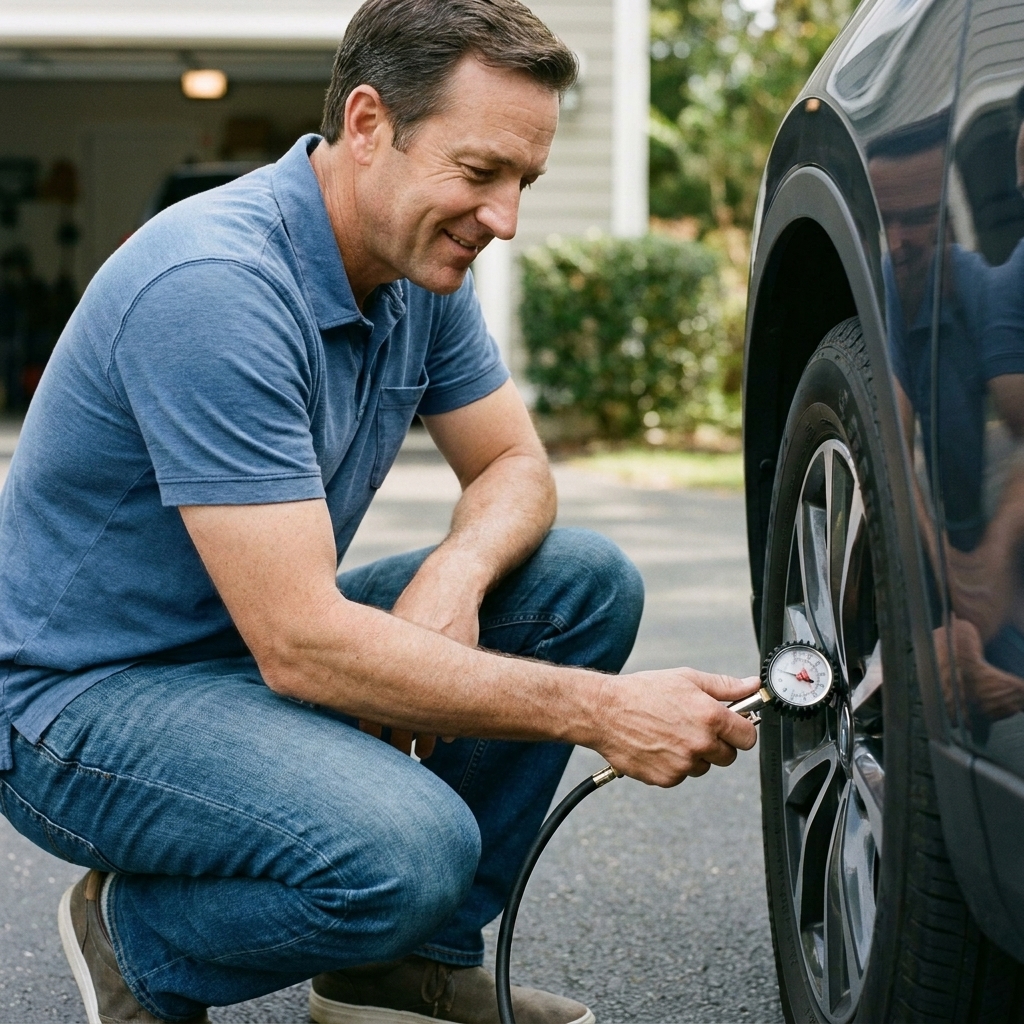
If your TPMS light is on, your car is basically tapping you on the shoulder saying, “Hey, at least one tire pressure reading looks wrong.” Sometimes that’s a legit low tire. Other times it’s a picky sensor, a temperature swing, or a reset that never took. Either way, you can troubleshoot it at home with a pressure gauge, a little patience, and a methodical approach.
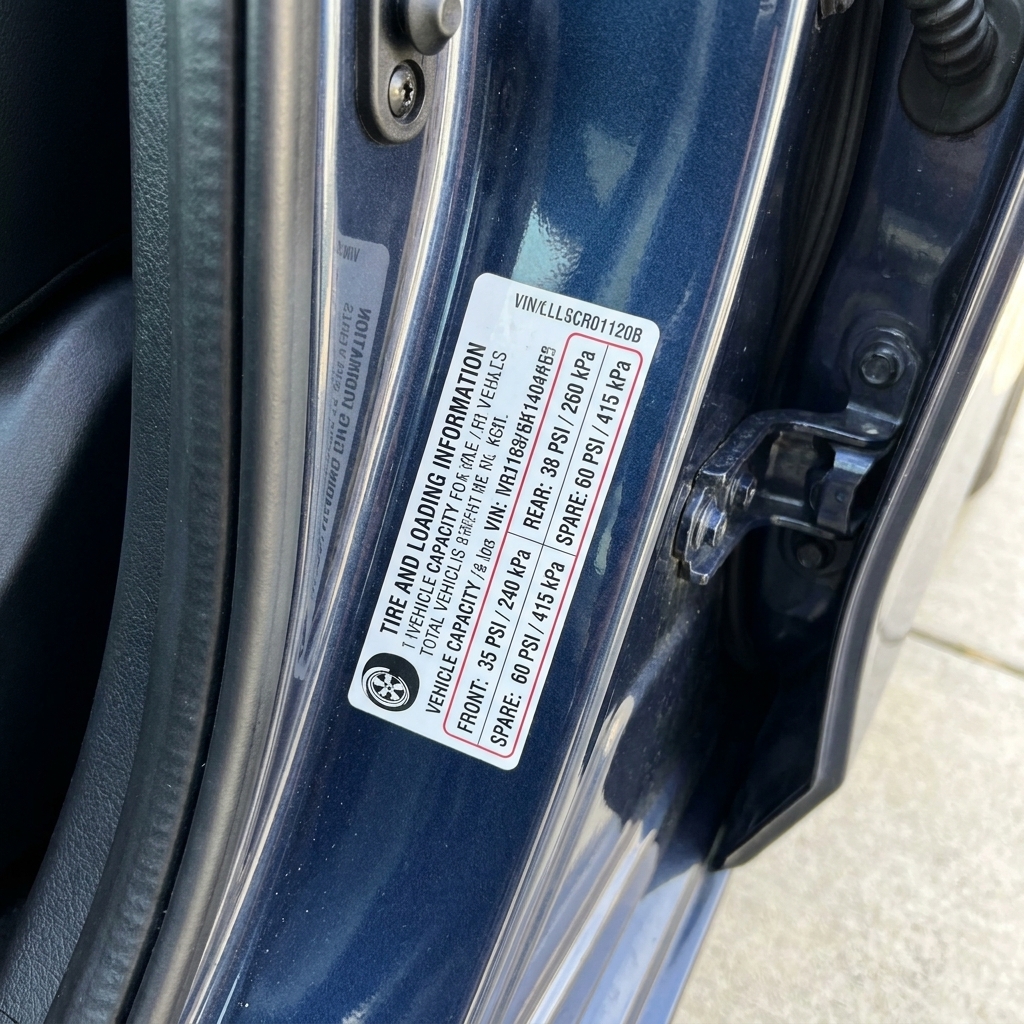
What matters most: Set tire pressures to the door jamb sticker, not the number molded into the tire sidewall. The sidewall number is the tire’s maximum, not your car’s recommended pressure.
What the TPMS light means
TPMS stands for Tire Pressure Monitoring System. Many late-model vehicles use direct TPMS, meaning each wheel has a sensor (usually inside the rim on the valve stem) that reports pressure, and often temperature, to the car. Some vehicles use indirect TPMS, which estimates low pressure using wheel speed (ABS) data instead of pressure sensors.
- Solid TPMS light: On many vehicles, one or more tires is low, or the system believes it is.
- Flashing TPMS light (then solid): On many vehicles, this points to a system fault like a dead sensor battery, missing sensor, or communication issue.
Some vehicles also show which tire is low on the dash screen. If yours does, great. If not, you will check all four, and yes, you should check the spare if your vehicle monitors it.
How to tell if the spare is monitored: If your dash shows a fifth tire reading, or your spare has a sensor-style valve stem (often metal clamp-in), there is a good chance it is monitored. Many compacts are not monitored, so do not assume.
Tools you will want
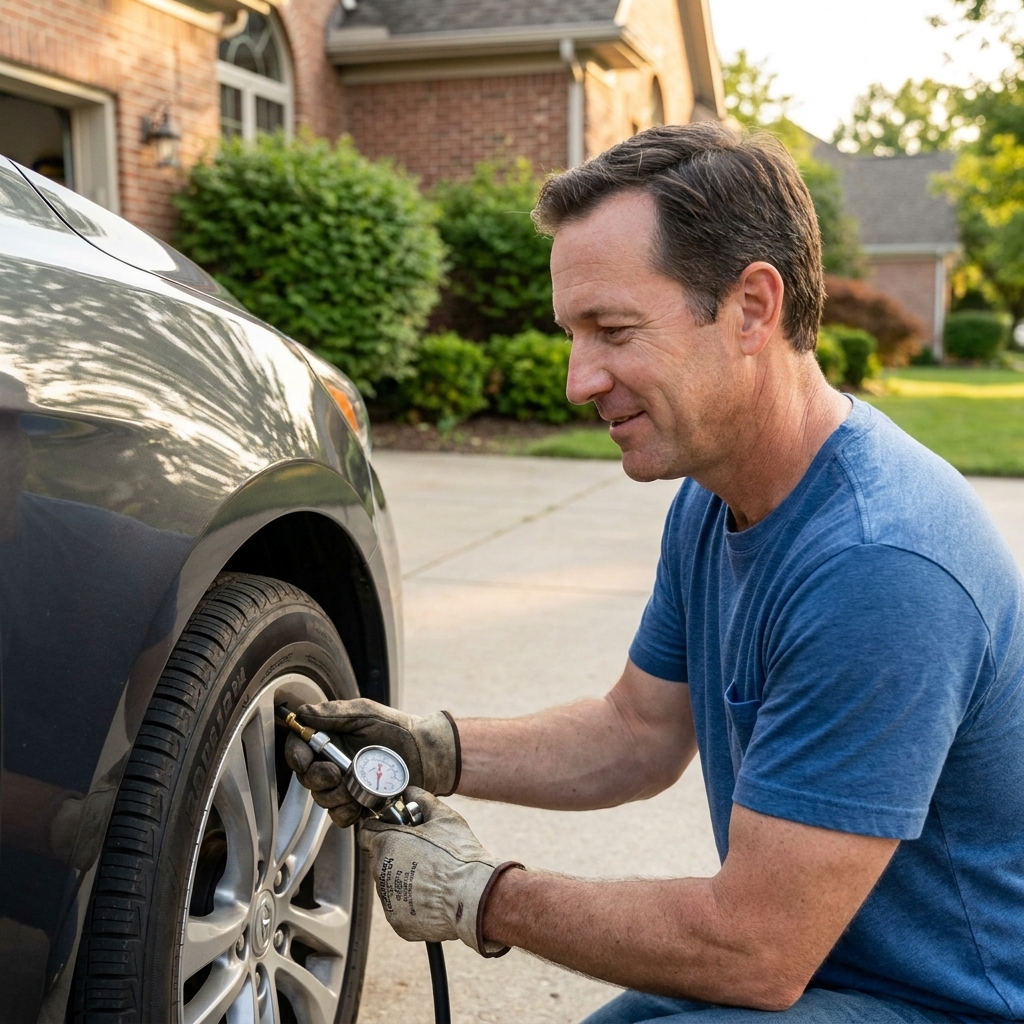
- Quality tire pressure gauge: A $10 to $20 dial gauge beats most gas station gauges.
- Air source: Compressor, portable inflator, or a station pump that actually works.
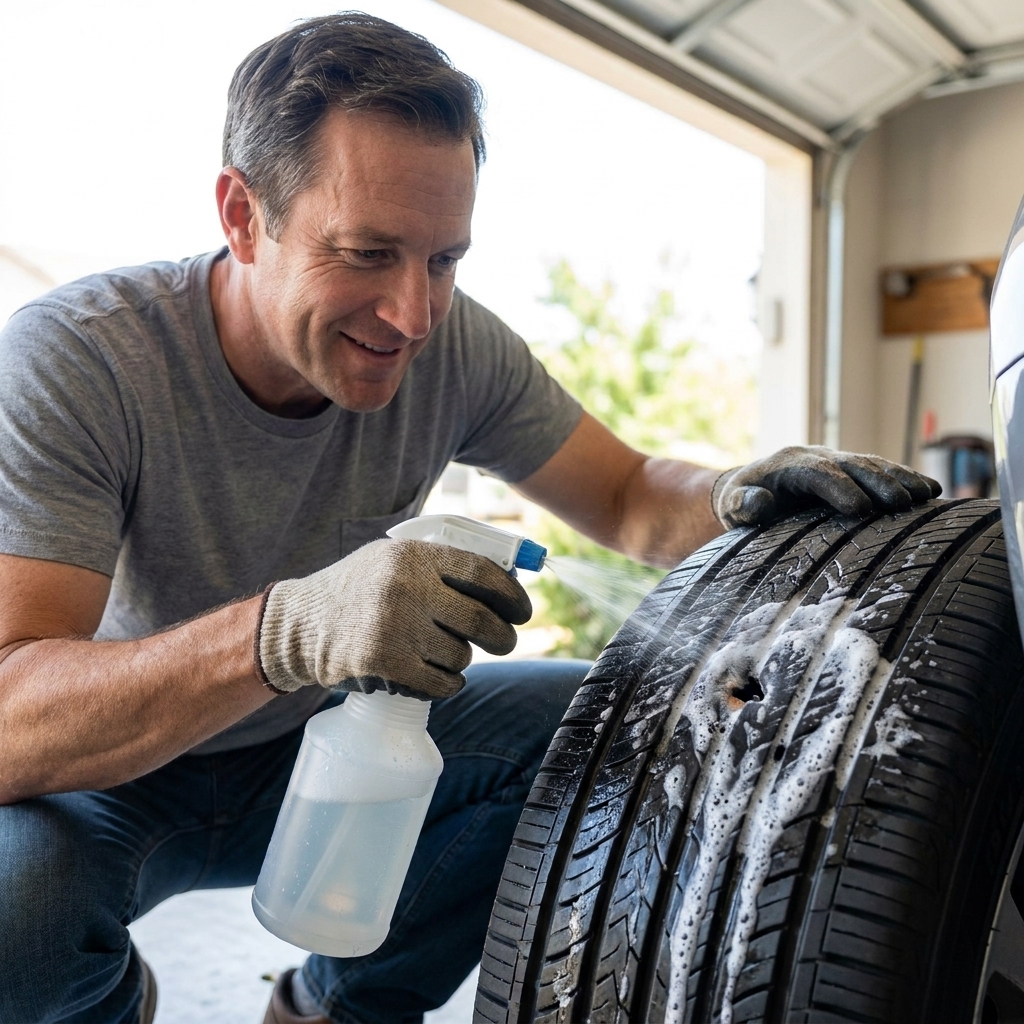
- Soapy water in a spray bottle: For finding slow leaks.
- Tread depth gauge (optional): Not required for TPMS, but useful while you are there.
Step 1: Set pressures correctly
Find the correct pressure
Open the driver door and look for the placard on the door jamb. It lists recommended PSI for front and rear. If your tires are different sizes front to rear, pay attention, because the specs may be different too. (This guide assumes PSI. Some vehicles list kPa or bar as well.)
Check cold pressure
“Cold” means the car has been parked for a few hours, or you have driven less than about a mile at low speed. If you check after the highway, the pressure will read higher than it truly is at rest.
Adjust all four tires
Top off low tires to the placard spec. If a tire is overfilled, bleed it down using the gauge or a small tool. Do not forget the fifth tire if your vehicle uses a full-size spare with a sensor.
Helpful context: Many systems trigger the warning when a tire is roughly 25 percent below the placard spec, but the exact threshold varies by manufacturer. That is why being “a few PSI low” might not set it off, while a bigger drop will.
Step 2: Drive and recheck
After pressures are corrected, many cars will turn the light off after a short drive once the sensors report updated readings. Give it 10 to 20 minutes of normal driving, ideally above 25 mph.
If the light goes off, you are done. If it stays on, keep going.
Step 3: Reset the right way
Not all cars reset the same way. Some auto-reset after driving. Others require a manual reset or a TPMS relearn procedure. Here are the most common DIY-friendly methods.
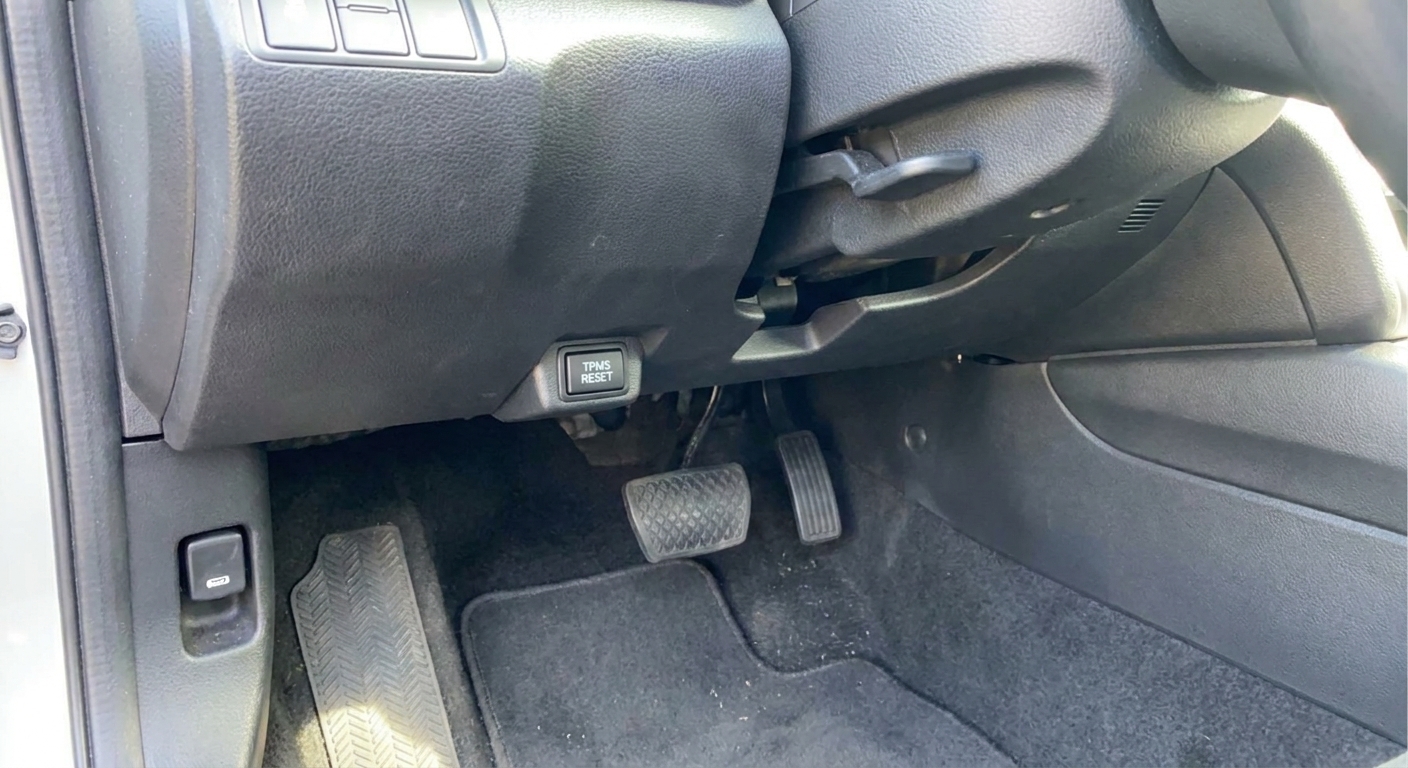
Method A: Reset button
This is common on some models and model years, but not universal.
- Turn the key to ON (engine off) or press the start button without pressing the brake.
- Locate the TPMS reset button (often under the dash, near the steering column, or in the glove box area).
- Press and hold until the TPMS light blinks (often 3 to 5 seconds).
- Start the car and drive for 10 to 20 minutes.
Method B: Dash menu reset
Look in the instrument cluster menu for something like:
- Vehicle Settings
- Tire Pressure
- TPMS
- Set / Calibrate / Relearn
Confirm the reset, then drive. If your car has individual tire readings, you should see them repopulate after a few minutes.
Method C: The higher-then-correct trick (unofficial)
This is not an OEM procedure, but it can help on a stubborn system that is slow to recognize changes. If you have the correct pressures and the proper reset method does not work, this may be worth a try before you head in for a scan and relearn.
- Inflate all four tires to about 3 to 5 PSI above the door sticker.
- Drive for 5 to 10 minutes.
- Park, then set all four back to the exact placard spec.
- Drive again.
Caution: Do not exceed the tire’s maximum pressure (on the sidewall), and do not do this if you are already close to that max.
If the light stays on
1) Temperature swings and borderline tires
Tire pressure drops about approximately 1 PSI for every 10°F drop in the temperature of the air in the tire (rule of thumb). If your tires were already a little low, the first cold snap of the season can trip the light. Set pressures cold to the door jamb spec and you usually solve it.
2) Slow leak
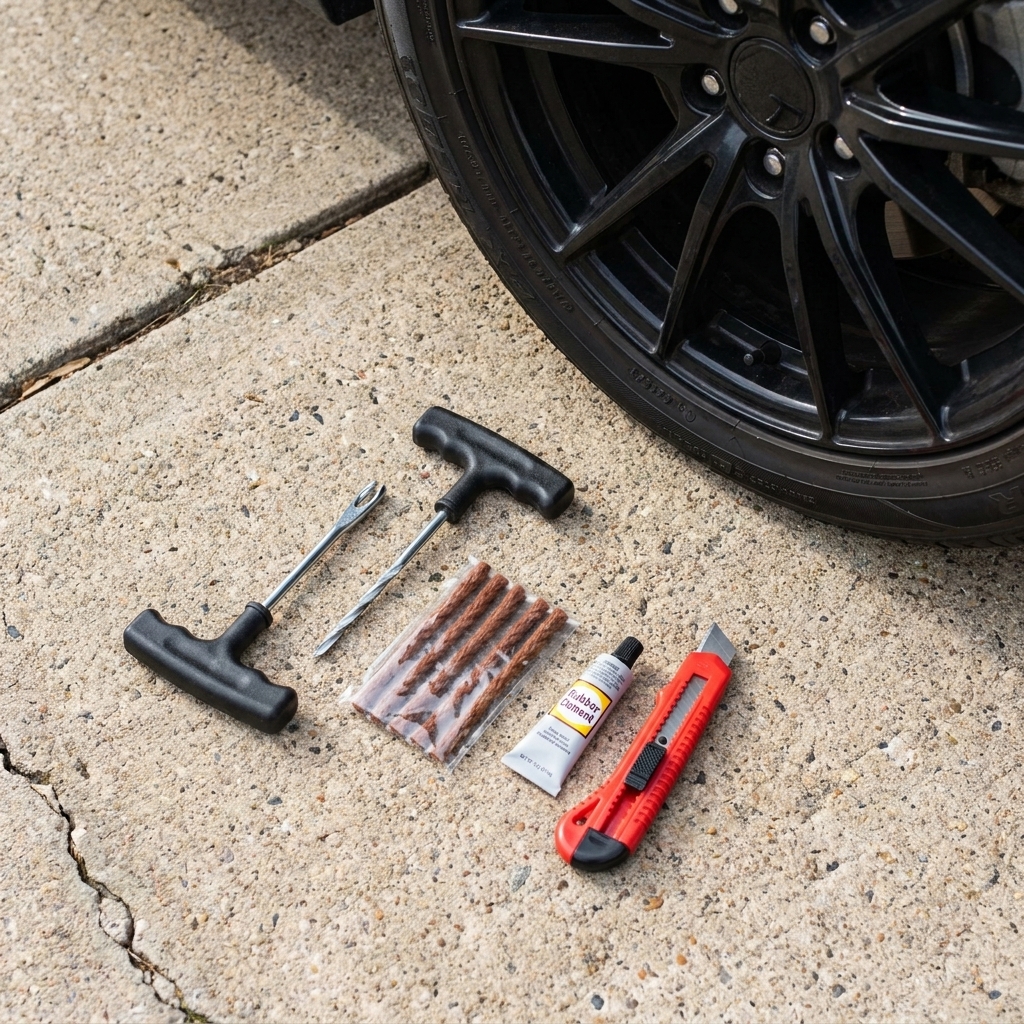
If the light goes off after you add air but comes back a few days later, you likely have a leak.
- Visually inspect the tread for screws, nails, or anything embedded.
- Spray soapy water on the suspected puncture area, the bead area where the tire meets the rim, the valve stem base, and the valve core.
- Look for bubbles that keep growing, which indicates air escaping.
A repair shop can patch most tread punctures. Sidewall damage is usually a replacement situation.
3) Mismatched tires or unusual setups
This depends on the type of TPMS you have:
- Direct TPMS: A mismatched tire size or type will not usually trigger the TPMS light by itself if pressures are correct and sensors are working. But it can complicate diagnostics, and mismatched wheels can come with sensor compatibility issues.
- Indirect TPMS: Mismatched sizes, significantly different tread depths, or an oddball spare can absolutely cause repeated warnings because the system is watching wheel speed differences.
4) You rotated tires or swapped wheels
On many cars, the system needs to relearn which sensor is at which corner after a rotation. Some vehicles figure it out automatically. Others require a relearn using a scan tool or a specific procedure.
If your dash shows individual tire positions and they are mixed up after a rotation, that is a big clue you need a relearn.
5) Sensor battery is dying
Most TPMS sensors have sealed batteries that last roughly 5 to 10 years depending on climate and mileage. When the battery gets weak, you may see:
- TPMS light flashing at startup, then going solid
- Intermittent readings on the dash (one tire shows “--” sometimes)
- Light comes and goes with no pressure changes
The fix is sensor replacement, then a relearn. Many people replace sensors when buying new tires to save on labor.
6) Sensor damage after tire service
It happens. Sensors live inside the wheel, and a careless tire machine move can crack a sensor body or snap a valve stem. If the TPMS light appeared right after tire service, go back and ask them to check sensor communication.
7) Aftermarket wheels or valve stems
If TPMS problems started right after a wheel swap, make sure the sensors are the correct frequency and style for your vehicle, and that the valve stems and sensor seals were installed correctly. Wrong parts or a pinched seal can mean leaks, weak signals, or a constant warning light.
8) Indirect TPMS needs calibration
Indirect systems use wheel speed sensors (ABS) to infer a low tire. They often require a “calibration” reset after you set tire pressures. If your vehicle has no individual PSI readouts anywhere, there is a chance it is indirect. In that case, the dash menu reset matters a lot.
Quick checklist
- Solid light? Check and set all tires to door jamb spec, cold.
- Light stays on? Drive 10 to 20 minutes above 25 mph.
- Still on? Perform your vehicle’s reset or calibration method.
- Comes back in days? Hunt for a slow leak.
- Flashing then solid? Suspect sensor battery, damaged sensor, or missing sensor. Plan for a scan tool check.
When not to ignore it
I get it. Warning lights are annoying. But low tire pressure is not just a mileage issue. It can overheat a tire and lead to a blowout, and it can make your car handle unpredictably, especially in the rain.
Stop and check immediately if:
- The TPMS light came on right after you hit a pothole or curb
- The steering feels heavy or the car pulls
- You can see a tire looks low
- You smell hot rubber after driving
If a tire is very low, do not keep driving on it. That is how good tires become unrepairable.
FAQ
Why did my TPMS light come on right after I filled my tires?
Most often: you filled to the number on the tire sidewall instead of the door jamb sticker, you checked them hot, or one tire is still low. Set pressures cold to the door jamb spec. If the light persists, run the reset or drive cycle.
Will disconnecting the battery reset the TPMS light?
Sometimes it clears the light temporarily, but it does not fix the underlying cause. If a sensor is dead or a tire is actually low, the light will come back. Also, battery disconnects can create other headaches like radio lockouts and lost window or steering angle calibrations on some cars.
How long does it take TPMS to reset after putting air in?
It varies. Some systems update within a minute of driving. Others take 10 to 20 minutes, and some need a manual reset or relearn. If you have correct pressures and the light is still on after a day of normal driving, move on to the troubleshooting steps above.
Can I replace a TPMS sensor myself?
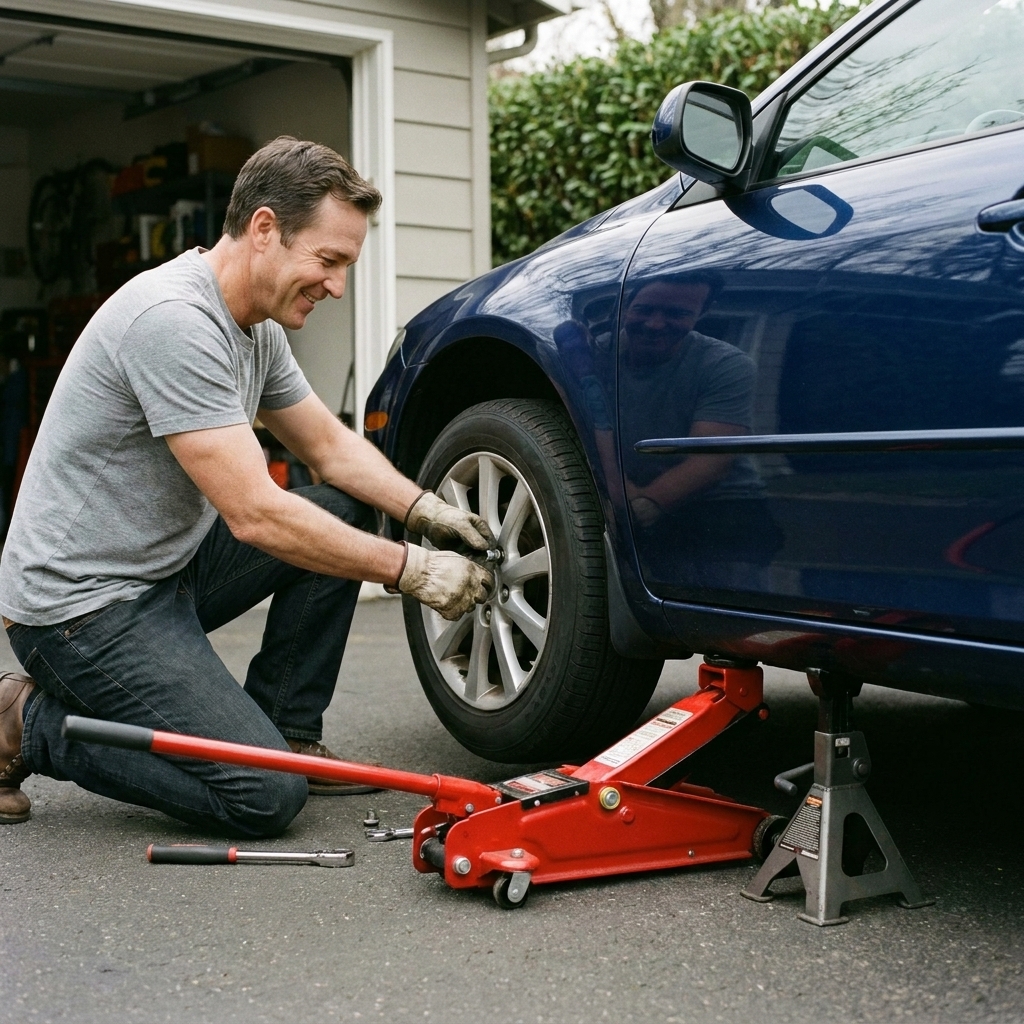
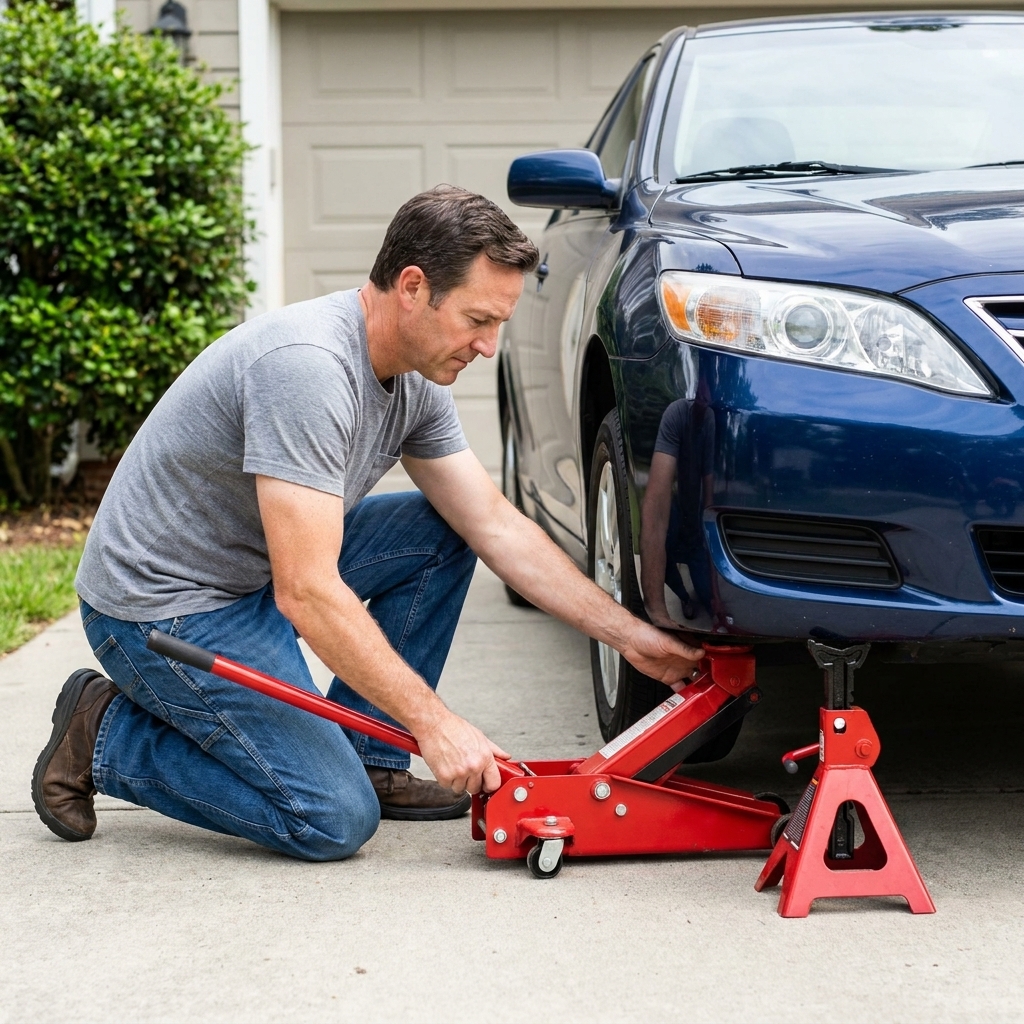
You can buy sensors and some are clamp-in or snap-in, but the tire must be unmounted from the wheel to replace it. That requires tire equipment most home garages do not have. Many DIYers do the diagnosis at home, then have a tire shop install the sensor and perform the relearn.
Do I need sensors in my winter wheels?
If your car uses direct TPMS and you run a separate winter wheel set, you will usually want sensors installed to avoid a constant warning light. Some vehicles can store multiple sensor sets, others require a relearn each season.
Last tip
If you only take one habit from this article, make it this: check pressures monthly with your own gauge. TPMS is a warning system, not a maintenance plan. When you stay ahead of tire pressure, the TPMS light mostly becomes what it should be: an occasional heads-up, not a weekly annoyance.