A nail in the tread is one of those problems that feels like a day-ruiner until you realize it can be a 20-minute fix with the right kit and a calm approach. A basic rope plug repair is meant to get you rolling again so you can drive to a tire shop for a proper inspection, an internal patch-plug repair, or replacement if needed. Some shops and manufacturers do not consider an external plug alone an approved permanent repair, so expect policies to vary.
I’ll walk you through the whole job: finding the leak, plugging it correctly, airing the tire back up, and checking your work. If you take your time and follow the safety notes, this is absolutely a skill you can learn.
Before you plug it: when a plug is OK and when it is not
A plug can be a solid temporary repair for a small puncture in the tread area. But there are times you should not plug the tire at all.
OK to plug (usually)
- Puncture is in the tread, in the central tread area (not the shoulder). As a rule of thumb, think the center portion of the tire, not the outer edges where the tread curves down.
- Hole is small (think nail or small screw). In general, punctures around 1/4 inch (6 mm) or less are the kind of damage that is often repairable, but a shop should confirm.
- Tire is holding at least some air and you did not drive far while flat.
Do not plug if you see any of this
- Sidewall or shoulder puncture (near the edge where the tread curves down). Sidewalls flex too much for a plug to be safe.
- Big cut, gash, or torn rubber.
- Multiple punctures close together.
- Tire was driven on while very low or flat. That can destroy the tire internally even if the outside looks fine.
- Bulge, bubble, or exposed cords anywhere on the tire.
- Run-flat tire uncertainty. Many run-flats can be damaged internally without looking dramatic on the outside. If it is a run-flat, treat this as a “get it to a pro” situation and follow the tire maker’s guidance.
If any of those apply, install the spare or call for help. A plug is not worth gambling with your safety.
What you need
Most basic plug kits look similar, and that is a good thing. Here is what I like to have on hand.
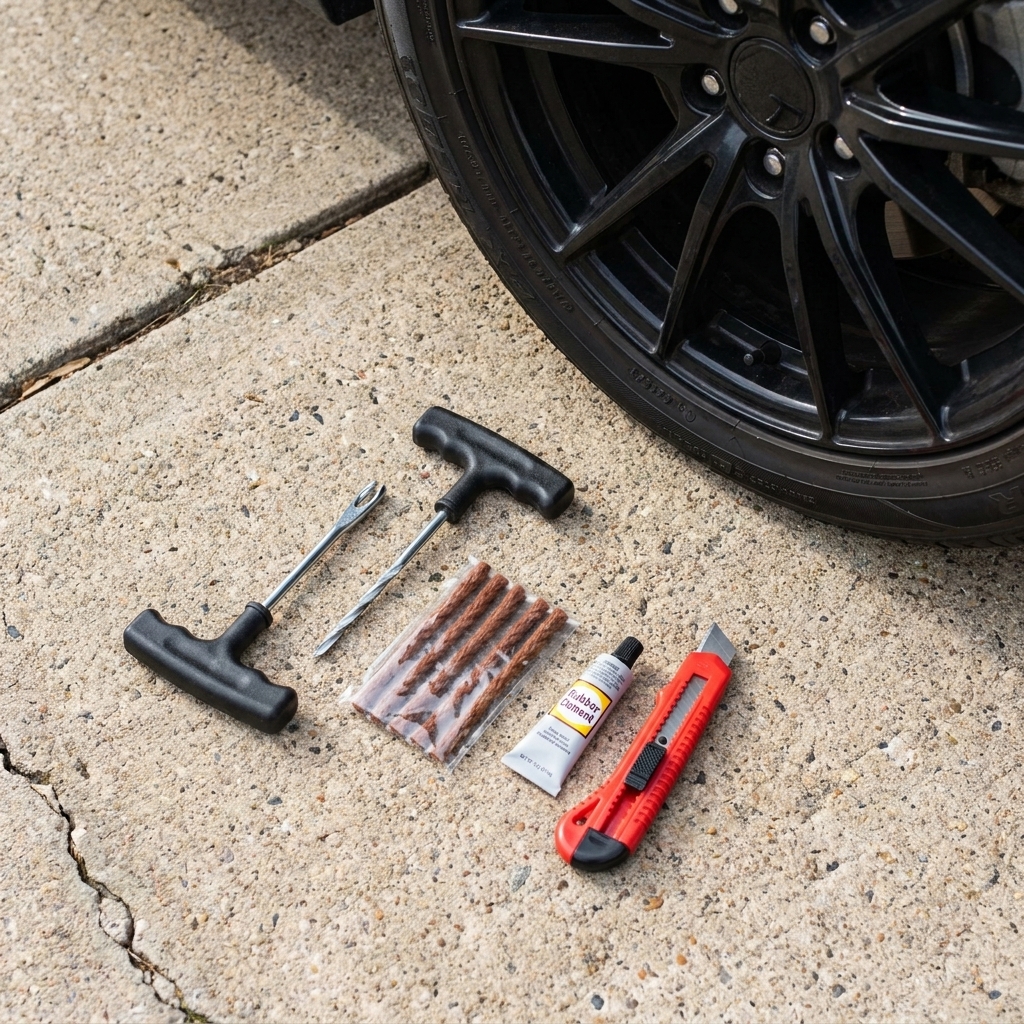
- Tire plug kit with: T-handle reamer, insertion tool, rope plugs, and rubber cement (if included)
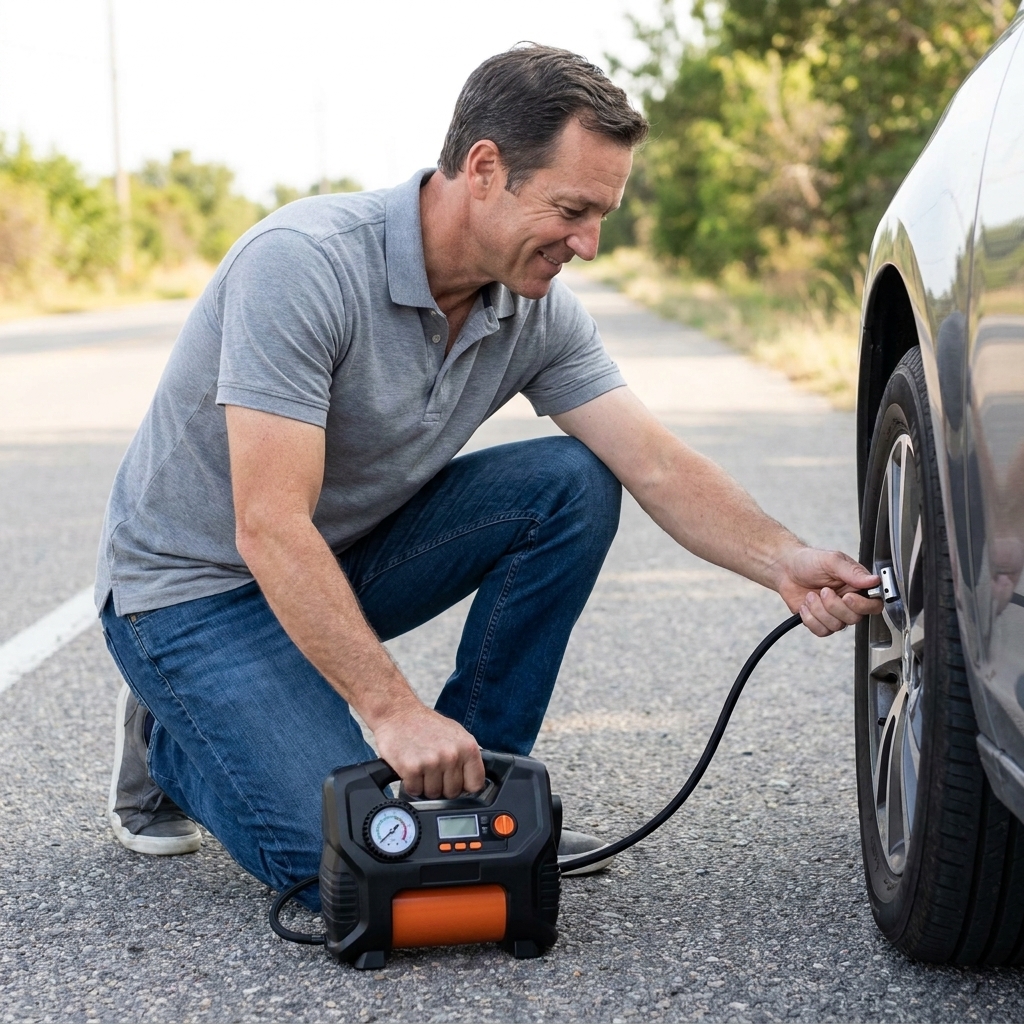
- Air source: portable 12V inflator, shop compressor, or a reliable pump
- Soapy water in a spray bottle (dish soap plus water works great)
- Pliers (or locking pliers) to pull the nail or screw
- Utility knife or razor blade to trim the plug
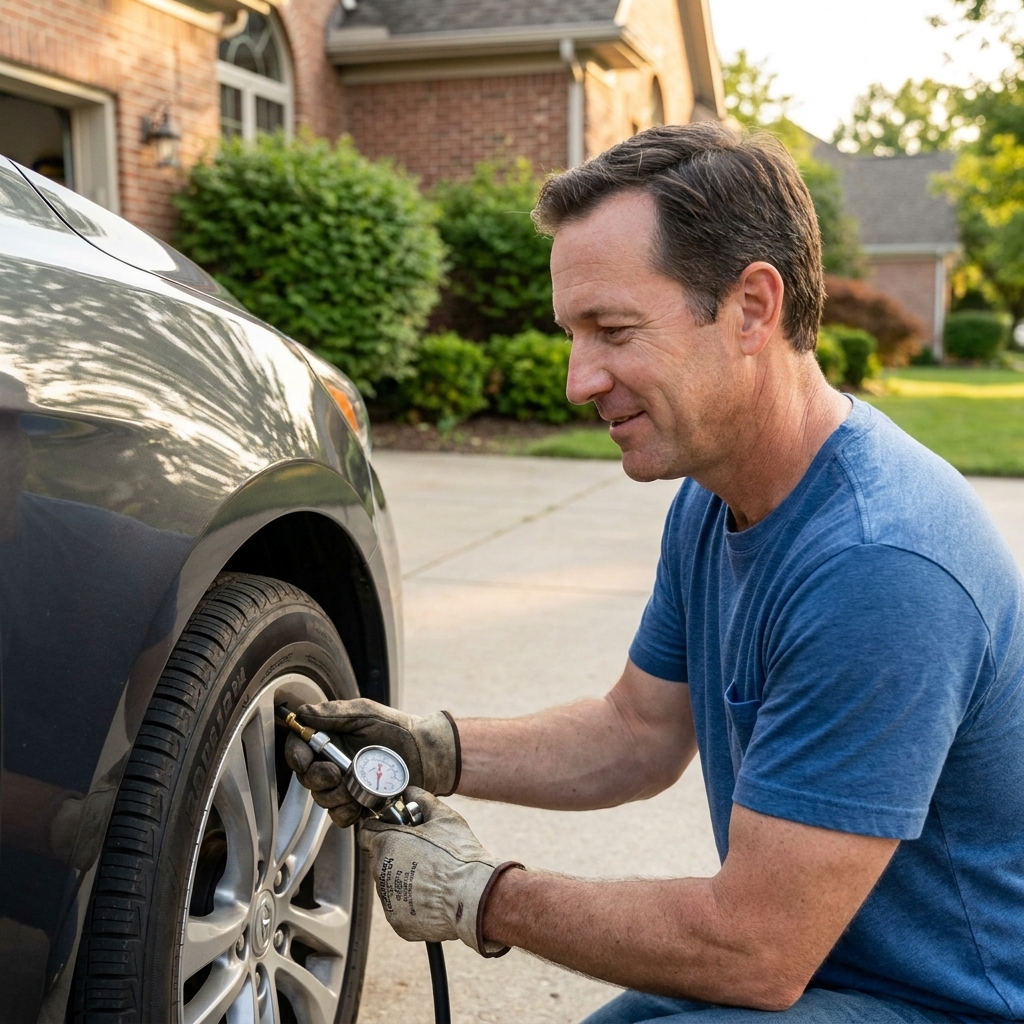
- Tire pressure gauge
- Gloves and eye protection
- Jack and jack stand (optional but helpful). Sometimes you can plug without lifting the car, but do not force it.
Step 1: Get safe and set yourself up
Start by moving to a safe, flat spot away from traffic. Turn on hazards. Set the parking brake. If you are on the shoulder, stay aware of passing cars. No repair is worth becoming invisible to someone staring at their phone.
- Chock a wheel if the car is on any kind of slope.
- Do not crawl under the car for any reason during this job.
- If you jack the car up, use a jack stand. A plug job is not complicated, but gravity is undefeated.
Step 2: Find the puncture
Sometimes you get lucky and see a shiny screw head right away. Other times the leak is sneaky. Here is my method from the shop days.
Quick visual and touch check
- Slowly roll the car a foot or two (if safe) and look for a nail or screw in the tread.
- Listen for hissing.
- Look for something dark and wet, or a tiny line of rubber dust around a puncture.
Use soapy water to confirm
Spray soapy water over the tread blocks and grooves, especially where you suspect the puncture is. Bubbles that keep growing point right at the leak.
If the tire is very low, add a little air first. A tire with 5 psi can leak so slowly you will miss it. Bring it up enough to make bubbles, then hunt again.
Once you find one puncture, take 30 seconds and scan the rest of the tread. It is not common, but it is absolutely possible to have more than one leak.
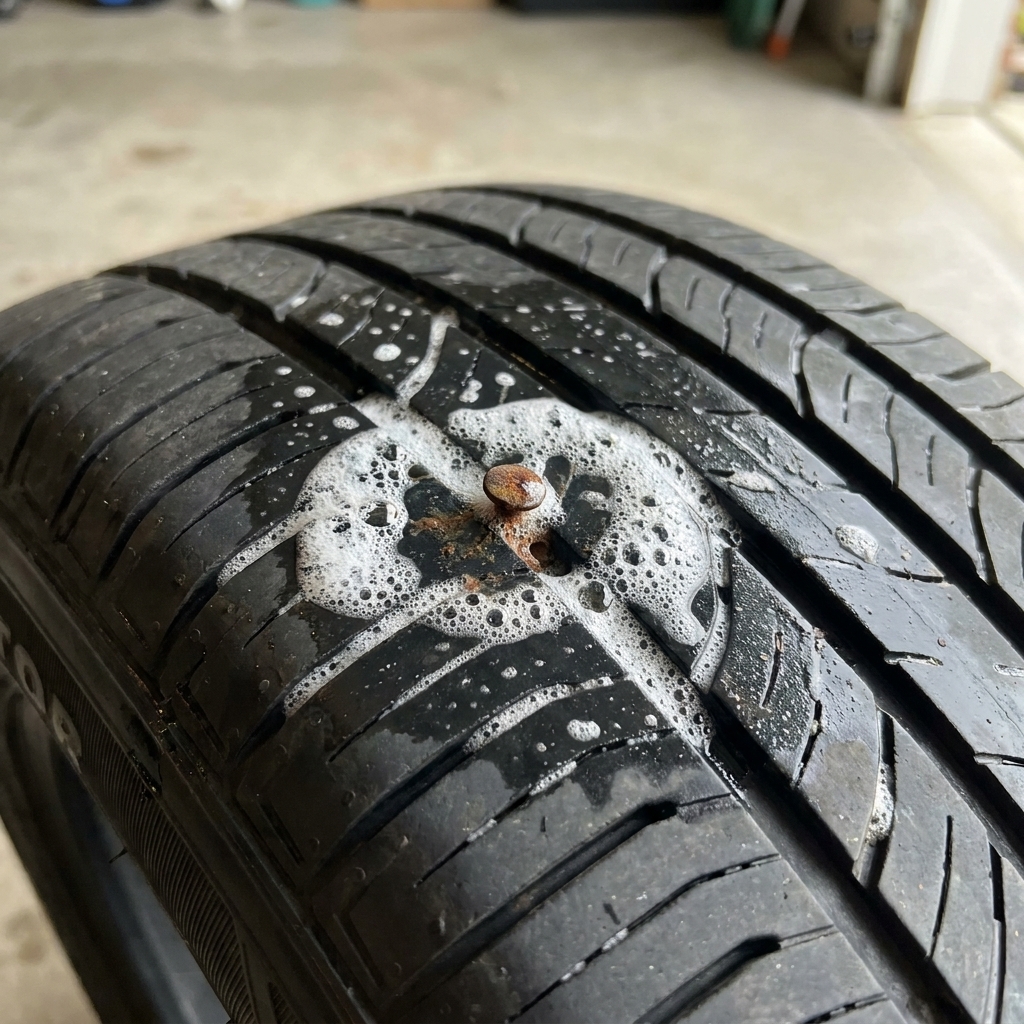
Step 3: Mark it and pull the nail
Once you find the leak, mark it. Chalk is great, but even a key scratch in a tread block works in a pinch. The point is to avoid losing the hole when you set your tools down.
Use pliers to pull the nail or screw straight out. If it is a screw, you can often back it out with a screwdriver, but pliers work fine if you can grip it.
Tip: The tire will usually hiss harder once you pull the object. That is normal. This is why you want your plug kit opened and ready before you yank anything out.
Step 4: Ream the hole
This is the part that makes most first-timers nervous. The reamer tool roughs up and slightly sizes the hole so the plug can grab and seal.
- Insert the reamer into the puncture. Use firm, controlled pressure.
- Work it in and out several times.
- Follow the original angle of the nail or screw. If the puncture went in at an angle, match that path so you do not chew up belts by forcing a new direction.
- Leave the reamer in place if the tire is losing air quickly. It acts like a temporary stopper while you prep the plug.
If you cannot get the reamer in, check that you are aligned with the original puncture angle. Nails often go in at a slight angle, not perfectly straight.
Step 5: Load the plug and add cement
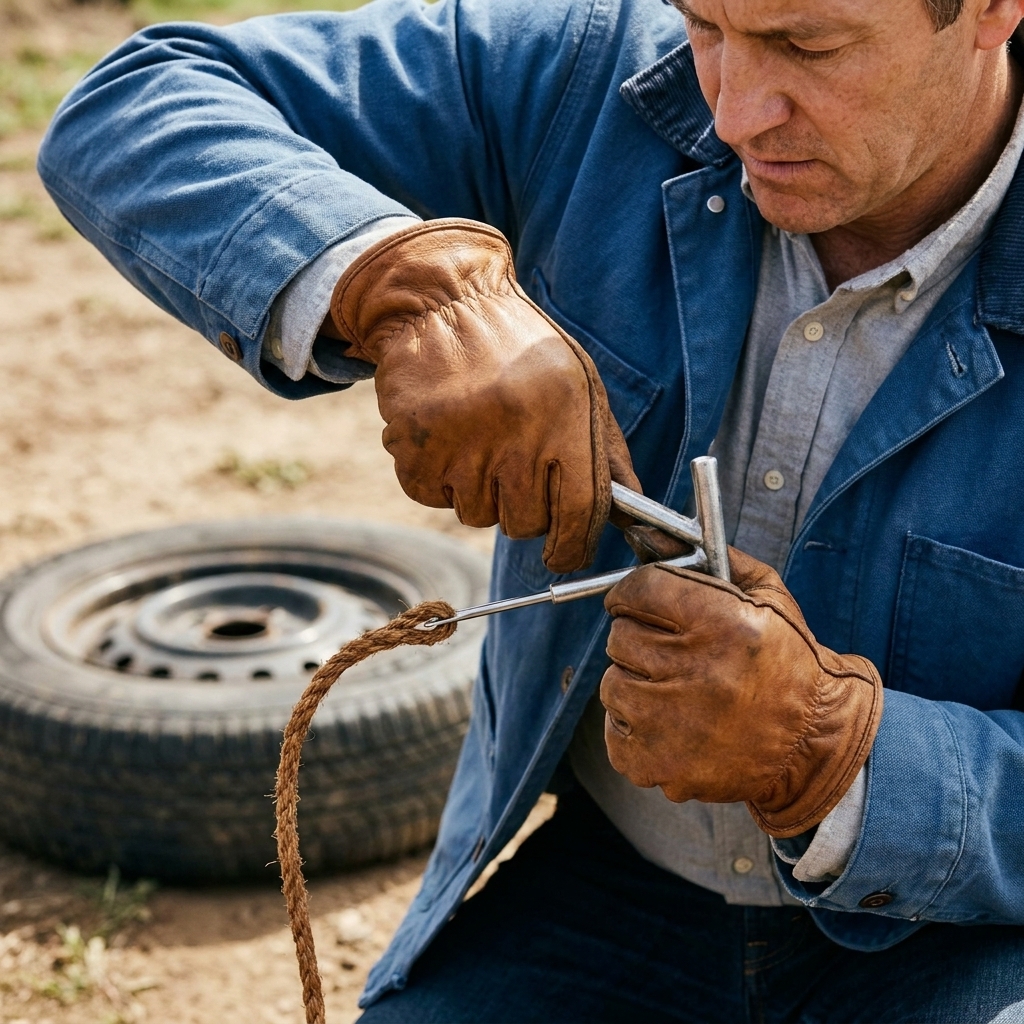
Take one rope plug and thread it through the eye of the insertion tool so it is centered, like a little piece of jerky hanging evenly on both sides.
If your kit includes rubber cement, coat the plug and the tip of the insertion tool. Some kits are designed to work dry, but cement usually makes insertion smoother and helps seal small imperfections.
Step 6: Install the plug
This is where you commit. The goal is to get most of the plug into the tire while leaving a little bit sticking out so it can seal.
- Remove the reamer (if you left it in).
- Immediately insert the plug tool into the hole, following the same angle as the puncture.
- Push until about 1/2 inch to 3/4 inch of plug remains outside the tread. This takes muscle. Brace yourself and push steadily.
- Pull the tool straight out with a quick, firm motion. The split-eye design should let the tool slip out while the plug stays behind.
If the plug comes out with the tool, do not panic. Ream the hole again, reload a new plug, and try once more. Also check whether your insertion tool has a slotted end, and make sure you are pulling straight out.
Step 7: Trim the plug and reinflate
Use a razor blade or utility knife to trim the excess plug flush with the tread. It does not need to be perfect. Just do not leave a big tail that can get tugged by the road.
Reinflate the tire to the pressure listed on the driver’s door jamb sticker (not the max PSI on the tire sidewall). Use a gauge and be precise.
Step 8: Leak check and clean up
Spray soapy water on the plugged area. You want to see no continuous bubbling. If bubbles keep growing, it is still leaking.
If it still leaks
- Try pushing the plug a little deeper (if there is a lot sticking out).
- If it is clearly not sealing, pull the plug out with pliers, ream again, and install a fresh plug.
- If you cannot get it to seal after a couple attempts, stop and go to a tire shop or install the spare.
Once it holds air, put your tools away, and wash your hands. Tire plug cement smells rough, and it loves to migrate onto steering wheels.
How far can you drive on a plugged tire?
Here is my shop-floor honesty: a rope plug is best treated as a get-you-home or get-you-to-a-shop repair. Many people drive thousands of miles on a plug with no issues, but you cannot see internal tire damage from the outside, and that is the real risk.
My recommendation for most drivers is simple:
- Drive gently, avoid high speeds if you can, and avoid heavy loads.
- Go straight to a tire shop for an internal inspection and a proper patch-plug repair if the tire is repairable.
- Check tire pressure daily for the next week. Then check it weekly.
Common mistakes I see
Plugging the shoulder or sidewall
If the puncture is near the edge, do not talk yourself into it. That area flexes and runs hotter. Use the spare.
Not reaming enough
If the hole is too tight, you fight the plug, and you can end up with a half-installed plug that leaks. Reaming feels aggressive, but it is part of the process.
Forcing the wrong angle
If the puncture went in at an angle, follow that same path with the reamer and insertion tool. Trying to straighten it out can tear rubber and belts and make sealing harder.
Underinflating afterward
A tire at 24 psi might “look fine” but it runs hot and wears out fast. Set it to the door sticker spec.
Ignoring the reason the tire went low
If the tire was driven on while soft, the sidewalls may be damaged inside. If it rode low for miles, have it inspected even if the plug seals perfectly.
FAQ
Can I plug a tire without taking the wheel off?
Often, yes. If the puncture is accessible and you can work the tools safely, you can plug it on the car. If the hole is near the ground or you cannot get a straight shot with the reamer and insertion tool, jack the car up and support it with a stand.
What if I cannot find the leak?
Add air, then use soapy water across the whole tread. Also spray around the valve stem and bead area. If bubbles form at the valve stem, the valve core may be loose. You can gently tighten it with a valve core tool, but do not crank on it. If it still leaks, replace the core or have a shop handle it.
Is a plug the same as a patch?
No. A plug seals from the outside. A patch is applied from the inside after the tire is removed from the wheel. The most robust repair for a tread puncture is typically an internal patch-plug combination installed by a tire shop.
Will the tire pressure light go off after a plug?
Usually it will after you inflate to the correct pressure and drive a bit, but some cars require you to reset the TPMS system. If the light stays on, verify pressure with a gauge first , then check your owner’s manual for the reset procedure.
My parting advice
A tire plug kit is one of the best cheap tools you can keep in the trunk, right next to a good inflator. The trick is respecting its limits. Plug tread punctures, avoid sidewalls, and treat the plug as a smart temporary repair until a tire shop can confirm the tire is truly safe.
If you want to build confidence, practice at home with an old tire sometime. The first time you feel that plug slide in and seal, you will wonder why it ever felt intimidating.