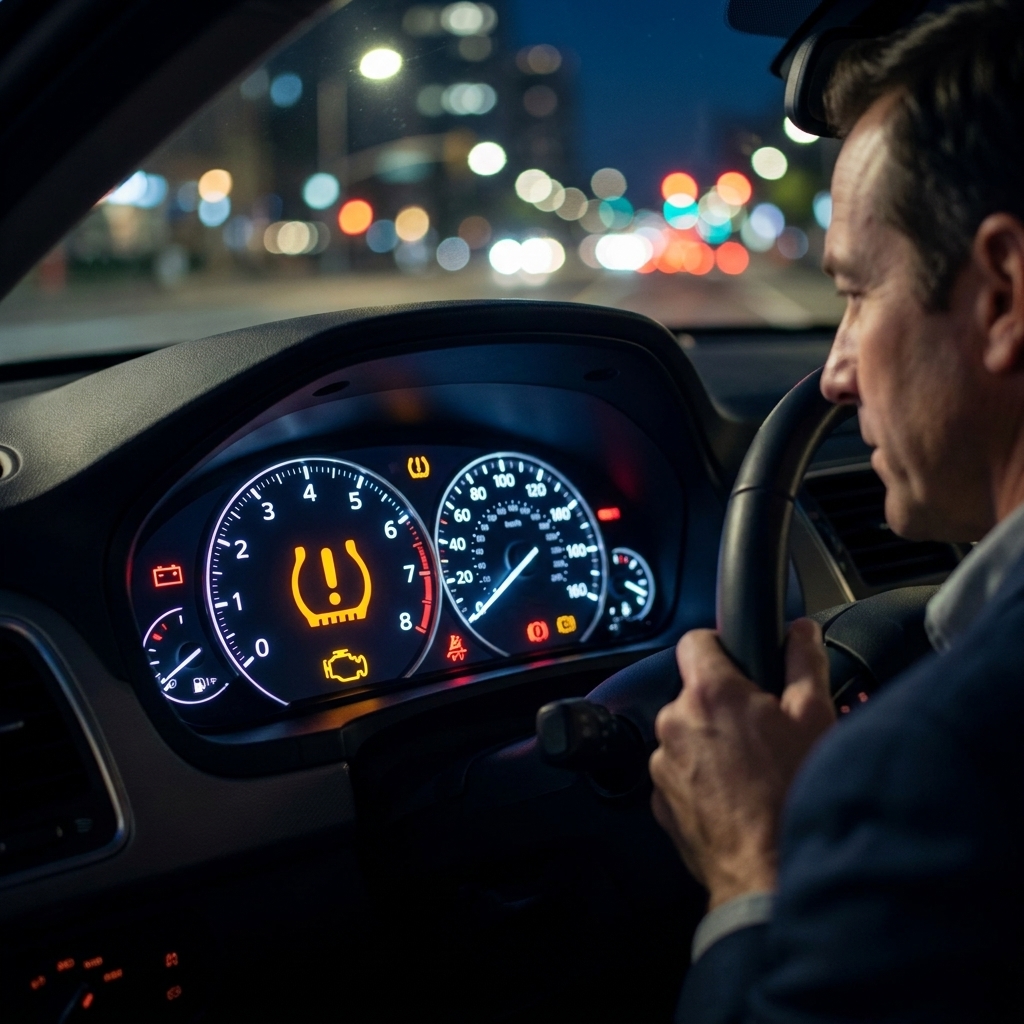
If you have ever been driving along, minding your own business, and your dash lights up like a slot machine, you are not alone. Dashboard warning lights are your car’s way of tapping you on the shoulder. Some are polite reminders. Others are the automotive version of a fire alarm.
This guide is built around one practical question: Do I need to pull over right now, or can I drive it home? I will keep it plain-English, give you safe checks you can do on the shoulder or in a parking lot, and tell you what not to do so you do not turn a simple problem into a blown engine or a brake scare.

First, the color rule
Most dashboards follow a simple color logic:
- Red: Stop soon or stop now. A system that keeps you safe or keeps the engine alive may be compromised.
- Amber or yellow: Caution. Usually safe to drive gently for a short time, but it needs attention.
- Green or blue: Information. Headlights, cruise control, turn signals, and so on.
The big exception: a flashing check engine light is basically a red alert even though it is usually amber. Flashing often means a severe misfire that can damage the catalytic converter quickly.
When in doubt, treat a new red light like it is serious. Pulling into the nearest safe spot and taking two minutes to think beats pushing your luck and paying for it later.
Pull over now
These are the ones that can turn into an unsafe situation or major engine damage fast. If a red light comes on and stays on, find a safe place to pull over. If the car is making awful noises, losing power, or you smell smoke or burning, shut it down.
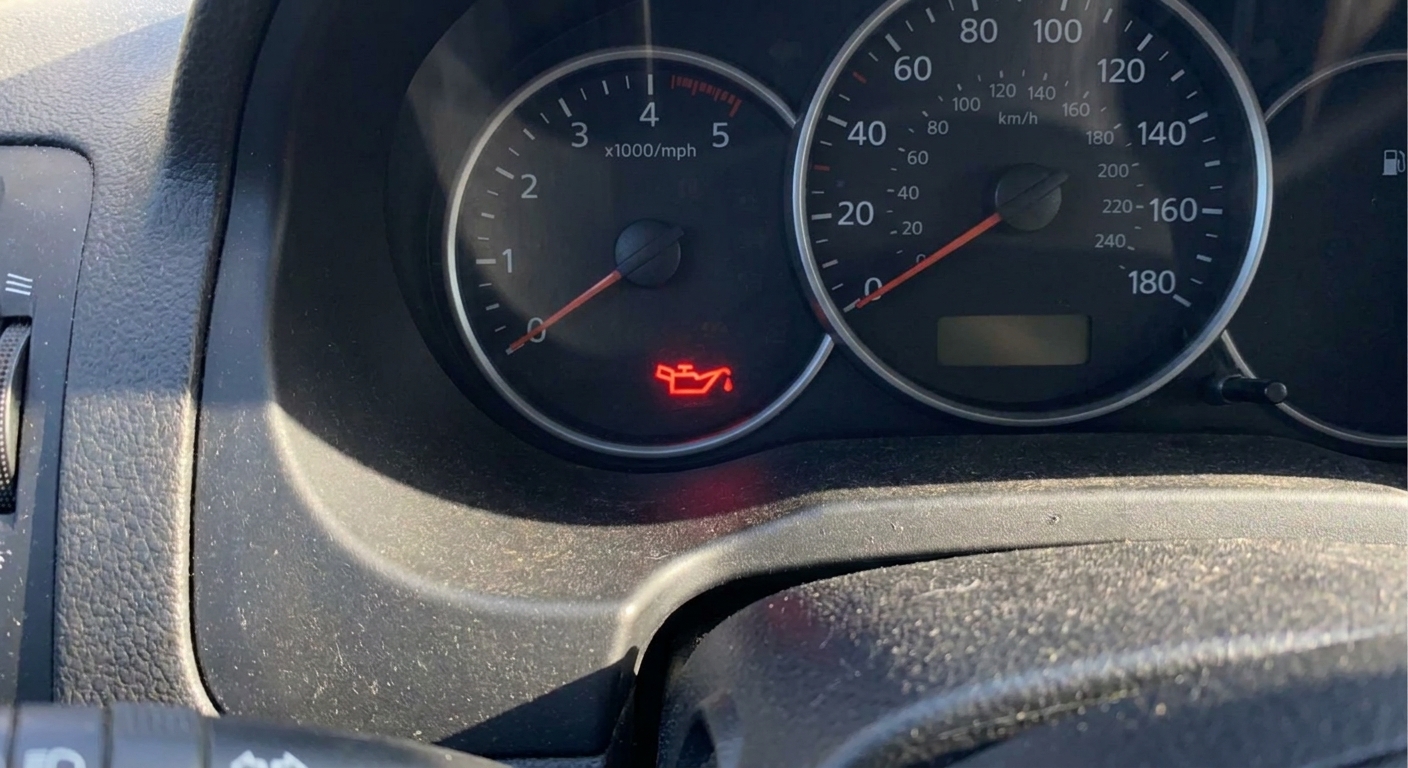
Oil pressure warning (oil can icon)
What it means: Your engine may not be getting oil pressure. That is different from “low oil level.” No oil pressure can destroy an engine in minutes.
- Do now: Safely pull over, shut the engine off.
- Quick check: Check the dipstick level if you can do it safely on level ground. If it is low, add oil, but understand this light can also mean a failed oil pump, clogged pickup, a major leak, or a failed sensor.
- Do not: Keep driving to “see if it goes away.”
Note: Some vehicles also have an amber low-oil-level warning that is separate from the red oil pressure light. Your owner’s manual is the tie-breaker.
Engine temperature warning (thermometer icon) or “HOT”
What it means: The engine is overheating, or the coolant temp is dangerously high.
- Do now: Turn off A/C. If you must limp a very short distance to a safer pull-off, you can turn the heat to full hot as an emergency heat sink only if it does not compromise visibility or your safety (fogging, heat stress). Stop as soon as you safely can.
- Quick check: After the engine cools, check coolant level in the reservoir. Look for a broken belt, coolant puddle, or steam.
- Do not: Open the radiator cap on a hot engine. That is how people get burned.
Brake warning light (red “BRAKE” or circle with exclamation)
What it means: Could be the parking brake is on, low brake fluid, or a brake system fault. Low brake fluid often means the pads are worn or there is a leak. Some cars also have separate amber brake system or electronic parking brake indicators, so the owner’s manual matters here.
- Do now: Confirm the parking brake is fully released. If the light stays on, treat it as serious.
- Quick check: Check brake fluid in the reservoir if accessible. If it is low, do not just top off and ignore it. Find out why it is low.
- Do not: Continue driving if the brake pedal feels soft, sinks, or braking distance increases.
Charging system warning (battery icon)
What it means: The alternator may not be charging the battery. Once the battery drains, the car will stall and may not restart.
- Do now: Turn off high electrical loads (rear defroster, heated seats). Head toward a safe stop or repair shop immediately.
- Quick check: Look for a loose or broken serpentine belt under the hood if safe.
- Do not: Assume “it’s just the battery.” This light is usually the charging system, not battery health.
Power steering warning (red steering wheel icon) with heavy steering
What it means: Loss of power assist. You can still steer, but it can become very heavy, especially at low speed. If assist drops out suddenly at speed, it can surprise you.
- Do now: Keep a steady grip, reduce speed smoothly, and pull over when safe if steering effort is suddenly much higher.
- Quick check: Listen for belt squeal on hydraulic systems. Electric systems may log a fault and limit assist.
Airbag or SRS warning (person with a circle)
What it means: The airbag system may be disabled or compromised. This is not usually an “instant pull over” item if the car drives normally, but it is immediate from a safety standpoint. If you are headed out on a road trip with family, fix it before you roll miles.
- Do now: Drive cautiously and schedule diagnosis ASAP.
- Do not: Ignore it for months. You may not have airbags in a crash.
Drive gently and fix soon
These lights mean you should reduce stress on the car and plan a near-term fix. If the vehicle is driving strangely, overheating, or making new noises, bump it up a level and stop sooner.
Check engine light (solid)
What it means: The car’s computer detected a fault. It can be minor (loose gas cap) or important (misfire, sensor failure, emissions issue).
- Do now: Note any symptoms: rough idle, loss of power, fuel smell.
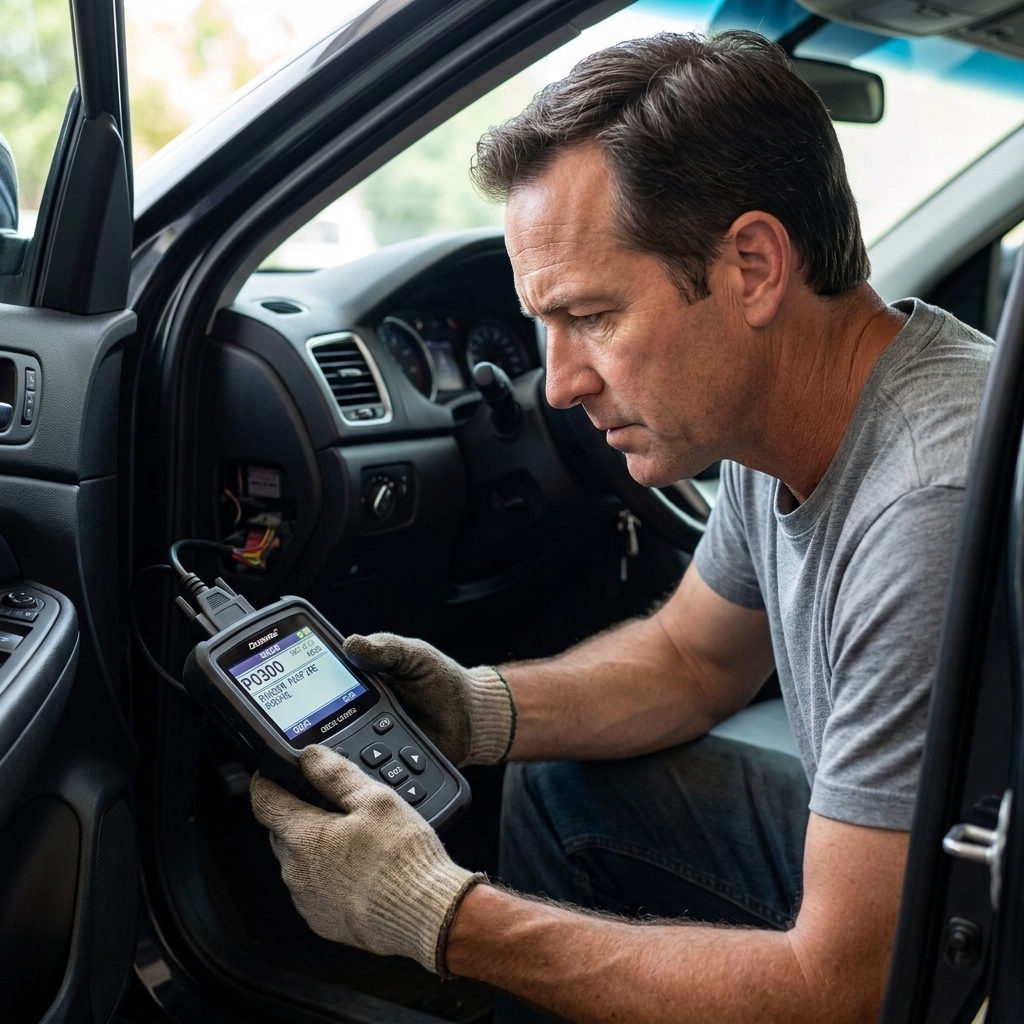
- Quick check: Tighten the gas cap until it clicks. If the light stays on, pull codes with an OBD2 scanner.
- Safe to drive? Often yes, if the car runs normally. But do not ignore it. Small issues snowball.
Check engine light (flashing)
What it means: Typically an active misfire severe enough to damage the catalytic converter. Treat it like a “stop now” warning.
- Do now: Ease off the throttle, avoid hard acceleration, and pull over as soon as safely possible.
- Best move: Tow it if it continues flashing or the engine shakes.
ABS warning light
What it means: Anti-lock braking is disabled, but normal braking usually still works.
- Do now: Drive with extra following distance, especially in rain or snow.
- Quick check: If you also have a red brake warning light, treat it as higher priority.
Traction control or stability control (sliding car icon)
What it means: If it is flashing, the system is actively helping traction. If it is solid, the system may be disabled or has a fault. A single wheel speed sensor issue can light up ABS, traction, and stability warnings together.
- Do now: If solid, drive carefully and diagnose soon. Common culprits include wheel speed sensors and steering angle calibration issues.
Transmission temperature warning
What it means: The transmission fluid is overheated. This can shorten transmission life quickly.
- Do now: Treat this as “stop and cool.” Pull over when safe, shift to Park, and let it cool. Avoid towing, steep hills, and stop-and-go if possible.
- Quick check: Look for leaks. Check transmission fluid level only if your vehicle has a dipstick and the manual specifies a safe procedure.
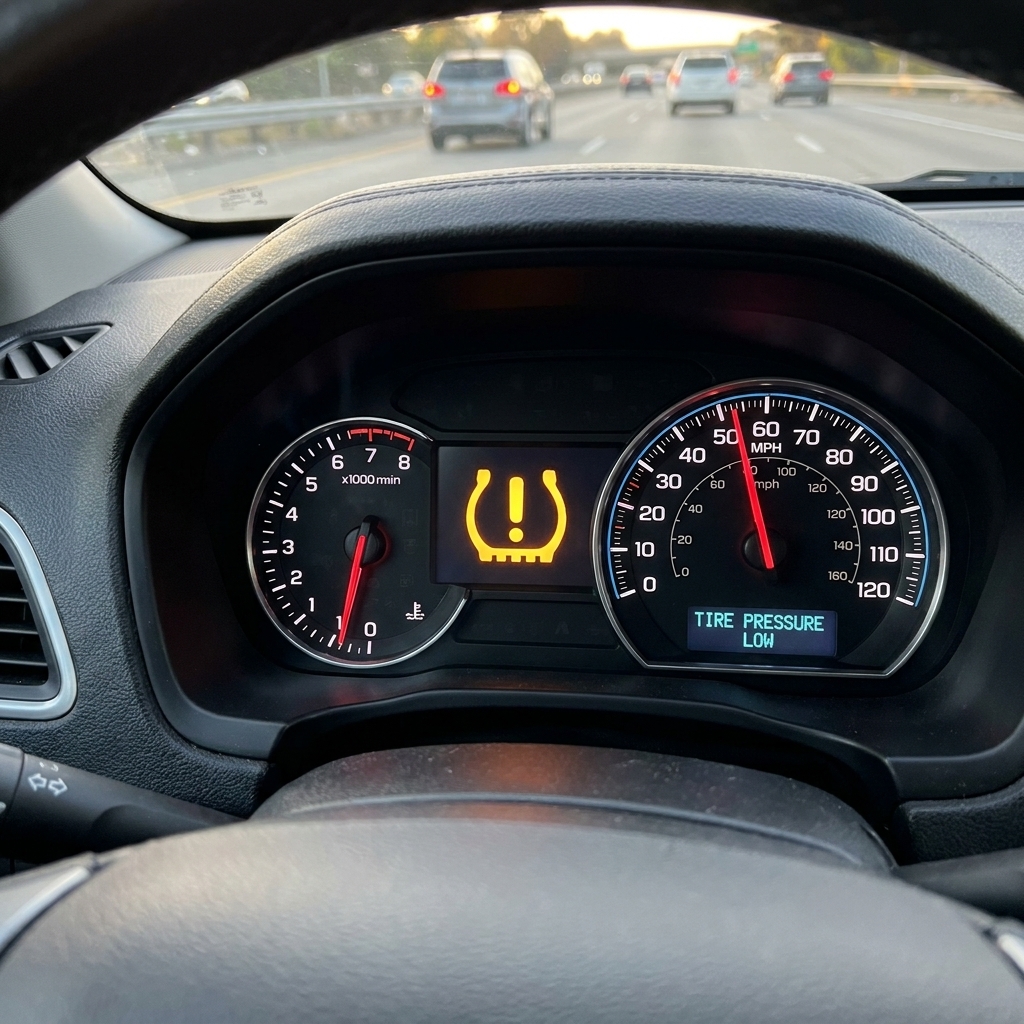
TPMS (tire pressure monitoring) light
What it means: One or more tires is low, or the system has a fault.
- Do now: Slow down and visually inspect tires. Use a tire gauge as soon as possible.
- Safe to drive? Usually, yes, for a short distance if the tire is not visibly low. If a tire looks low, stop and air it up or install the spare.
Usually safe to drive home
These lights are still worth understanding, but they rarely mean you need to stop immediately if the car drives normally.
Low fuel
Not a mechanical emergency, but running out of fuel can strand you in a dangerous spot. On some in-tank fuel pump designs, consistently running very low may add extra heat and wear. Either way, get fuel soon.
Washer fluid low
Top it off when you can. If you are driving in winter slop, washer fluid becomes a safety item fast.
Maintenance reminder or “Service” light (not check engine)
This is often mileage-based. It might mean oil change due, tire rotation due, or scheduled service.
- Do now: Verify what the reminder corresponds to in your owner’s manual. Do not confuse it with a check engine light.
Exterior bulb out
Fix it soon for safety and to avoid a ticket, but you can typically drive home in daylight if you still have required lights.
Fog light, high beam, cruise control indicators
These are informational. Blue high-beam lights are normal when highs are on.
Hybrid and EV warnings
Hybrids and EVs add a few lights that can look scary if you have only driven gas cars.
Master warning light (often a triangle) and “Check hybrid system”
What it means: A broad warning that could range from minor to serious. The message center usually provides more detail.
- Do now: Read the message, reduce load, and avoid hard acceleration. If you get reduced power or warning messages stack up, stop soon and arrange service.
High-voltage system warning
Treat this as serious. If the car requests you to stop, follow that instruction. High-voltage faults are not a DIY guessing game on the shoulder.
Regenerative braking reduced
This usually means the car will rely more on friction brakes. Drive with extra following distance and get it checked if it persists.

What to do when a light comes on
Here is the exact routine I use when I am test-driving a car after a repair and a light surprises me. You can use the same checklist.
1) Check the feel, smell, and sound
- Feel: Any loss of power, vibration, brake pedal change, or heavy steering?
- Smell: Burning oil, hot coolant sweet smell, electrical burning?
- Sound: Knocking, squealing belt, grinding, loud fan roar?
2) Look at the temperature gauge
If it is climbing toward hot, treat it as an overheating event even if the light is not on yet.
3) Get to a safe spot
Parking lot beats shoulder. Shoulder beats “just one more exit” if the warning is oil pressure or temperature.
Safety note: On a high-speed shoulder, it can be safer to stay buckled in the vehicle (if you are out of traffic and not in danger from smoke or fire) and call for help than to stand outside doing DIY checks.
4) Pull up the owner’s manual
Most manuals are online as PDFs. Search your year, make, model, and “warning lights.” The manual tells you what the manufacturer wants you to do, not what your buddy thinks you can get away with.
5) If the check engine light is involved, scan it
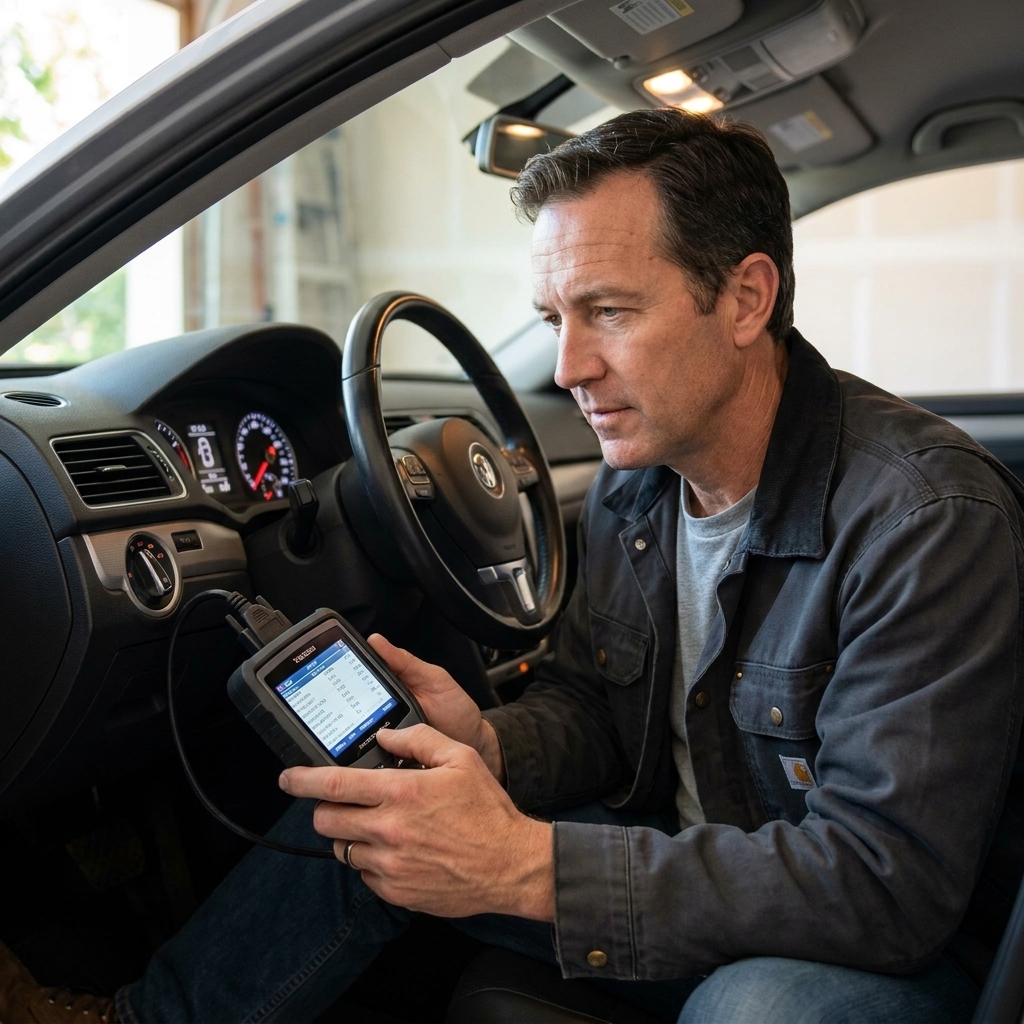
A basic OBD2 reader is one of the best DIY tools you can own. Codes do not magically tell you the broken part, but they point you to the system so you stop throwing money at guesses.
Quick “can I drive it?” sheet
Use this as a starting point. Always factor in symptoms like overheating, smoke, loud noises, or loss of braking.
- Pull over now: Oil pressure, overheating, brake warning with poor braking, charging system (get to a safe stop quickly), severe steering assist loss, flashing check engine.
- Drive gently and fix soon: Solid check engine, ABS, stability control fault, TPMS, airbag or SRS.
- Stop and cool: Transmission temperature warning.
- Usually okay until home: Washer fluid, low fuel, maintenance reminders, informational blue or green indicators, bulb-out warning (use judgment and local laws).
Misconceptions that cost money
“The oil light just means add oil”
Nope. Many cars have a separate low-oil-level message. The red oil can is typically oil pressure. If that light is on while the engine is running, you might be seconds away from metal-on-metal damage.
“If the light turns off, the problem is gone”
Intermittent problems are still problems. A loose battery cable, failing wheel speed sensor, or small evap leak can come and go. The code often remains stored even if the light disappears.
“ABS light means no brakes”
Usually you still have normal braking, but you lose anti-lock protection. You need more following distance and extra caution on slick roads.
“I can top off brake fluid and it’s fixed”
If the fluid is low, the system is telling you something. Worn pads, a leak, or a caliper issue does not fix itself.
FAQ
Why is my dashboard lit up like a Christmas tree after I changed the battery?
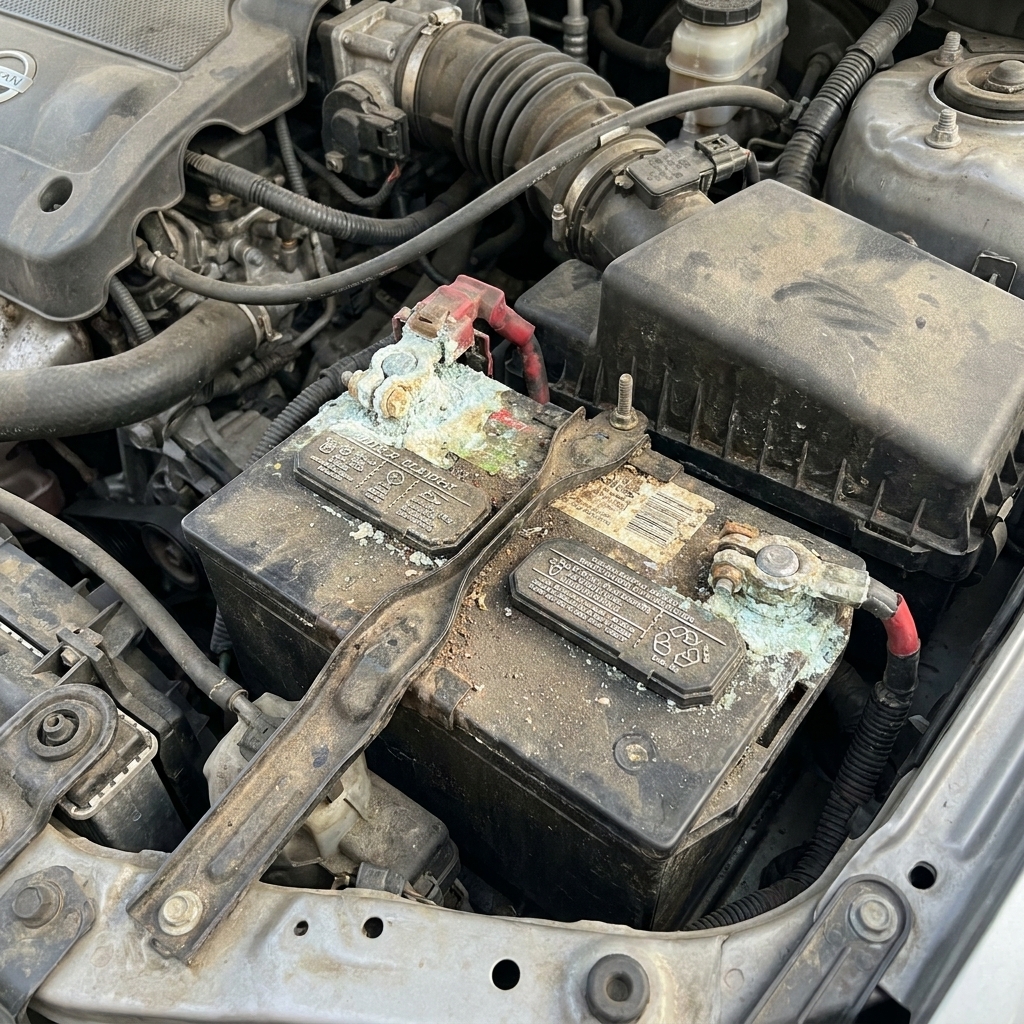
After a battery disconnect, some cars need steering angle sensor recalibration, window re-initialization, or a short drive for modules to relearn. If warning lights persist after a few miles and a restart, scan for codes. Also double-check battery terminals are tight and clean.
Can I drive with the check engine light on?
If it is solid and the car drives normally, you can often drive home or to a shop. If it is flashing or the engine is shaking, stop driving and arrange a tow.
What if multiple lights come on at once?
Start with the fundamentals: battery voltage and charging, engine temperature, and brake feel. A weak battery or charging issue can trigger a bunch of unrelated warnings because modules hate low voltage. And sometimes one root issue, like a wheel speed sensor fault, can light up ABS, traction, and stability together.
Do I need a special scanner for ABS and airbag lights?
Often, yes. Many cheap scanners only read generic engine codes. For ABS, SRS, and body modules, look for a scanner that supports those systems for your make, or use a reputable shop for diagnosis.
Is it safe to reset codes or disconnect the battery to turn the light off?
Turning the light off does not fix the issue. You also erase helpful data that makes diagnosis easier. Fix the cause first, then clear codes.
Closing advice
If you take nothing else from this guide, take this: oil pressure and overheating are the two fastest ways to turn a running car into a non-running car. If either warning pops up, your best money-saving move is to stop and think, not push your luck.
And if you want to feel more in control the next time a light comes on, toss a tire gauge and a basic OBD2 reader in your glove box. A little information beats a lot of anxiety.