Nothing raises your blood pressure like turning the key and getting… nothing. I have been there, usually at the worst possible time, usually with coffee getting cold in the cup holder. The good news is that most no-start problems can be narrowed down with a handful of simple checks, and you do not need to be a master tech to do it.
This guide walks you through the three usual suspects for a no-start: battery, starter, and alternator, plus the sneaky stuff that looks like a dead battery but is really just a loose connection.
Safety first and tools you actually need
Before you start poking around under the hood, do these basics:
- Park safely: Flat ground, in Park (or neutral), parking brake on.
- Keep hands and clothing clear of belts and fans. If the engine suddenly starts, you want nothing near moving parts.
- No smoking or sparks near the battery. Batteries can vent hydrogen gas.
- If you must jump-start, follow the steps carefully to avoid damaging electronics.
Tools that make this easy:
- Digital multimeter (the best cheap diagnostic tool you will ever buy)
- 10mm wrench or socket for most battery terminals
- Battery terminal brush or an old toothbrush and baking soda and water
- Jump pack or jumper cables
- Flashlight
Step 1: What happens when you try to start it?
Your car gives you clues. Pay attention to the exact behavior when you turn the key or press the start button.
A) Absolutely nothing
No crank, no click, dash lights may be dead or very dim. This is often:
- Dead battery
- Loose or corroded battery terminals
- Bad battery cable or ground connection
- Less commonly, a bad ignition switch or starter relay
B) Rapid clicking
This usually screams low battery voltage. The starter solenoid is trying to engage, but voltage collapses.
C) One solid click, no crank
Could be a weak battery, but also:
- Bad starter motor
- Bad starter solenoid
- Engine seized (rare, but there is a quick sanity check you can do below)
D) Cranks strongly but won’t fire
This is not a battery, starter, or alternator problem most of the time. That is usually fuel, spark, air, immobilizer, or sensor related. This article focuses on no-crank and weak-crank situations, but I will still give you a quick branch later so you are not stuck.
Step 2: Check battery terminals and cables
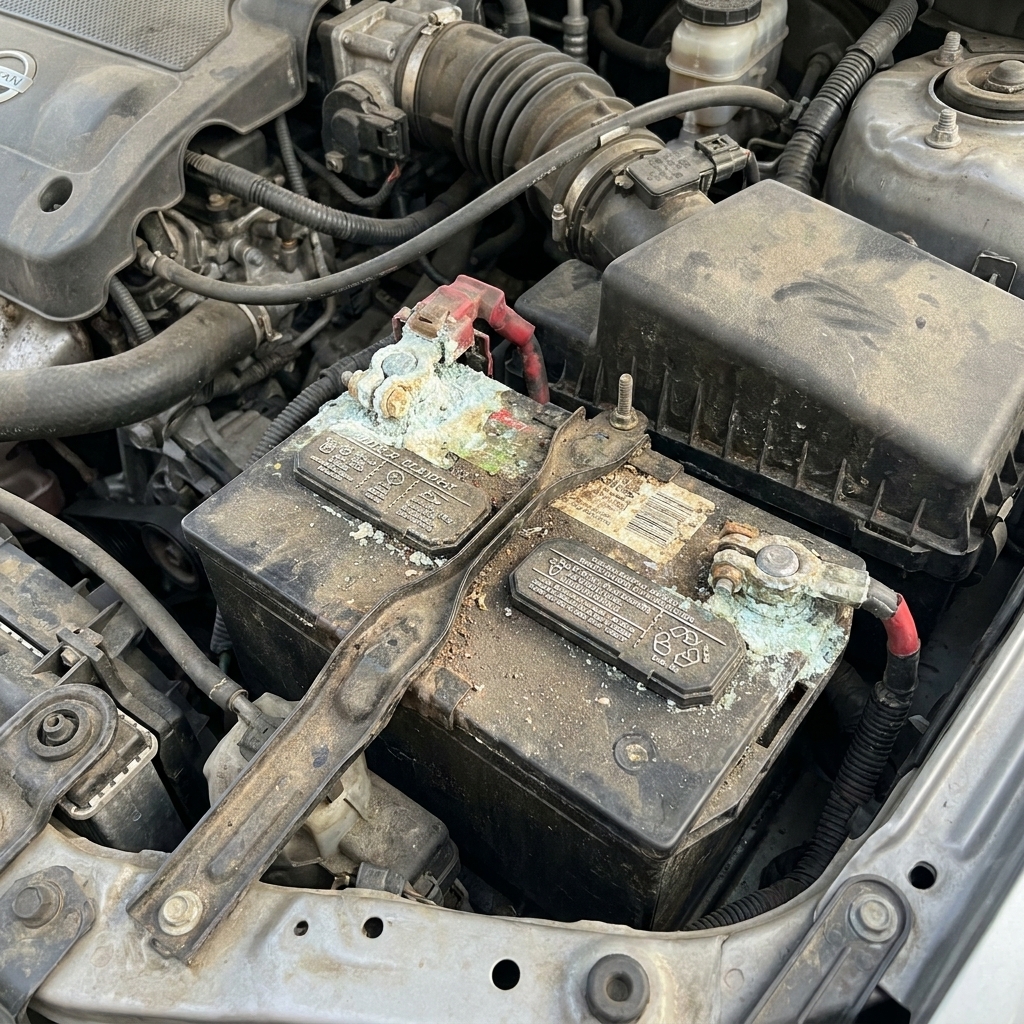
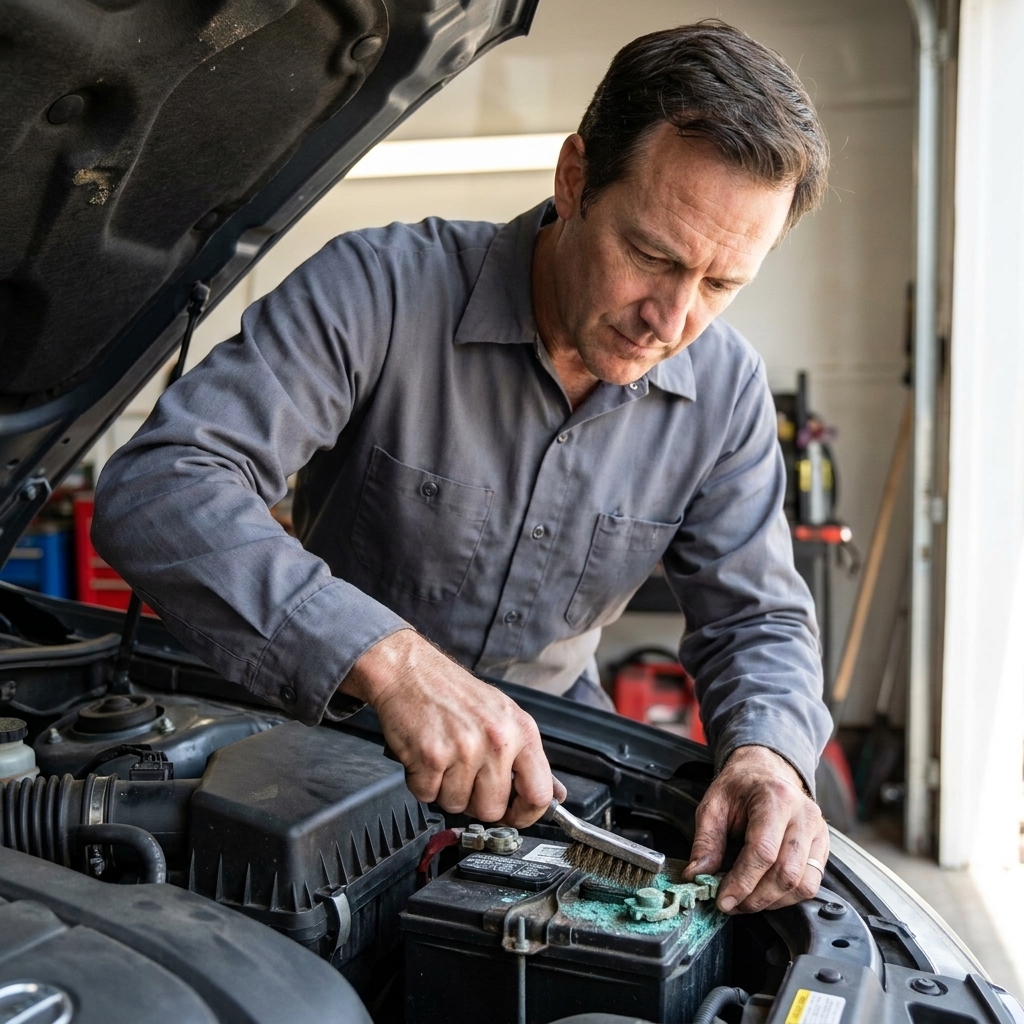
Pop the hood and look closely at the battery connections. You are looking for:
- White or green crust on the terminals
- Loose clamps that can twist by hand
- Frayed or swollen cables
- Aftermarket add-ons stacked on the terminal that prevent a solid clamp
Quick test: With the car off, grab each battery terminal clamp and try to rotate it. If it moves, it is too loose. A battery can be “good” and still act dead if the connection is sloppy.
Cleaning tip: If you see corrosion, disconnect the negative terminal first, then the positive. Clean, rinse carefully, dry, then reconnect positive first, negative last.
Step 3: Battery tests in your driveway
If you have a multimeter, you can get real answers in two minutes.
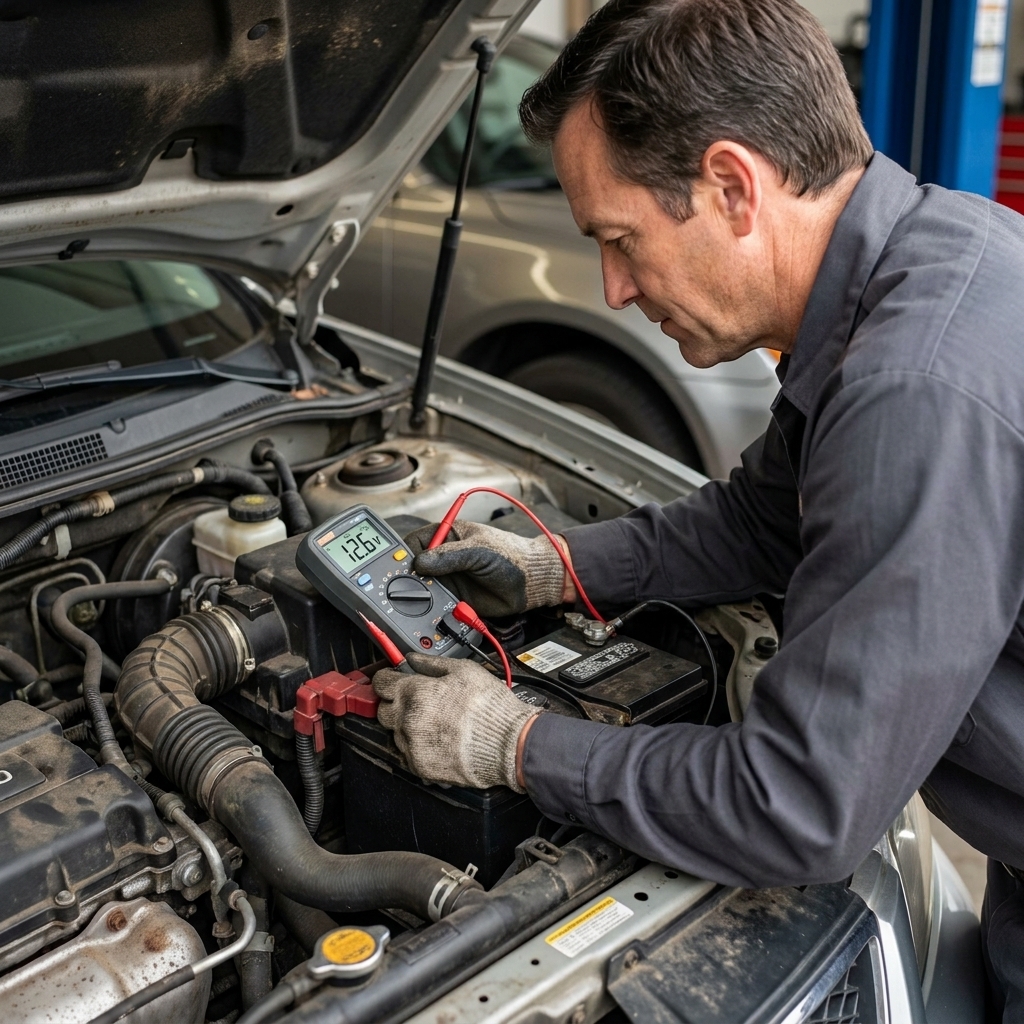
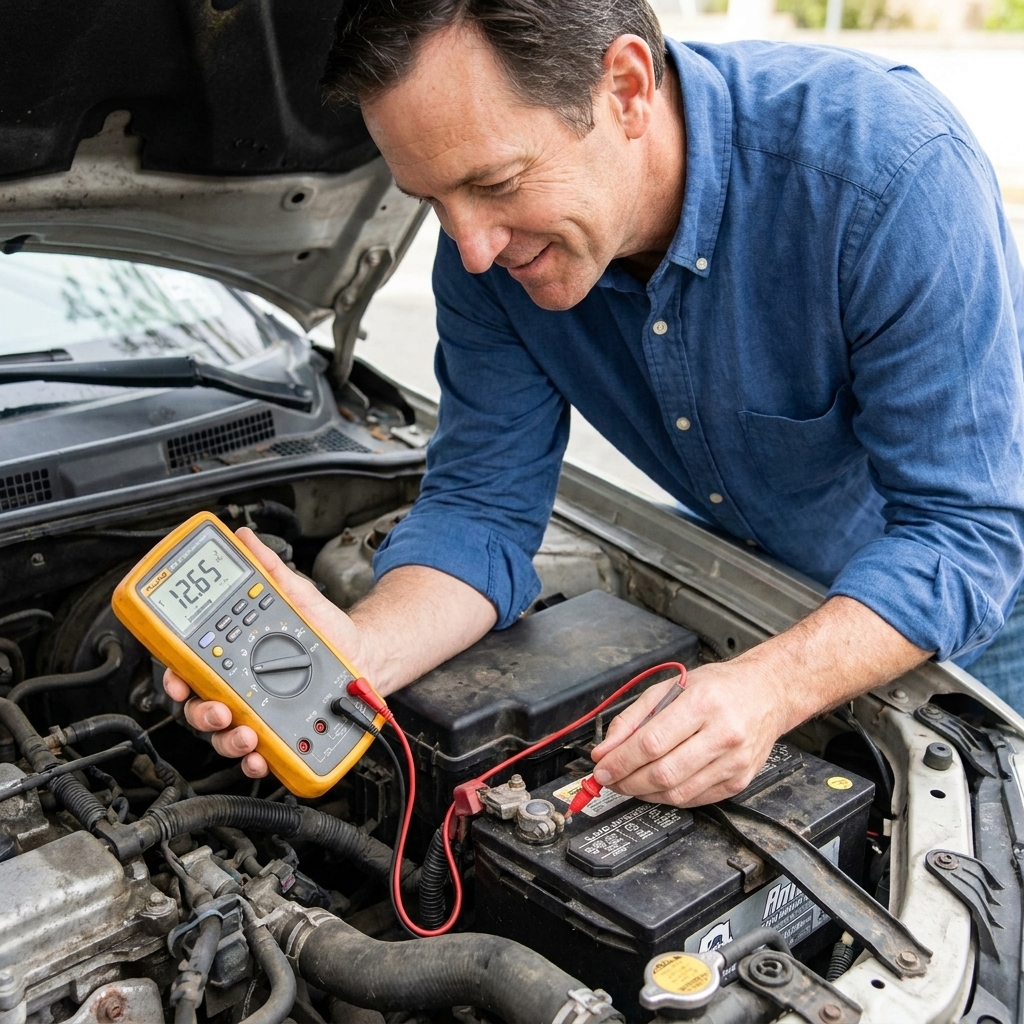
Measure resting voltage
For the most accurate reading, test after the car has been sitting for a while, ideally 30 minutes or more, or even better overnight. Temperature and “surface charge” from recent driving or charging can skew quick readings.
Place the red probe on the positive battery post and the black probe on the negative post.
- 12.6 V (roughly): fully charged at room temperature
- 12.4 V: partially charged, often still startable in mild weather
- 12.2 V or less: likely weak or significantly discharged
- 12.0 V or less: basically discharged
If you read something like 10 to 11 volts, that often points to a failed cell (a common number is around 10.5 V), especially if it will not recover after a proper charge. Severe discharge can also land in this range, so do not treat it as a guaranteed diagnosis by itself.
Measure voltage while cranking
Have a helper try to start the car while you watch the meter.
- Around 9.6 V or higher while cranking (at about 70°F): usually acceptable
- Drops below 9.6 V quickly: weak battery, poor connections, or high starter draw
If it stays above 10.0 V while cranking, the battery is less likely to be the main issue, but it is not a free pass. A marginal battery can still look OK for a moment, and voltage drop in cables or an overworked starter can still cause trouble.
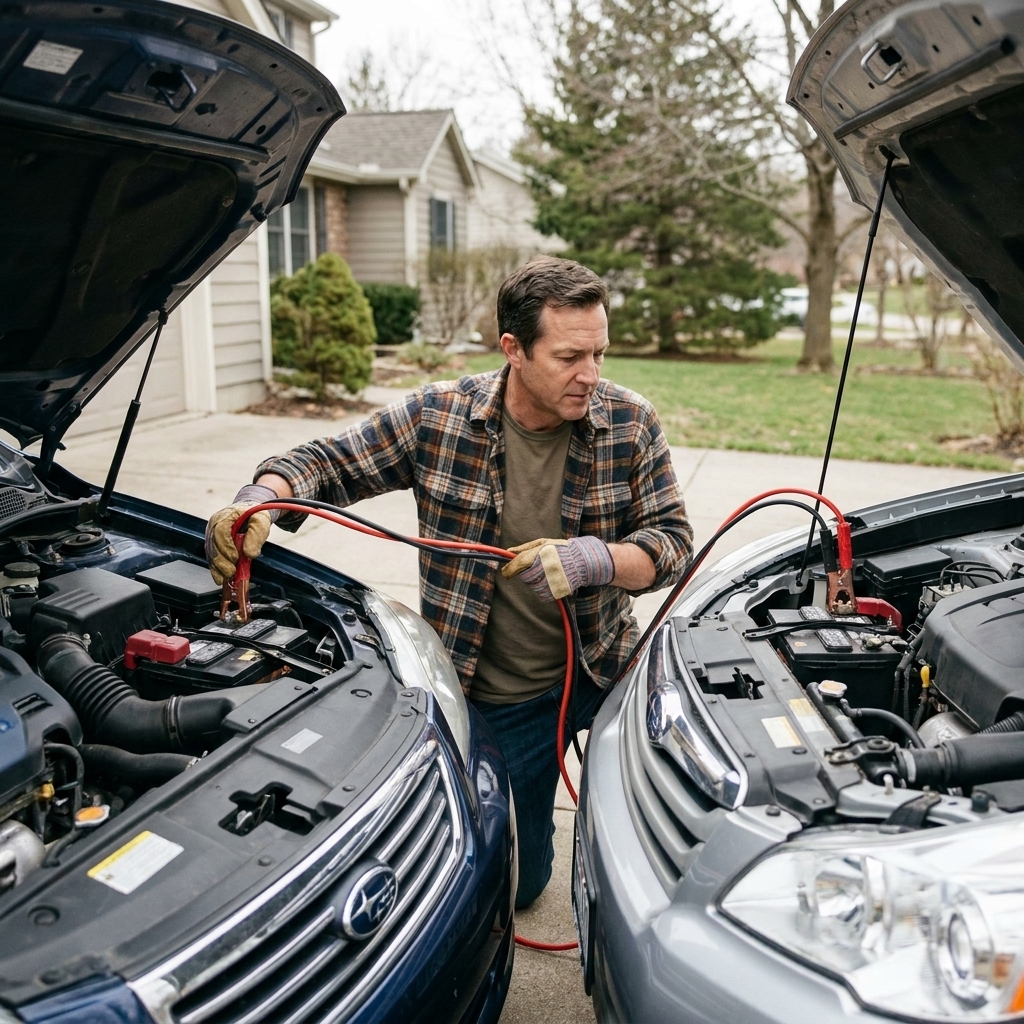
Step 4: The jump-start test
A jump-start is not just a way to get moving. It is a diagnostic tool.
If it starts immediately with a jump
Most likely:
- Weak or dead battery
- Dirty or loose terminals
- Parasitic drain (something is draining the battery overnight)
If it starts with a jump but dies soon after
This often points toward charging system trouble (alternator, belt, wiring), or a battery so far gone it cannot stabilize voltage. Less commonly, it can also be an unrelated issue that shows up once the car is running (fuel or ignition problems, a flaky crank sensor, and so on). The charging voltage test in Step 6 helps sort this out fast.
If it still won’t crank with a jump
Now we start suspecting:
- Bad starter or starter solenoid
- Bad ground cable or positive cable
- Engine mechanical problem (rare)
- Security or neutral safety issues (common on some vehicles)
Jump-start basics reminder: Positive to positive first. Negative to a solid metal ground point on the dead car if possible. Keep the cables away from belts and fans.

Step 5: Starter checks
If your lights come on normally, the battery tests OK, and you still get one click or no crank, the starter circuit becomes the main suspect.
Listen for patterns
- One click from the engine bay and no crank: starter solenoid may be engaging but the motor is not turning.
- No sound at all but dash lights are bright: could be a relay, fuse, neutral safety switch, clutch switch, or wiring issue.
Try Neutral (or the clutch)
If you have an automatic, move the shifter to Neutral and try starting. If it starts in Neutral but not Park, the park-neutral safety switch or shifter adjustment may be the culprit.
If you have a manual, make sure the clutch is pressed firmly to the floor. A failing clutch safety switch can mimic a dead starter.
Check battery age
If your battery is around 3 to 5 years old, it is living on borrowed time in many climates. Look for a date sticker on the battery case. Age does not diagnose the problem by itself, but it helps you decide how hard to trust borderline voltage readings.
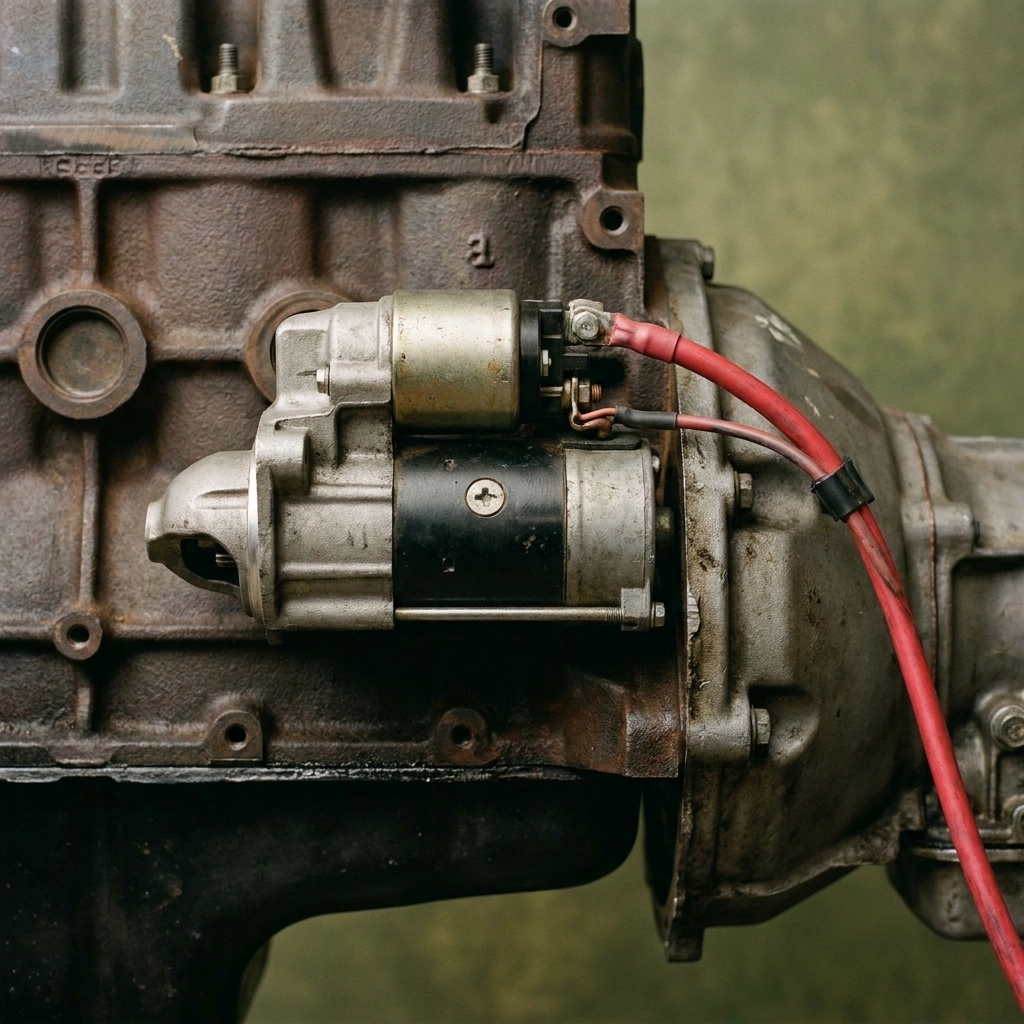
Watch for a loose starter power cable
Some cars will have bright dash lights but no crank because the heavy power cable at the starter is loose or corroded. If you are comfortable and can safely access it, inspect the cable for looseness and heavy corrosion. If you are not comfortable getting under the vehicle, do not. A shop can confirm this quickly.
Quick voltage drop check (simple version)
If you have a multimeter and a helper, you can do a quick check for bad cables or connections while cranking:
- Positive side: Put the red probe on the battery positive post (not the clamp) and the black probe on the starter’s main power stud (the big cable connection). Have your helper try to crank. A reading over about 0.5 V suggests too much voltage drop on the positive side.
- Ground side: Put the red probe on the starter housing (bare metal) and the black probe on the battery negative post. Crank again. Over about 0.2 to 0.3 V suggests a ground problem.
If you are not sure you can safely reach the starter connections, skip this and let a shop do it. The point is simple: you can have a good battery and still lose the fight through bad cables.
Engine seized sanity check (rare, but real)
If you get a single heavy click and the starter will not turn the engine at all, and you are confident the battery and connections are solid, do this quick check:
- Make sure the car is in Park or Neutral with the parking brake on.
- Try turning the engine by hand at the crank pulley bolt with a proper socket and breaker bar, if you know how and have access.
If the crank will not budge, stop. Do not keep hitting the starter. At that point you want professional diagnosis because you may have an engine problem or an accessory that is locked up.
Tap test (use caution)
On some older starters with worn brushes, a light tap can temporarily wake them up. If you can safely reach the starter from above, you can try a gentle tap with a tool handle while a helper turns the key.
If tapping makes it crank, the starter is on borrowed time. Plan for replacement soon. Do not make tapping your long-term plan.
Step 6: Alternator checks
Here is the key idea: the alternator does not start the car. The battery does. The alternator’s job is to recharge the battery and run the electrical system once the engine is running.
So alternator problems usually show up as:
- Battery keeps dying every day or two
- Car starts with a jump but won’t stay alive
- Warning lights like battery or charging light while driving
- Headlights dimming or electronics acting weird
Charging voltage test (engine running)
If you can get the engine running, check voltage at the battery with the engine idling.
- 13.8 to 14.6 V: generally healthy charging on many vehicles
- 12.6 V or lower while running: alternator is not charging (or the belt is slipping, or there is a wiring issue)
- Above 15.0 V: possible overcharging, which can cook a battery and electronics
One nuance: many modern cars use smart charging. Voltage can legitimately move around depending on temperature, battery state, and electrical load. If you see numbers that swing up and down, especially after a cold start, that can be normal. If it stays low all the time or the battery light is on, that is when you dig deeper.
Check the belt
On many vehicles, the alternator is driven by the serpentine belt. If that belt is missing, broken, or extremely loose, the alternator cannot charge. A failed belt can also cause overheating on some cars because the water pump may run off the same belt.

Step 7: Quick decision tree
If you want the simple cheat sheet, here it is.
- Dash lights dead or very dim and you get clicking or nothing: start with battery terminals, then battery voltage.
- Battery reads low and voltage drops hard when cranking: battery weak or bad connections.
- Battery voltage good, lights bright, one click and no crank: suspect starter (but verify cables and grounds).
- Starts with jump but dies soon, or charging voltage is low while running: suspect alternator or belt.
- Cranks strong but won’t start: think fuel, spark, immobilizer, not starter or alternator.
Common beginner traps
Trap 1: Replacing the starter because it clicks
Clicking is often low voltage. Test the battery first. A tired battery can make a perfectly good starter look bad.
Trap 2: Assuming a new battery fixes it
A brand-new battery will go dead if the alternator is not charging, or if there is a parasitic draw. If the battery is new and keeps dying, do not keep buying batteries.
Trap 3: Ignoring the ground
Your car’s electrical system needs a solid return path. A crusty ground cable can cause no-starts, slow cranking, and random electrical weirdness.
Trap 4: Testing voltage only
You can measure 12.6 V at the battery and still have a no-crank if the clamps are loose or corroded. Voltage at the post is not the same as voltage delivered to the starter under load. That is why the quick voltage drop check can be so revealing.
If it cranks but won’t start
I know this guide is focused on battery, starter, and alternator, but beginners often say “won’t start” when it actually cranks fine. If your engine is turning over strongly but never fires:
- Look at the dash: Is the security light flashing? Immobilizers can prevent starting.
- Listen for fuel pump prime: Many cars make a brief humming sound for 1 to 2 seconds when you turn the key to ON.
- Check for obvious intake issues: A disconnected intake hose can cause a no-start on some vehicles.
- Scan for codes: Even a cheap code reader can point you in the right direction.
When to stop DIY and call in help
DIY diagnostics should make you feel more confident, not cornered. It is time to get professional help if:
- You smell burning insulation, see melted battery terminals, or notice hot cables
- The battery cables spark heavily when connecting a jump
- You suspect an alternator overcharge situation (voltage above 15 V)
- You are not comfortable accessing the starter safely
- The vehicle is stranded somewhere unsafe
A good shop will respect you more when you can say, “Battery is 12.6 V at rest, drops to 8.9 V during crank,” or “Charging voltage is 12.4 V while running.” That kind of info cuts through the guesswork fast.
FAQ
Can a bad alternator cause a car not to start?
Indirectly, yes. A failing alternator can stop charging the battery. The car will start fine for a while, then the battery slowly drains until it will not crank. But the alternator is rarely the reason a car will not crank today unless it has already drained the battery.
What does it mean if the lights come on but the car won’t crank?
Often it is a weak battery under load, corroded terminals, a bad starter, or an issue in the starter control circuit (relay, safety switch). Bright lights do not guarantee the battery can deliver starter-level current.
Is rapid clicking always the battery?
Usually, but not always. Rapid clicking is most often low voltage, caused by a weak battery or poor connections. A bad ground cable can create the same symptom.
How do I know if my battery terminals are too loose?
If you can twist the terminal clamp on the battery post by hand, it is too loose. Tighten it until it is snug and does not move, but do not crank down so hard you crack the battery post.
My battery is new but the car still won’t start. Now what?
Check terminal tightness and corrosion, then test voltage while cranking and consider a quick voltage drop check. If it still will not crank with solid voltage, move to starter circuit checks. If it jump-starts and then dies, test alternator charging voltage with the engine running.