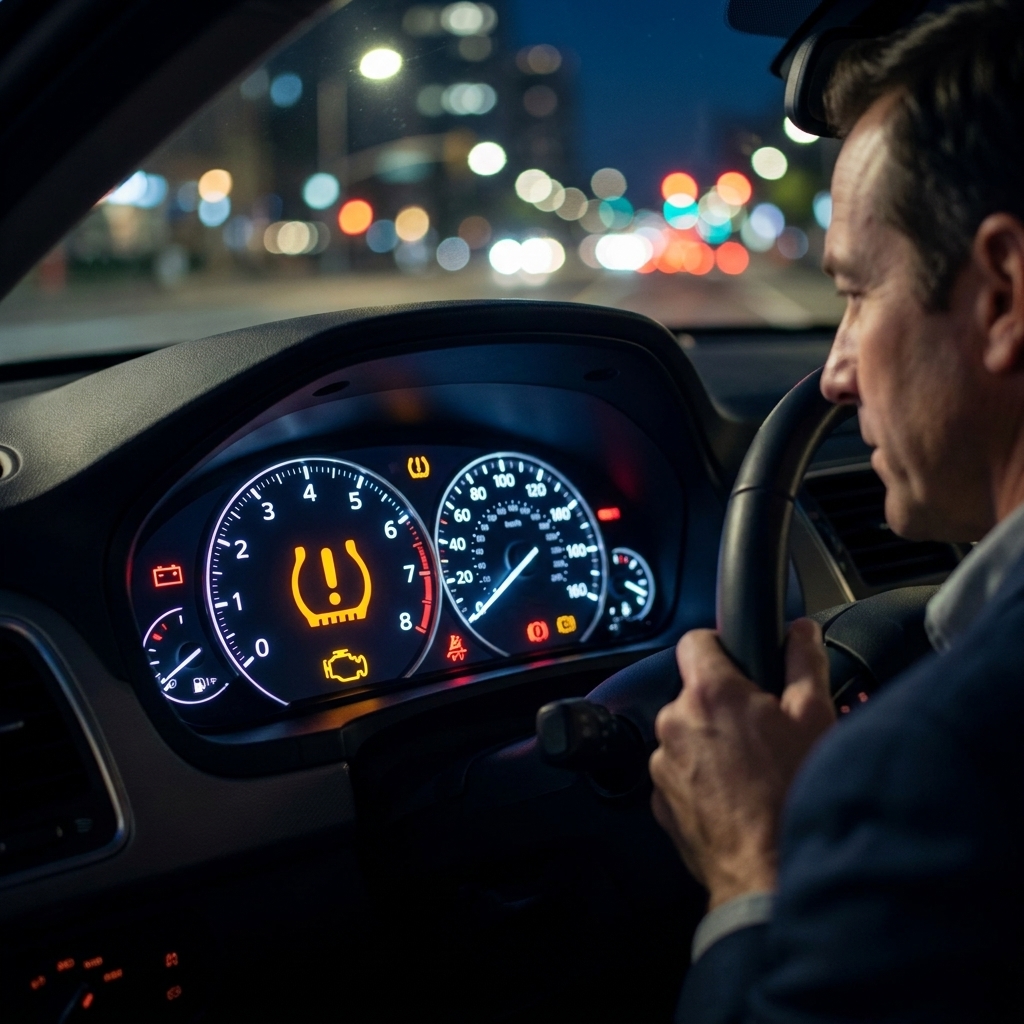
If your check engine light just came on, take a breath. That little amber icon is not your car yelling “catastrophe” every time. Most of the time it’s your car saying, “Hey, something’s out of range, can you check my notes?” An OBD2 scanner is how you read those notes.
I spent years in independent shops watching people get talked into expensive “diagnostics” when all they needed was a basic code read and a little common sense. This guide will walk you through plugging in a scanner, pulling codes, understanding what they actually mean, and clearing the light only when it makes sense.
What an OBD2 scanner does
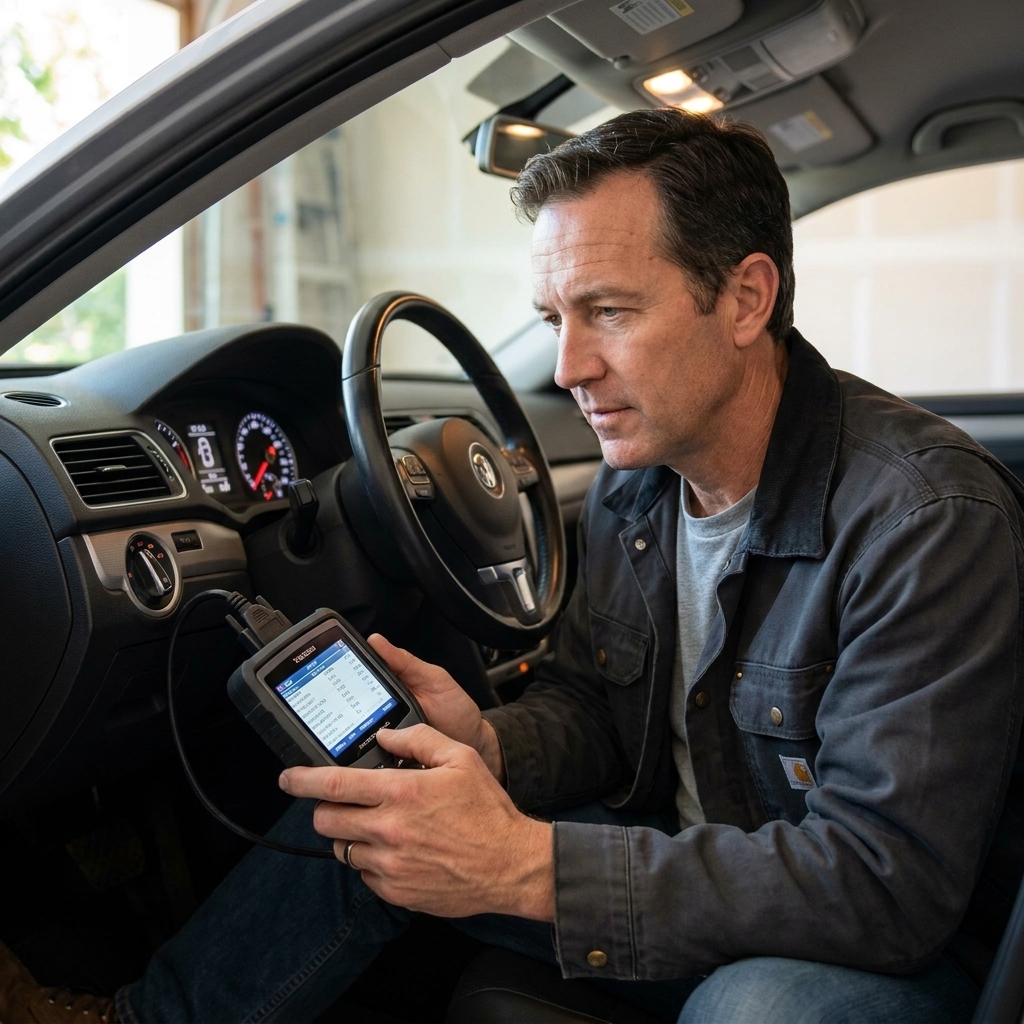
OBD2 stands for On-Board Diagnostics, second generation. In the U.S., 1996 and newer light-duty vehicles sold here generally have it. Many diesels do too, depending on year and market. The scanner talks to the car’s computers and pulls:
- DTCs (Diagnostic Trouble Codes): the famous P0xxx type codes
- Pending codes: problems the car noticed but has not yet confirmed
- Freeze frame data: a snapshot of conditions when the code set (coolant temp, RPM, speed, load)
- Readiness monitors: whether emissions self-tests have completed (important for inspections)
- Live data (on better scanners): sensor values while the engine runs
The key takeaway: a code points to a system, not a guaranteed bad part. A “misfire” code does not automatically mean “buy spark plugs.” It means you should diagnose the misfire.
One more thing that trips people up: basic OBD2 code readers often only access powertrain (P) emissions-related codes. Even though you may see B, C, and U prefixes explained online, ABS, airbags, body modules, and network issues often require a higher-level scan tool (often brand-specific) to read detailed codes.
Before you scan
1) Is the light flashing?
If the check engine light is flashing, treat it as urgent. A flashing malfunction indicator lamp (MIL) typically means an active misfire that can damage the catalytic converter. Ease off the throttle, avoid hard acceleration, and get the car diagnosed ASAP.
2) Do a 30-second under-hood check
- Make sure the gas cap is tight and clicks (a loose cap can trigger EVAP codes).
- Look for obvious vacuum hoses popped off or split.
- If the engine is running rough, listen for a loud hissing (vacuum leak) or ticking (sometimes an exhaust leak near the manifold).
3) Battery voltage matters
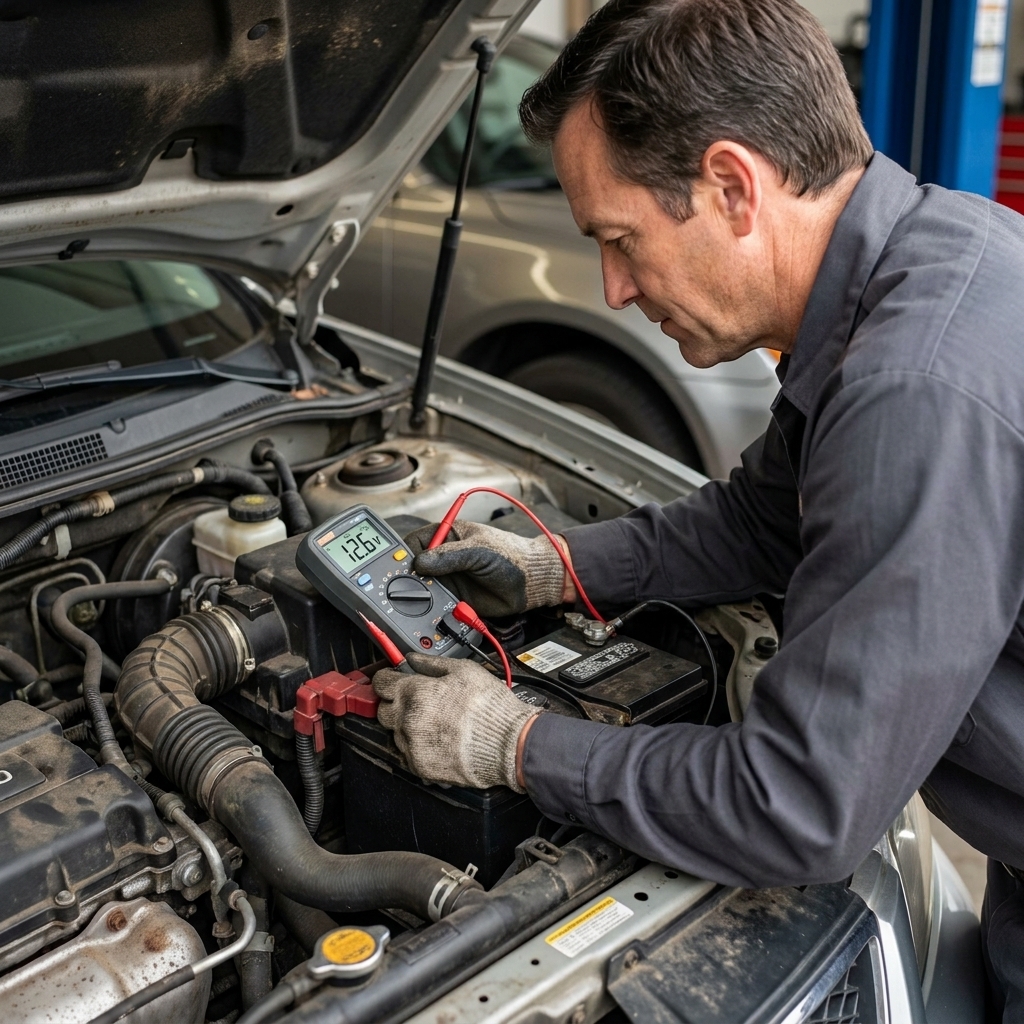
If your battery is weak, you can get weird electrical codes or low-voltage nonsense that sends you chasing ghosts. If the car cranks slowly or you have lots of warning lights after a jump start, consider charging the battery first and making sure the terminals are clean and tight.
Finding the OBD2 port
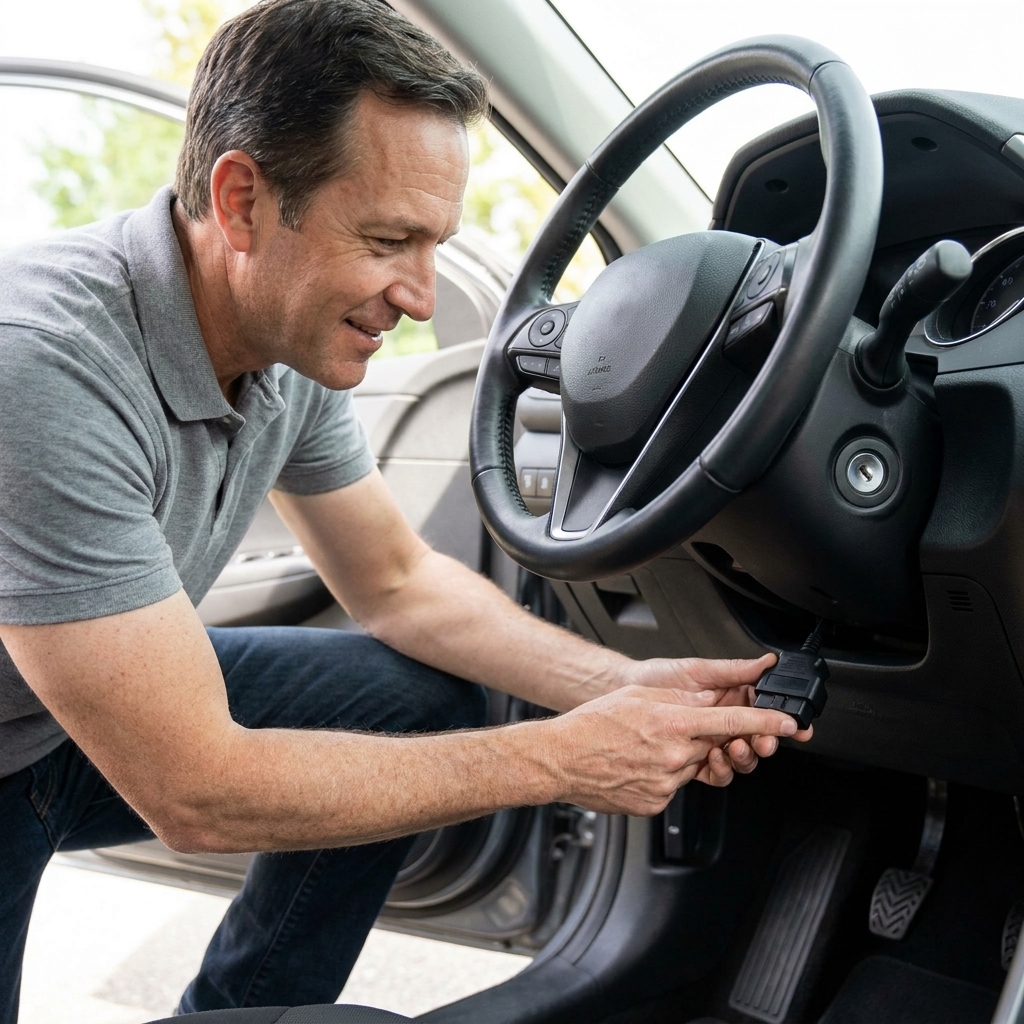
The OBD2 port is a 16-pin trapezoid connector, usually located:
- Under the steering column near the driver’s knees
- Under the dash near the hood release
- Behind a small cover near the fuse box area
It is almost always accessible from the driver’s seat area without tools. If you cannot find it, check your owner’s manual index for “diagnostic connector.”
How to connect a scanner
Step 1: Turn the key to OFF
Many scanners recommend plugging in with the ignition off, then turning the key to ON.
Step 2: Plug in the scanner
It only fits one way. Do not force it. If it feels wrong, check alignment and try again.
Step 3: Ignition ON, engine OFF
On a keyed ignition, turn to ON so the dash lights up. On push-button cars, press the button without pressing the brake (usually enters ignition-on mode).
Step 4: Let it connect
A basic handheld scanner will power up from the car and display a menu like “Read Codes.” A Bluetooth dongle will need pairing with your phone app.
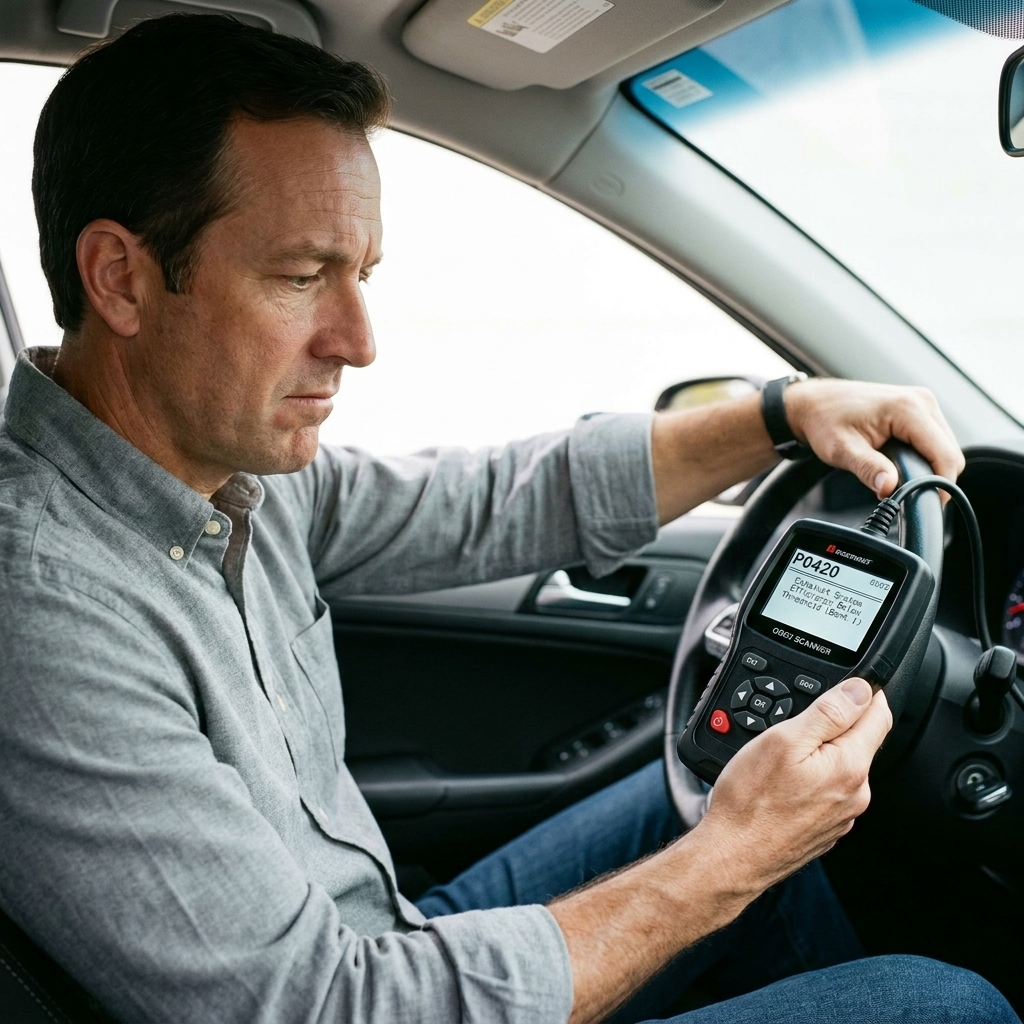
Step 5: Read codes
Pull:
- Stored codes (these turned the light on)
- Pending codes (these may become stored later)
- Freeze frame if your scanner supports it
Write everything down or take photos of the screen. I know, it feels old-school, but it saves you from guessing later.
How to read codes
OBD2 codes usually look like P0301. Here’s the breakdown:
- P = Powertrain (engine and transmission)
- B = Body (airbags, seat modules, etc.)
- C = Chassis (ABS, steering, suspension)
- U = Network/communication (modules not talking)
The next digit matters too:
- P0xxx is a generic code (standard across brands)
- P1xxx is manufacturer-specific (definition and test steps vary)
Common codes beginners see
- P0300, P0301-P0308: Random misfire or cylinder-specific misfire
- P0171, P0174: System too lean (often vacuum leak, MAF issue, fuel delivery, or exhaust leak ahead of O2)
- P0420, P0430: Catalyst efficiency low (could be cat, but also O2 sensors, exhaust leaks, misfires)
- P0455, P0442, P0456: EVAP leak large/small (often gas cap, purge valve, vent valve, cracked hose)
- P0128: Coolant temp below regulating temp (thermostat stuck open is common, but a bad coolant temp sensor or other cooling-system issues can also trigger it)
One of the biggest rookie mistakes is replacing the part named in a code description. Example: a code might mention an “oxygen sensor,” but the oxygen sensor is often just reporting what it sees. The cause could be a vacuum leak, misfire, or exhaust leak.
Use freeze frame data
Freeze frame is the moment the car decided, “Yep, this is a real problem.” If you have it, look at:
- Coolant temp: Was the engine cold or fully warmed up?
- Vehicle speed: Did it happen cruising or at a stop?
- RPM and load: Light throttle, heavy throttle, climbing a hill?
- Fuel trims (if available): Clues for vacuum leaks or fuel delivery issues
This helps you avoid wild goose chases. A lean code that only sets at idle screams “vacuum leak” more than “fuel pump.” A misfire under heavy load might point you toward ignition coil breakdown or fuel delivery.
Clearing codes
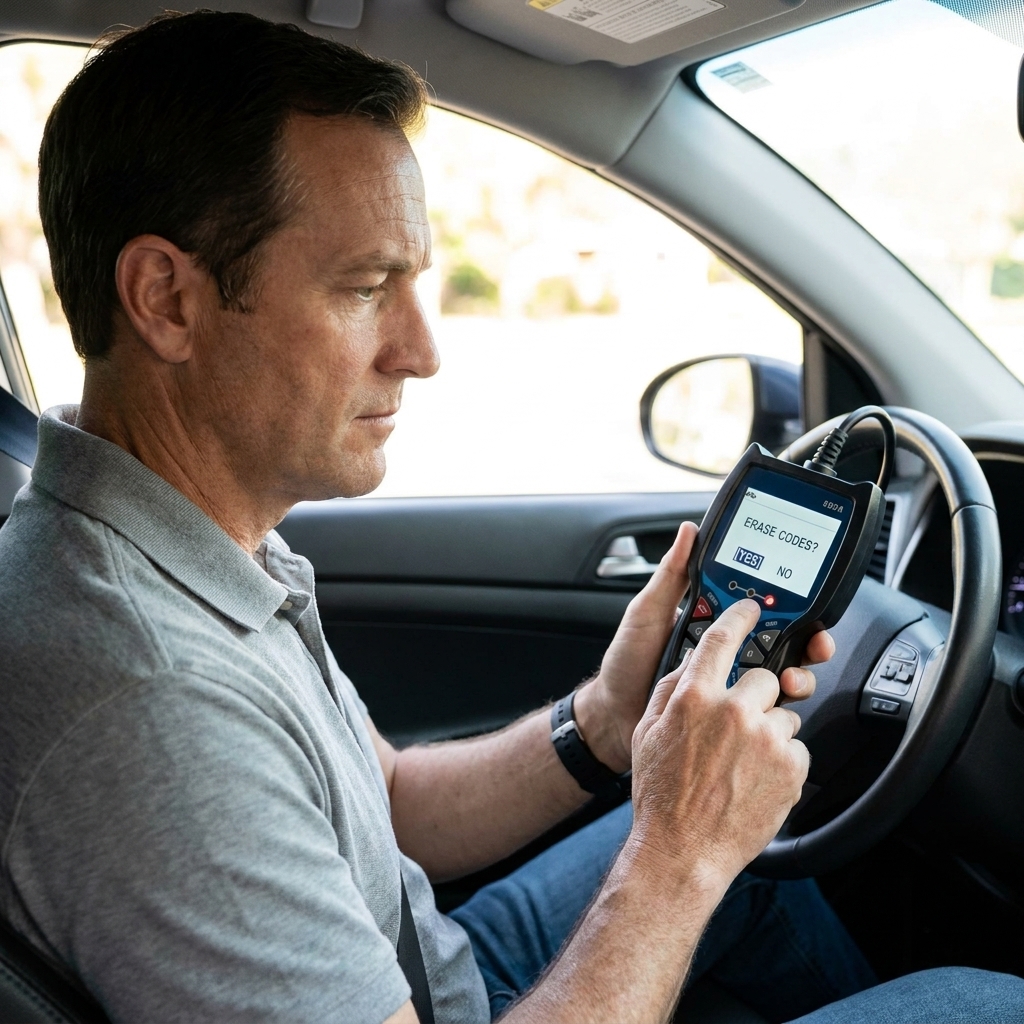
You can clear codes with nearly any scanner. The question is whether you should.
It’s usually okay to clear the code if:
- You fixed something obvious (example: tightened or replaced a bad gas cap)
- You repaired the cause (example: replaced a torn intake boot causing a lean code)
- You want to confirm the repair by seeing if the code returns
Hold off on clearing if:
- The car is running rough, stalling, overheating, or shifting badly
- The light is flashing
- You need an emissions inspection soon
- You have not recorded the codes and freeze frame yet
Important: Clearing codes resets readiness monitors on most vehicles. That means even if the light is off, your car may not pass an emissions inspection until it completes a full drive cycle and all monitors run again.
Also, do not get into the habit of clearing codes just to make the light go away. If the underlying issue is still there, it can come back at the worst time, and repeated clearing can mask a problem that is getting worse.
How to clear codes properly
- Read and record stored and pending codes.
- Fix the issue (or at least inspect likely causes).
- Select Erase Codes or Clear DTCs on the scanner.
- Start the car and confirm the light stays off.
- Test drive under mixed conditions (idle, city, highway) and re-scan for pending codes.
DIY or shop?
Here’s how I think about DIY check engine repairs after a decade in shops: start with what’s safe, common, and easy to verify.
Often DIY-friendly
- Loose gas cap or worn cap seal (EVAP small leak codes)
- Air filter box not sealed after service, or intake hose clamp loose
- Vacuum line off after other work
- Spark plugs on many 4-cylinder engines (misfire codes), if you are comfortable and follow torque specs
- Coil swap test on coil-on-plug engines: move coil from misfiring cylinder to another and see if misfire follows
Proceed carefully or consider a pro
- P0420/P0430: Catalytic converter efficiency codes can be expensive guesswork without data
- Transmission codes (many P07xx): can be simple sensors or serious internal issues
- Network U codes: can involve module communication and wiring diagnostics
- Repeated misfires: can be compression, valve issues, injector faults, or timing problems
If you’re on the fence, your next best tool is a scanner that can view live data. Even basic live data like short-term fuel trim and O2 sensor activity can prevent you from throwing parts at the car.
Bluetooth vs handheld
Both can work. The best scanner is the one you will actually use and understand.
Handheld scanner
- Pros: Simple menus, no phone pairing, reliable connection, easy to keep in glove box
- Cons: Usually limited live data and graphs unless you buy a nicer unit
Bluetooth dongle with an app
- Pros: Great live data, graphs, logging, often cheaper
- Cons: App quality varies, connection can be finicky, some cheap dongles are unstable
If you go Bluetooth, buy a reputable adapter. A flaky dongle is like a cheap multimeter: it wastes your time right when you need it.
After you clear the light
Clearing the code is not the finish line, it’s the start of verification.
- If the code comes back immediately, the issue is still present.
- If it comes back after a day or two, it might be intermittent or condition-specific.
- If a different code appears, you may have a related issue or the first code was a symptom.
Re-scan after your test drive. Check for pending codes even if the light stays off. Pending codes are your early warning system.
Common scanning mistakes
- Erasing codes first. You just erased your best clues.
- Ignoring pending codes. They often tell you what’s about to happen.
- Replacing parts by code description. Diagnose the cause, not the messenger.
- Forgetting about readiness monitors. Clearing codes right before inspection is a classic self-own.
- Skipping the basics. Intake leaks, loose clamps, low voltage, and poor grounds create chaos.
FAQ
Will disconnecting the battery clear check engine codes?
Sometimes. On many vehicles it will clear codes and often resets readiness monitors, but some cars retain certain memory or codes. A scanner is the cleaner, more controlled way to clear codes.
Why did my check engine light turn off by itself?
If the problem stops happening for enough drive cycles, the light can turn off even though a history code may remain stored. You should still scan and see what it was, especially if it returns.
Can I drive with the check engine light on?
If the light is steady and the car feels normal, you can usually drive short-term, but you should scan soon. If it’s flashing, or the car is running rough, overheating, or losing power, reduce driving and get it diagnosed.
What does “pending” mean?
The car saw a fault but has not yet confirmed it under the right conditions. Pending codes are useful because they can warn you before the light turns on.
Do I need a fancy scanner?
Not to start. A basic scanner that reads and clears codes is enough for many DIYers. If you plan to troubleshoot fuel trims, misfires, or intermittent issues, live data is worth paying for.
Bottom line
An OBD2 scanner is one of the best confidence boosters you can buy for DIY maintenance. It won’t magically fix your car, but it will stop you from guessing. Read the codes, write them down, look at freeze frame if you can, and clear the light only after you have a plan. That’s how you save money and avoid getting sold a “maybe” repair.