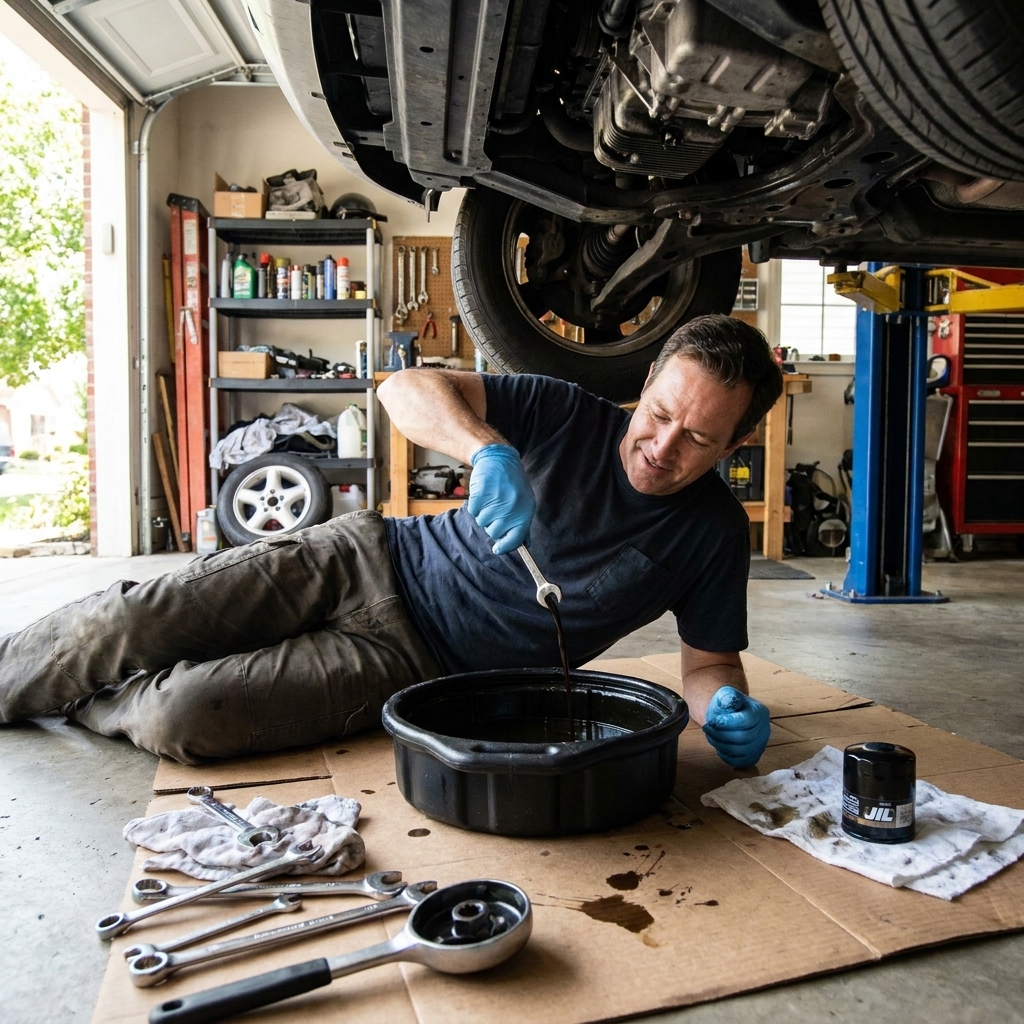
I have watched people get quoted real money for a job that takes less time than your coffee order. Engine and cabin air filters are two of the easiest maintenance items on most cars, but they get mixed up constantly. One protects your engine. The other protects your lungs. Both matter, and both are DIY-friendly.

In this guide, I will show you how to tell them apart, how to spot when they are clogged, and how to replace each one cleanly and safely.
Engine vs. cabin air filter: what each one does
Engine air filter
The engine air filter cleans the air before it goes into the engine. Your engine is basically a giant air pump. Restrict the air enough and you can hurt performance and, in some cases, fuel economy. Modern fuel-injected engines can compensate for a mildly dirty filter, so do not expect miracles unless the old filter was truly plugged up.
- What it protects: Engine internals and sensors from dust and debris
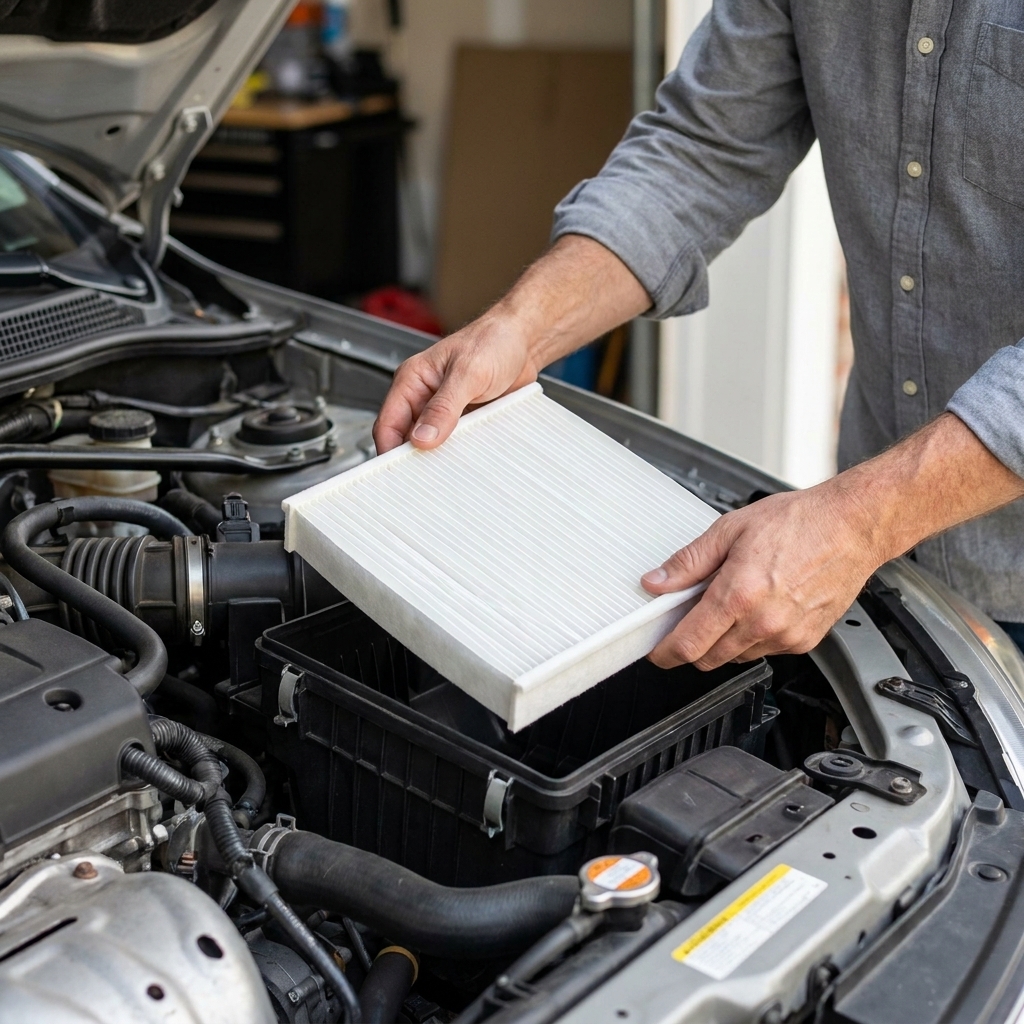
- Where it lives: In the engine bay, usually inside a plastic airbox or a housing connected to the intake tube
- What it looks like: A rectangular or panel-style pleated paper filter, sometimes a cone-style on certain setups
Cabin air filter
The cabin air filter cleans the air you and your passengers breathe through the HVAC system. It traps dust, pollen, road grit, and sometimes odors, depending on the filter type.
- What it protects: Your HVAC blower motor and, more importantly, your sinuses
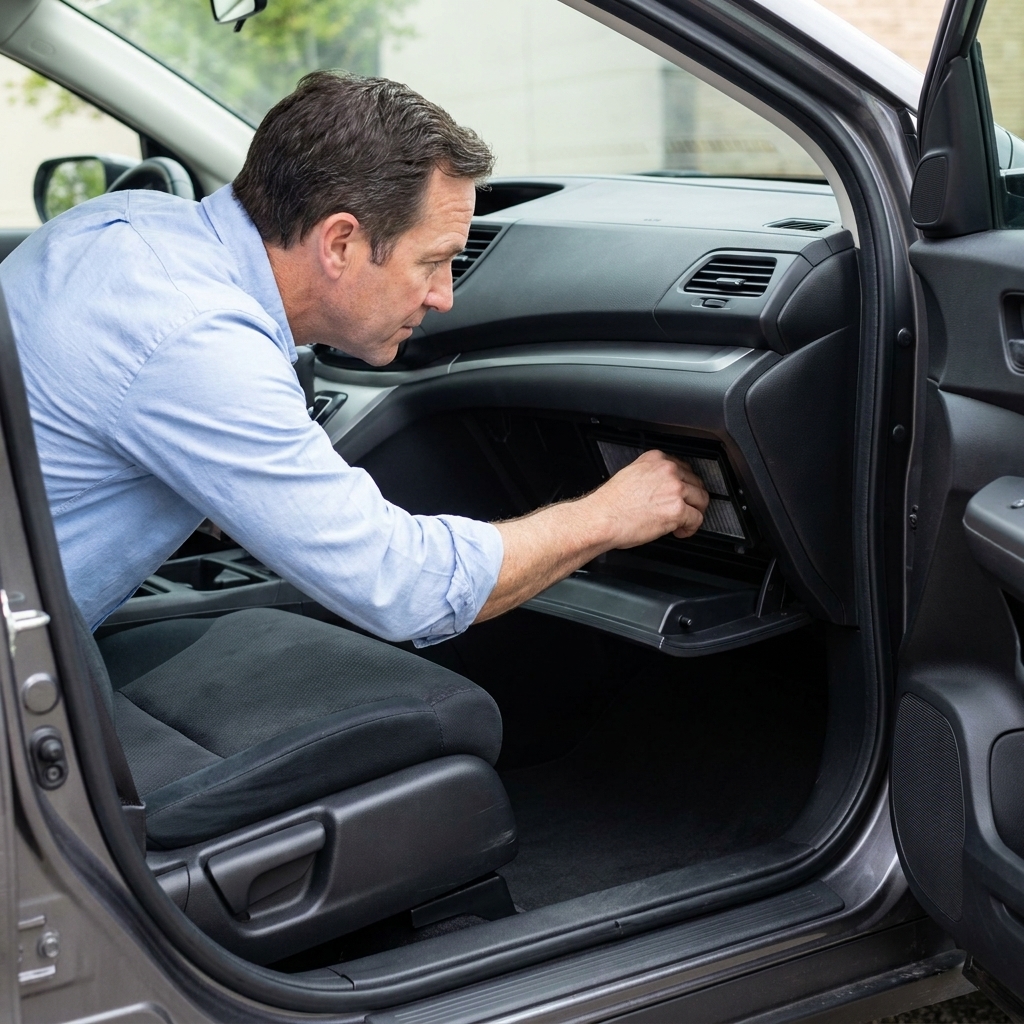
- Where it lives: Usually behind the glove box, under the dash, or at the base of the windshield under a cowl panel
- What it looks like: A smaller pleated panel filter, often with an arrow showing airflow direction
When to replace them
Your owner’s manual is the final word, but here are common ranges that work for a lot of drivers. Some OEM schedules go longer, especially for engine filters, and some go shorter if you drive in dust, heavy traffic, or wildfire smoke.
Common ranges
- Engine air filter: Often 15,000 to 60,000 miles depending on the vehicle and conditions. Dusty areas and dirt roads can push you to the early end.
- Cabin air filter: Commonly 15,000 to 30,000 miles, or about once a year if you deal with pollen, smoke, or gritty city air.
Filter replacements are also an easy add-on for a shop, so treat any mileage sticker as a reminder, not a verdict. Use symptoms and a quick inspection. If it is clean and flowing well, keep driving.
Signs your engine air filter is clogged
A dirty engine filter usually will not trigger a check engine light by itself, but a severely restricted one can cause changes you feel.
- Sluggish acceleration: Especially when you tip into the throttle to merge
- Fuel economy drifting down: Usually modest, and often only noticeable when the filter is really loaded
- Dirty airbox: Dust or debris inside the housing can be a clue the filter has been overdue or not seated well
- Visual clogging: Pleats packed with dirt, bugs, or leaves
Quick check: Pull it out and inspect it in good light. If the pleats look dark and matted and you cannot see much light through the media, it is time. If you want to knock loose surface dust, tap it gently against your palm or a clean surface, not the ground. Do not blast most paper filters with high-pressure shop air. If someone insists on using low-pressure air, blowing from the clean side outward is less risky, but replacement is still the better move for typical paper filters.
Signs your cabin air filter is clogged
A clogged cabin filter makes the HVAC system work harder and can make the inside of the car smell like a gym bag left in the sun.
- Weak airflow from vents: Fan on high, but air barely comes out
- Musty or dusty smell: Especially when you first turn on the fan
- Slower defogging: Reduced airflow can contribute to slower windshield clearing (fogging has other causes too, like recirc settings and cabin moisture)
- Allergy flare-ups: Sneezing and itchy eyes can be a clue
If you ever see leaves or pine needles fall out when you remove it, that filter earned retirement. Bag the old one before you carry it through the cabin, especially if it is dusty or smells moldy.
How to replace an engine air filter
This is the classic under-the-hood DIY job. On most cars, it is clips or a few screws. Some models add a small brace, ECU cover, or intake snorkel you have to move first, so do not be surprised if your layout looks a little different.
Tools and supplies
- New engine air filter (matched to your year, make, model, and engine)
- Flathead screwdriver or 8 mm to 10 mm socket, depending on your airbox
- Clean rag or shop towel
Step-by-step
- Park safely and shut the engine off. Let it cool if you have been driving.
- Find the airbox. Look for a black plastic box connected to a large intake tube.
- Open the housing. Release metal clips or remove the screws around the lid.
- Lift the lid carefully. You often do not need to disconnect the intake tube. Just lift enough to slide the filter out.
- Remove the old filter. Note how it sits so the new one goes in the same way.
- Clean out the airbox. Wipe out loose dirt and leaves with a rag. Do not drop debris into the intake tube.
- Install the new filter. Make sure it seats fully all the way around.
- Close and secure the housing. Clips snapped, screws snug. Do not crank down and strip plastic.
Mechanic tip: If the lid will not sit flat, the filter is probably not seated in its groove. Do not force it.
How to replace a cabin air filter
The cabin filter location varies more, but the most common spot is behind the glove box. Some vehicles put it under the passenger-side dash, and others hide it under the windshield cowl from the engine bay side. Once you have done it once, you will wonder why you ever paid for it.
Tools and supplies
- New cabin air filter (correct fit for your vehicle)
- Small flashlight
- Optional: trim tool for plastic clips
Common spot: behind the glove box
- Empty the glove box. Your registration can take a short break.
- Lower the glove box. Some cars have side stops you push inward. Others have a small damper arm on the right side that pops off.
- Find the filter door. It is usually a small rectangular cover with tabs.
- Remove the old filter slowly. Keep it level so you do not dump leaves into the blower area.
- Check airflow direction. There will be an arrow on the filter frame. Match the arrow to the direction printed on the housing, or install it the same direction as the old one.
- Install the new filter. Slide it in without crushing the pleats.
- Reinstall the cover and glove box. Make sure the damper arm is reattached if your car has one.
If your car is different: If you do not see an access door behind the glove box, check under the passenger dash or look up “cabin filter location” in the owner’s manual index. Cowl-access filters are common on some models and usually involve popping a plastic panel at the base of the windshield.

Choosing the right filter
Engine air filters
- Standard paper: Best for most drivers. Good filtration, low fuss.
- Oiled high-flow: Only worth it on specific builds. On vehicles that use a mass airflow (MAF) sensor, over-oiling or improper oiling can contaminate the sensor and cause issues. If you do not know, stick with paper.
- Washable “lifetime”: Works if you actually clean and re-oil correctly. Most people do not, and “lifetime” turns into “neglected.”
Cabin air filters
- Standard particulate: Great baseline choice.
- Activated carbon: Helps with odors and some fumes. Worth it if you sit in traffic a lot.
- HEPA-style (when available): Higher filtration, sometimes slightly reduced airflow. Great for allergy season if your HVAC can handle it.
If you are torn, here is my simple rule: engine filter, standard paper. Cabin filter, carbon if the price difference is reasonable.
Common mistakes
- Installing the cabin filter backward: Airflow arrow matters. Backward filters can whistle, restrict airflow, and load up faster.
- Not seating the engine filter evenly: A crooked filter can let unfiltered air sneak past the edge.
- Dropping debris into the HVAC box: Pull the cabin filter out slowly and level, and bag it as you remove it.
- Over-tightening airbox screws: Stripped plastic threads are a headache you do not need.
- Expecting a “power boost” every time: Replacing a filter is maintenance. You feel a difference mainly when the old one was severely restricted.
Quick checklist
Yes, you can do both filters in one shot, and it is a smart habit. If you already have the hood open or the glove box emptied, knock out both.
- Confirm you bought the correct filters before disassembly
- Take a photo of the old filter orientation (especially cabin airflow direction)
- Clean the airbox and the cabin filter slot while you are there
- Set a simple reminder for 12 months to check again
FAQ
Will a dirty engine air filter cause a check engine light?
Usually no. It can contribute to performance issues, and on some vehicles it can aggravate problems that eventually trigger a light, but a filter alone is not a common direct cause.
Why does my car smell bad when I turn on the AC?
A clogged cabin filter can hold moisture and funk, and the evaporator case can grow mildew. Start with a new cabin filter. If the smell persists, an HVAC evaporator cleaner can help. For prevention, avoid leaving the system on recirculate all the time in humid weather and consider running the fan for a minute before you shut the car off to dry things out a bit.
Can I vacuum my air filter instead of replacing it?
You can gently vacuum loose debris off the surface, but it will not restore the filter media. If it is loaded deep in the pleats, replacement is the right move.
Is it okay to drive without a cabin air filter?
In a pinch, the car will run, but you are sending dust and debris straight into the blower and evaporator core. Install a filter. Your HVAC system will thank you.
Do I need OEM filters?
Not necessarily. A quality aftermarket filter from a reputable brand is fine. The important part is correct fit and proper installation.
The bottom line
If you want the biggest confidence boost for the smallest effort, start here. The engine air filter keeps your engine breathing clean. The cabin air filter keeps you breathing clean. Most of the time you can replace both in under ten minutes with zero special tools, and you will never look at a filter recommendation the same way again.