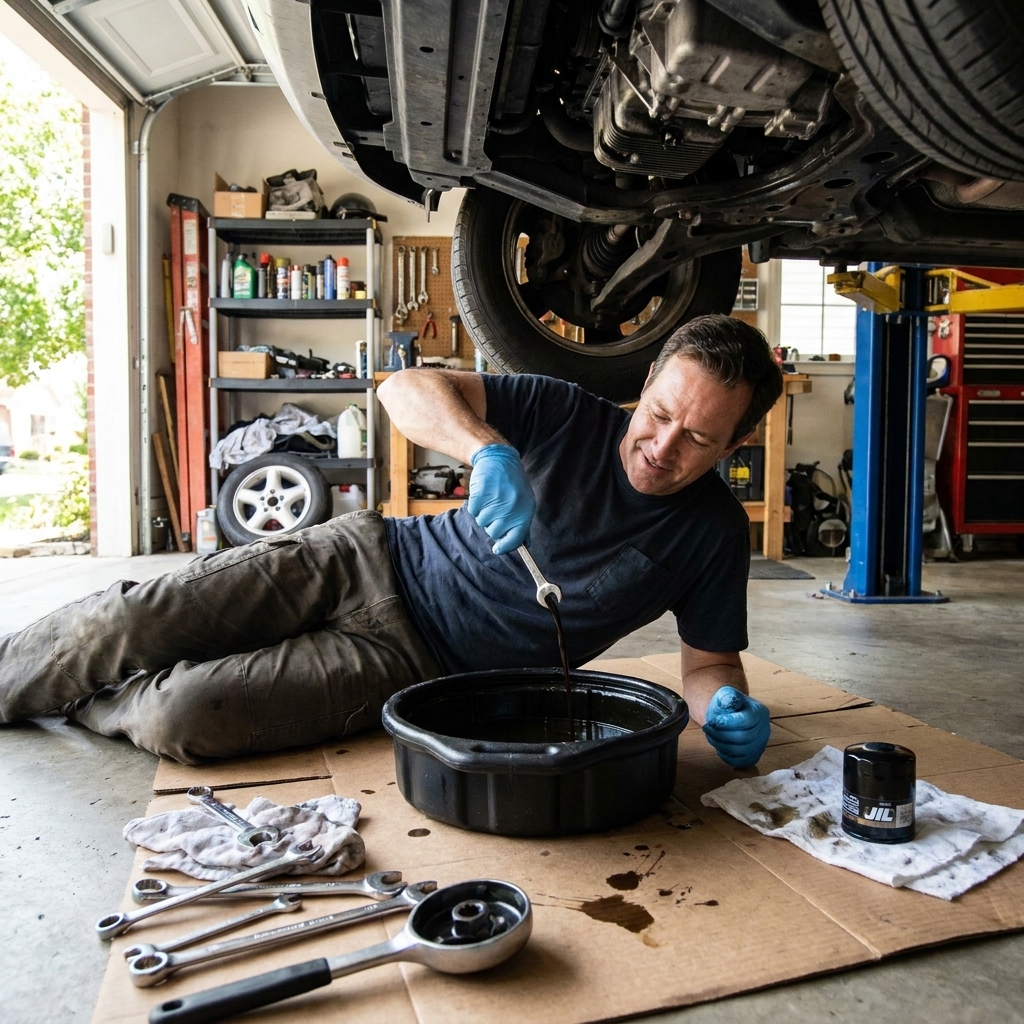
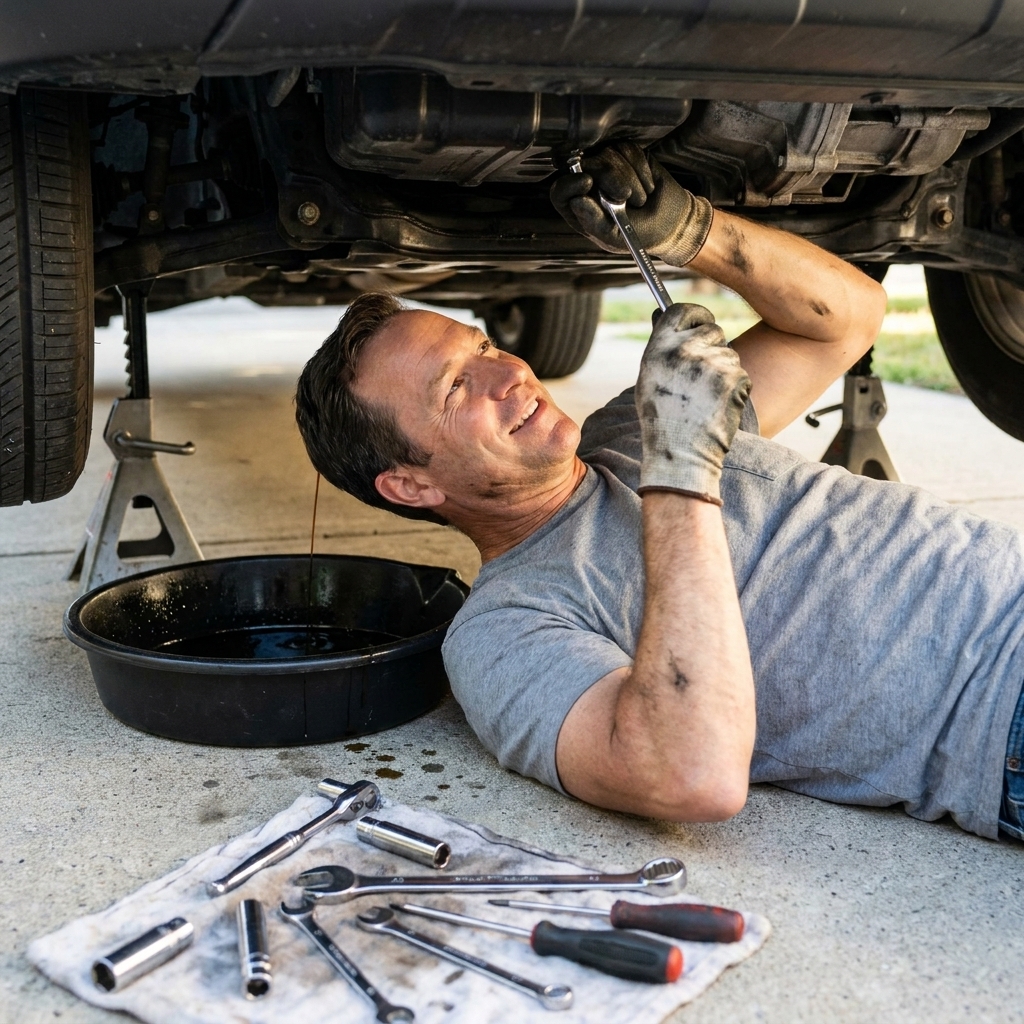
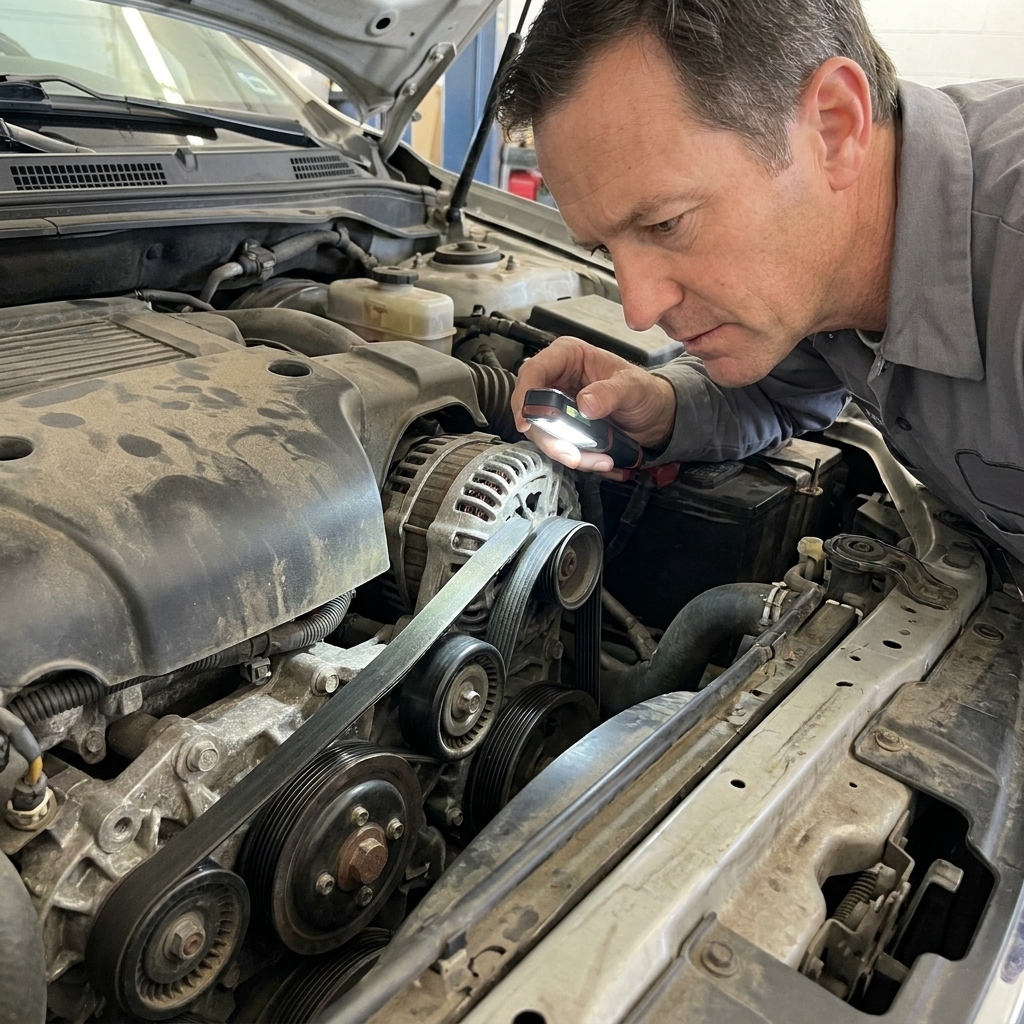
I grew up holding the flashlight for my grandpa, and the first lesson I learned was this: cars rarely fail out of nowhere. They give you little hints first. Low fluid is one of the clearest hints, and it is also one of the easiest things you can stay ahead of at home.
In many vehicles, you can check the basics in under 10 minutes. A couple of them depend on your setup, though. Some transmissions are sealed, and many cars have electric power steering with no fluid at all. Still, a quick monthly look under the hood catches leaks early, extends component life, and avoids that sinking feeling when a warning light pops on during a busy week.
Before you pop the hood
- Use your owner’s manual. It will show fluid locations, correct fluid types, and special procedures. This matters more than people think, especially for coolant and transmission fluid.
- Park on level ground and let the engine cool when required. “Level ground” is not a suggestion for accurate readings.
- Keep fluids clean. Dirt in a reservoir is like sand in your shoes. A little becomes a lot fast. Wipe around caps before opening.
- Do not mix fluids unless your manual says it is OK. “Universal” is not always universal.
- Top off is not the same as fixing. If a fluid keeps dropping, you have a leak or a consumption issue that needs attention.
- If a critical fluid is very low, do not gamble. Oil below the minimum mark, an empty coolant reservoir, or a brake warning light is a “stop and verify” moment, not a “send it and hope” moment.
1) Engine oil
What it does: Oil lubricates, cools, and cleans the engine. Low oil is one of the fastest ways to turn a perfectly good engine into a very expensive driveway ornament.
Where to find it
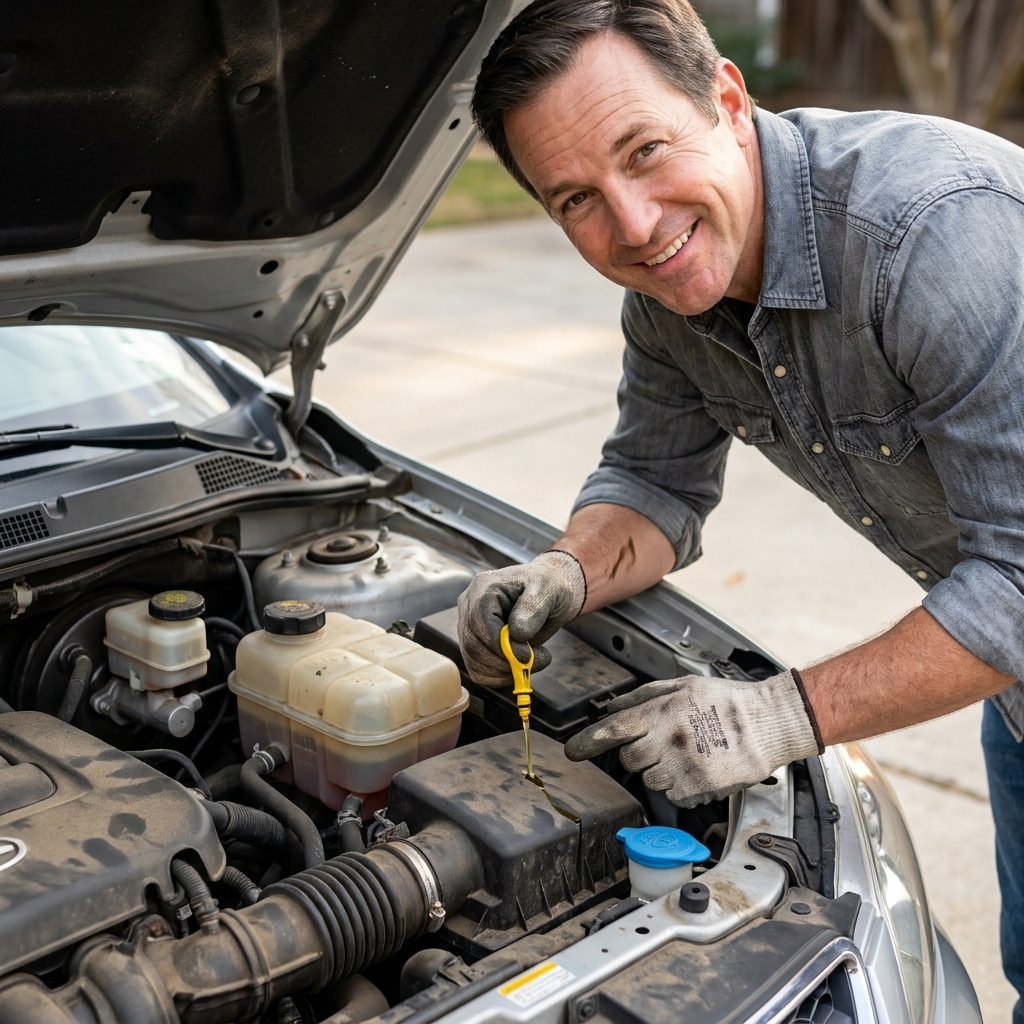
You will typically see a bright handle for the dipstick (often yellow or orange) and an oil fill cap on top of the engine.
How to check it
- Park on level ground.
- If the engine is warm, shut it off and wait 5 to 10 minutes so oil drains back into the pan.
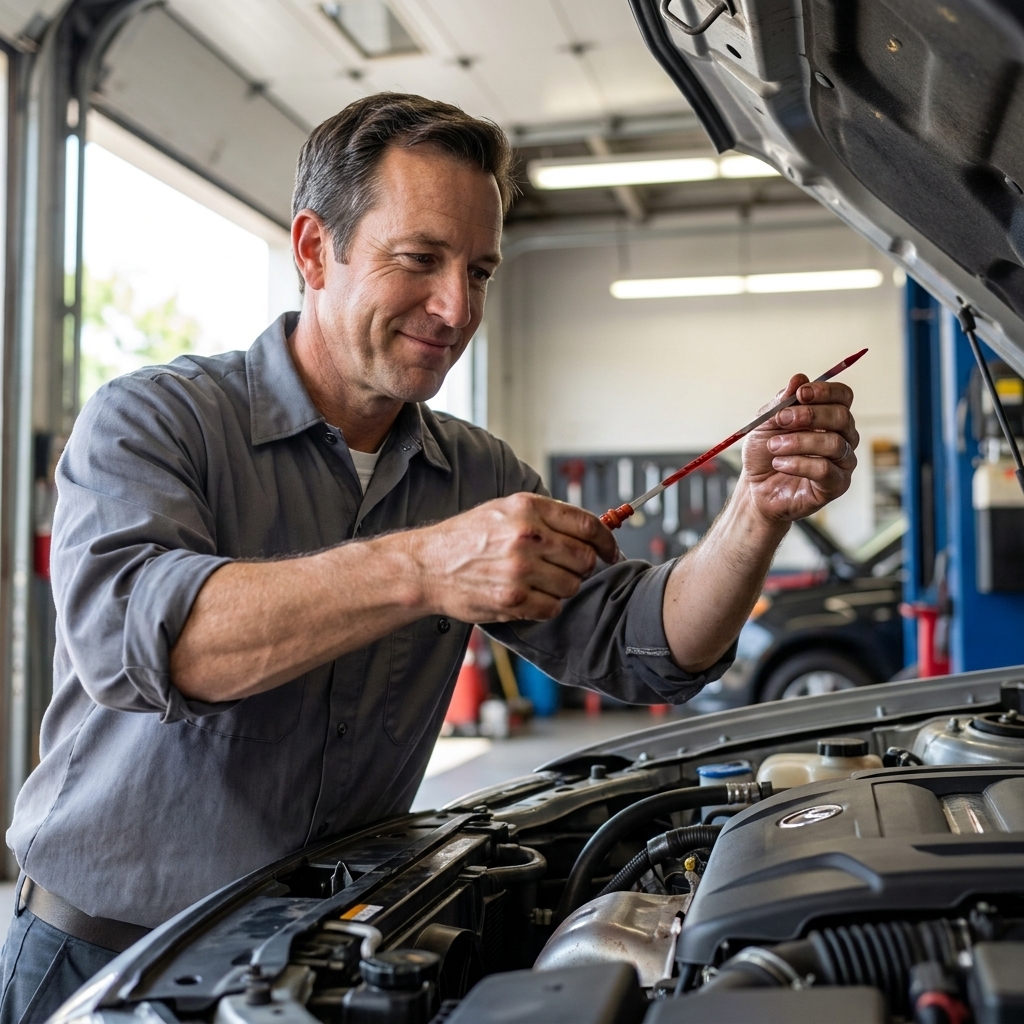
- Pull the dipstick, wipe it clean, reinsert fully, then pull again.
- Oil should be between the MIN and MAX marks (or the two holes or lines).
How to top it off
- Remove the oil fill cap.
- Add a little at a time, usually about 1/4 to 1/2 quart, then recheck.
- Stop when the level is near the top mark, not above it.
What “normal” looks like: Oil color varies. Dark does not automatically mean bad. Gritty oil, a burnt smell, or milky “coffee with cream” oil are signs to investigate.
If it is low again soon: Check for leaks around the oil filter, drain plug, and valve cover area. If there are no drips, your engine may be consuming oil, which is common on higher-mileage vehicles.

2) Coolant (antifreeze)
What it does: Coolant moves heat out of the engine and prevents freezing and corrosion. Low coolant can lead to overheating, and overheating is how engines warp heads and blow head gaskets.
Where to find it
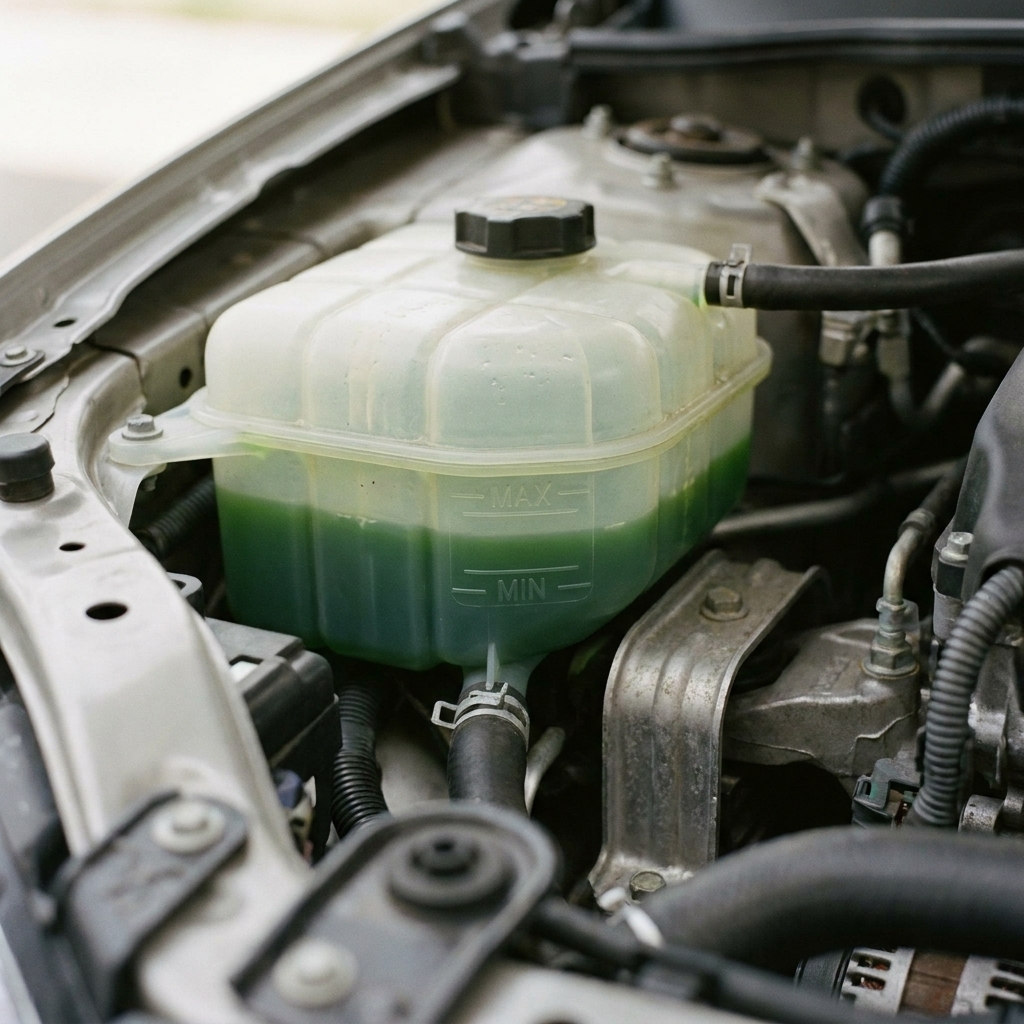
Most cars have a translucent coolant reservoir with MIN and MAX marks. Some also have a radiator cap directly on the radiator.
How to check it
- Check when the engine is cold for the most accurate reading and safest handling.
- Look at the reservoir level against the MIN and MAX lines.
- Note the coolant color. Many coolants are pink, orange, green, blue, or purple depending on type.
How to top it off
- Add coolant to the reservoir up to the COLD or MAX line, depending on markings.
- If you are unsure what coolant is in the car, the safest move is to use the exact type specified in the owner’s manual.
- If you need a small top-off and you are in a pinch, distilled water is generally better than tap water. Just know that in freezing climates, adding water can reduce freeze protection, so restore the proper mix as soon as you can.
Big safety warning: Never open a radiator cap on a hot engine. Hot coolant can spray out and cause serious burns.
If it is low again soon: Look for crusty residue near hose connections, the radiator end tanks, the water pump area, and under the car after parking. Also pay attention to a sweet smell or foggy windows, which can hint at a heater core issue.
3) Transmission fluid
What it does: In many vehicles, transmission fluid lubricates internal parts, controls hydraulic pressure, and helps manage heat. The exact checking method depends on whether you have an automatic, a CVT, a manual, or a sealed transmission.
Where to find it
Some vehicles have a transmission dipstick (often toward the back of the engine bay). Many newer cars do not, and instead use a fill plug and level-check procedure underneath the vehicle.
How to check it
- If you have a dipstick: Follow the manual exactly. Many require the engine running, the transmission at operating temperature, and the shifter cycled through gears with your foot on the brake.
- Fluid should be within the marked range.
- Fluid color varies by type and brand. It is often red, pink, or amber, but not always, especially with some modern ATFs and CVT fluids. Pay attention to smell and condition, and use the manual as your baseline. Very dark fluid, glittery debris, or a burnt smell is a red flag.
How to top it off
- Dipstick style: Add only the correct ATF or CVT fluid in small amounts through the dipstick tube using a funnel, then recheck.
- Sealed transmissions: Do not guess. Many require a specific temperature window and a level plug. If you are not set up for that, have a shop check it.
Important: Overfilling transmission fluid can cause foaming and shifting problems, so sneak up on the correct level.
Manual transmission note: Many manuals use gear oil that is checked from underneath at a fill plug. That is still a “fluid to care about,” it is just not always a quick driveway check.
4) Brake fluid
What it does: Brake fluid transfers force from your brake pedal to the brakes at the wheels. It also absorbs moisture over time, which is why brake fluid service intervals matter.
Where to find it
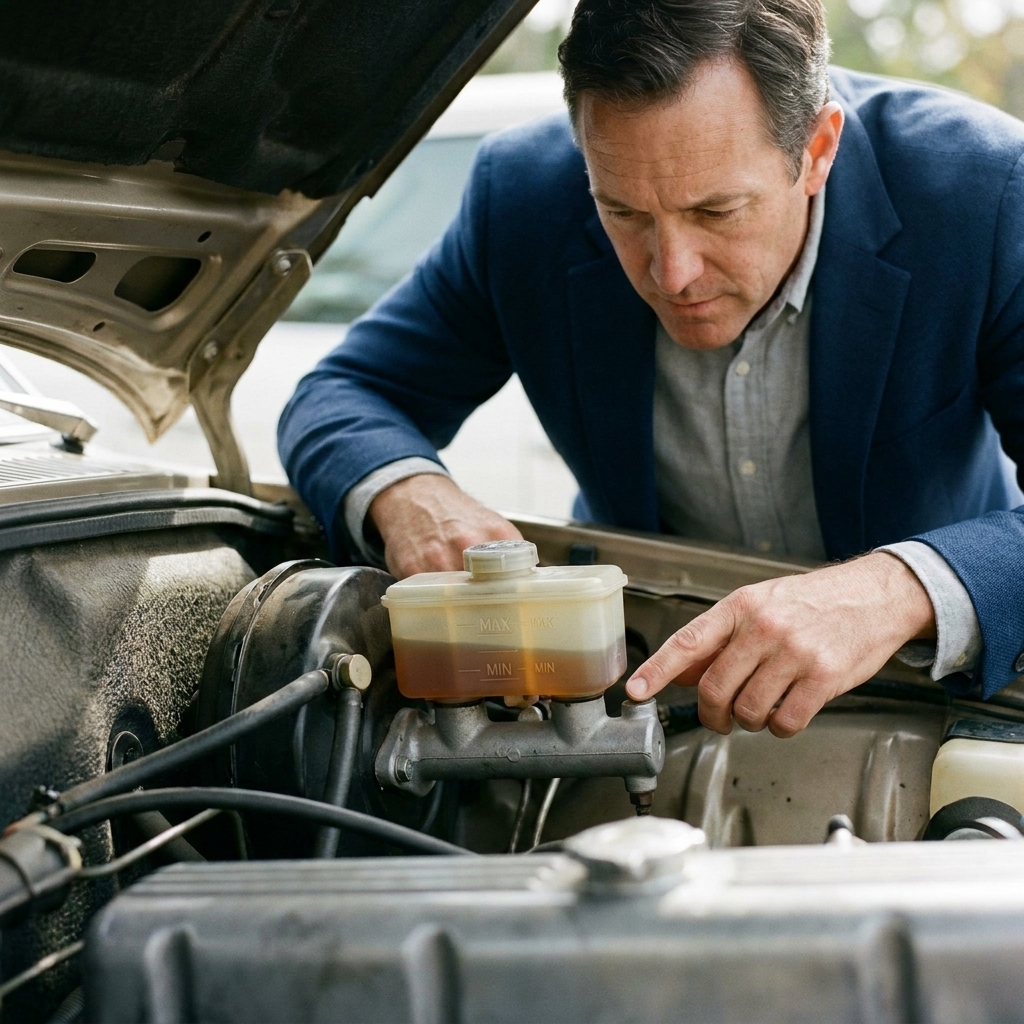
The brake fluid reservoir is usually on the driver side near the firewall, mounted to the brake master cylinder. The cap often says DOT 3, DOT 4, or DOT 5.1.
How to check it
- With the car parked level, look at the reservoir. Most are translucent with MIN and MAX marks.
- The level naturally drops as brake pads wear. A low level can also mean a leak.
How to top it off
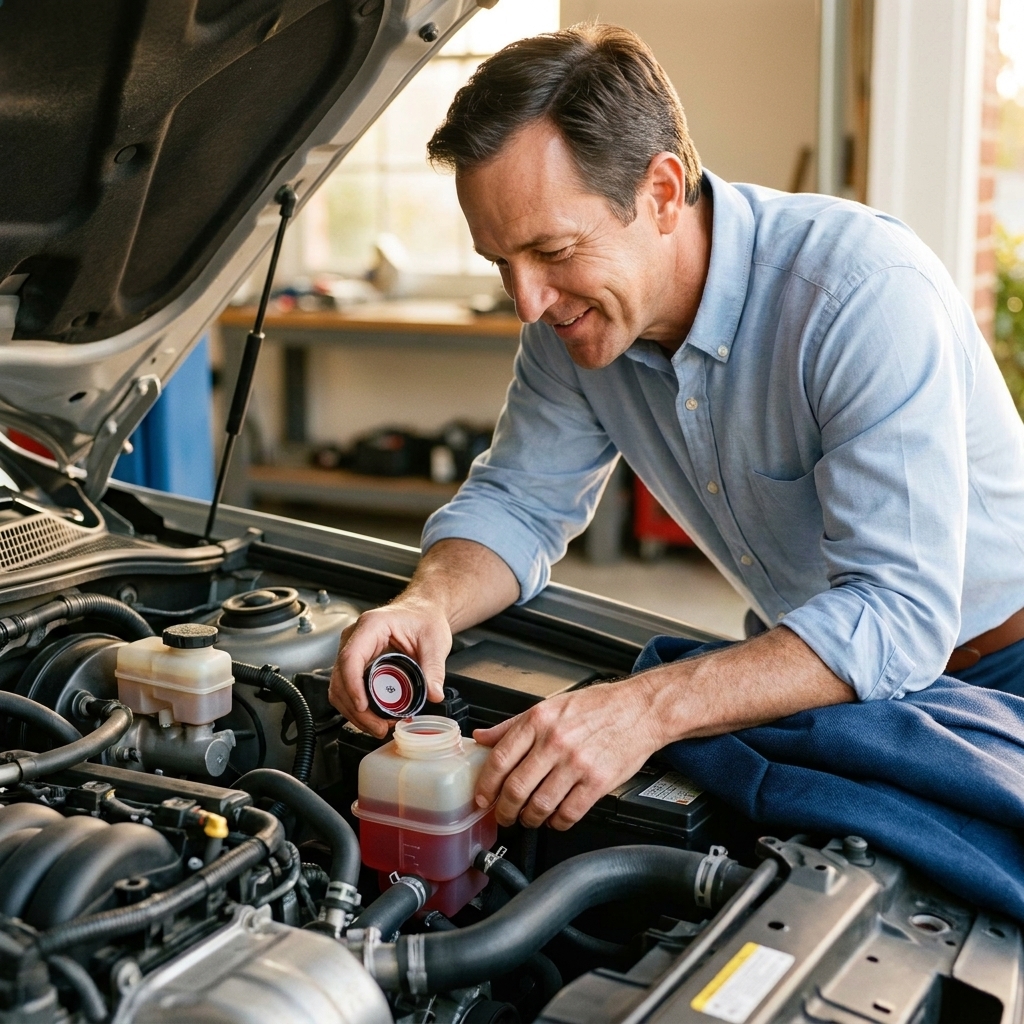
- Clean the cap area first so no grit falls in.
- Add only the brake fluid type specified on the cap or in the manual.
- Fill to just below the MAX line. Do not overfill.
Service interval tip: Many manufacturers call for a brake fluid flush around every 2 to 3 years, but your owner’s manual wins. Moisture is the enemy here.
Be careful: Brake fluid can damage paint. If you spill any, rinse with plenty of water promptly.
If it is low: Check pad thickness and look for wetness at the master cylinder, brake lines, and inside each wheel near the caliper. If your brake pedal feels soft or sinks, stop driving and have it inspected.
Clutch fluid note: On many manual-transmission cars, the clutch uses brake fluid. Sometimes it shares the brake reservoir, sometimes it has its own small reservoir nearby.
5) Power steering fluid
What it does: On hydraulic systems, power steering fluid helps you turn the wheel smoothly. Some vehicles use electric power steering and have no fluid to check at all.
Where to find it
If your car uses hydraulic power steering, you will see a power steering reservoir with a cap that may include a dipstick. Some caps have “HOT” and “COLD” level marks.
How to check it
- Follow the cap markings. Check hot or cold as indicated.
- If the cap has a dipstick, wipe and recheck like engine oil.
- Look at the fluid condition. Very dark fluid can indicate it is overdue for service.
How to top it off
- Add the specified fluid slowly. Some cars use ATF, others require dedicated power steering fluid.
- Do not overfill, and do not mix types.
If it is low again soon: Inspect for damp hoses, wetness around the pump, and drips on the subframe. A whining noise while turning is a common low-fluid symptom, but do not keep driving it that way. You can damage the pump.
6) Windshield washer fluid
What it does: Washer fluid is not just for bug guts. It is a safety item. Clear visibility is part of being able to stop in time, especially at night.
Where to find it
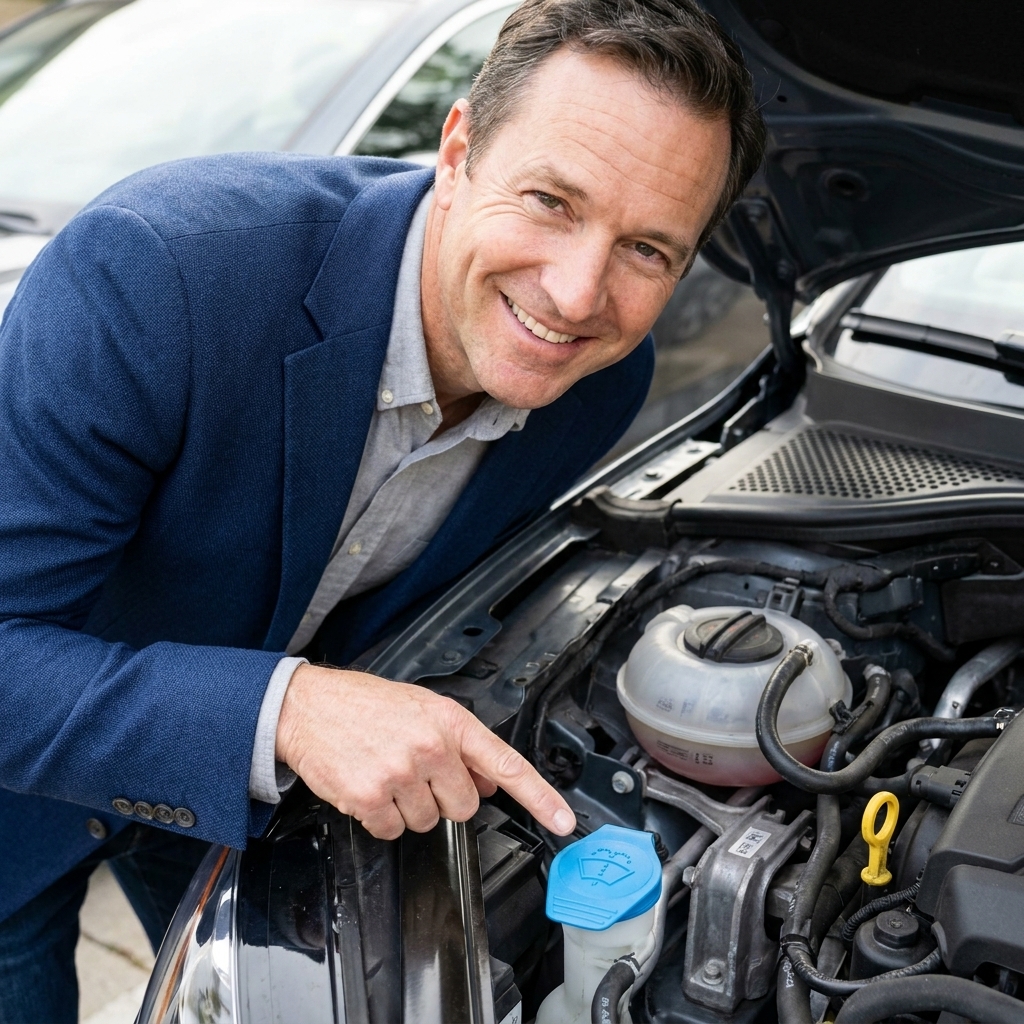
Look for a cap with a windshield and spray icon. The reservoir is usually near the front corner of the engine bay.
How to check it
- Many reservoirs are translucent so you can see the level.
- If you cannot see it, pop the cap and shine a flashlight down the neck.
How to top it off
- Pour in washer fluid until it is near the top. No precision required here.
- Use season-appropriate fluid, especially winter blend in freezing climates.
Skip the DIY soap mix: Dish soap can leave residue and clog nozzles. Washer fluid is cheap, and your time is worth something.
A routine you will keep
Most people do best with a schedule tied to something that already happens.
- Every other fuel fill-up: quick look for obvious leaks under the car.
- Once a month: engine oil and coolant reservoir level.
- Every 3 months: washer fluid and a visual check of brake fluid.
- Twice a year: power steering (if equipped) and a transmission fluid check if your vehicle has an accessible dipstick and the manual supports DIY checking.
- Before a long road trip: do a full under-hood check and take 60 seconds to look for fresh wet spots under the car.
If you are forgetful, keep a bottle of the correct oil and washer fluid on a garage shelf next to your funnel. Make it easy on yourself.
Extra fluids some vehicles have: AWD and 4WD vehicles may also have differential and transfer case fluids. Those are usually checked from underneath and are often “service interval” items rather than quick under-hood checks, but they matter.
Common mistakes I saw in the shop
- Topping off the wrong fluid. Brake fluid and power steering reservoirs can look similar at a glance. Read the cap, every time.
- Overfilling oil. More is not better. Too much oil can cause foaming and, in some cases, contribute to oil getting pulled into the intake, which can create bigger problems.
- Opening the cooling system hot. I am repeating this because it is that important.
- Ignoring repeat low levels. Fluids do not vanish. If it keeps dropping, find the leak or find the cause.
FAQ
Can I mix coolant colors?
Do not use color as the deciding factor. Different chemistries can share colors, and mixing the wrong types can cause corrosion or sludge. Use the coolant type specified by your manufacturer.
Why is my brake fluid low if I have no leak?
As brake pads wear, caliper pistons sit farther out, which lowers the reservoir level. Low fluid can be normal with worn pads, but it should never be below MIN. If you top it off and later replace pads, the level can rise and overflow, so check pad thickness before adding a lot.
My transmission has no dipstick. Should I worry?
Not automatically. Many modern transmissions are “sealed” and use a service procedure to check level. You should still service the fluid at the interval your manual recommends, but checking and topping off is often not a simple driveway job.
What if I do not know what fluid is already in the car?
For anything critical like coolant and transmission fluid, the safest path is to identify the correct type from the owner’s manual and, if needed, have the system serviced properly rather than mixing unknown fluids.
When to get help
DIY checking and topping off is great. But if you see any of the following, it is time to slow down and get a second set of eyes on it:
- Coolant level dropping repeatedly or any overheating
- Brake fluid below MIN, warning light on, soft pedal, or visible wetness near wheels
- Transmission slipping, harsh shifting, or burnt-smelling fluid
- Power steering whining or heavy steering
- Milky oil or metal flakes on the dipstick
Most of the time, catching a small leak early turns a scary repair into a manageable one. And that is the real win. Not just saving money, but staying in control of your own car.