If your steering wheel starts doing the jitterbug at 60 to 75 mph, your car is telling you something is off. The good news is that most highway-speed vibrations come from a short list of usual suspects, and you can narrow it down without guessing or throwing parts at it.
I spent years in independent shops watching people get sold expensive “front end rebuilds” when they really needed a tire balance. So let’s walk through what the shake feels like, what causes it, and how to confirm the problem step-by-step in your own driveway.
First: a quick safety check
If the steering wheel shake is violent, new, getting worse fast, or paired with any of these symptoms, treat it like a safety issue, not a weekend project:
- Shake or wobble at lower speeds (especially if it is strong or constant)
- Car pulls hard to one side suddenly
- Clunking noises over bumps or when braking
- Visible bulge in a tire or a tire losing air
- Brake pedal sinks or braking feels unpredictable (that is a separate brake-system safety problem, stop driving)
In those cases, slow down, avoid the highway, and inspect the tires and lug nuts right away. If anything looks questionable, get it towed or checked professionally.
Match the shake to the moment
Here’s the simplest way to aim your diagnosis: when does the steering wheel shake happen?
- Mostly at certain speeds (usually 55 to 75 mph): think tires and wheels first.
- Mostly while braking from highway speeds: suspect brake rotors, but do not ignore suspension play.
- Worse over bumps or during lane changes: suspect worn suspension or steering components.
- Happens under acceleration: could be an axle or drivetrain issue (more common on front-wheel drive and AWD, but not exclusive).
Keep that in your pocket as we go through the common causes.
Cause #1: Tire balance
If your steering wheel shakes mainly at highway speeds and calms down at lower speeds, an out-of-balance tire is the first place I’d look. Think of it like a washing machine with one heavy towel stuck to one side. At low speed it sort of tumbles along. At high speed it tries to walk across the room.
What it feels like
- Shake starts around a specific speed (often 55 to 65 mph)
- May get worse as speed increases
- Can come and go as road surface changes
- Often feels like a rapid shimmy rather than a slow wobble
DIY checks you can do
- Check tire pressure cold, on all four tires. A low tire can mimic imbalance.
- Look for mud, snow, or packed debris inside the wheel. This is a classic “it started right after that storm” problem.
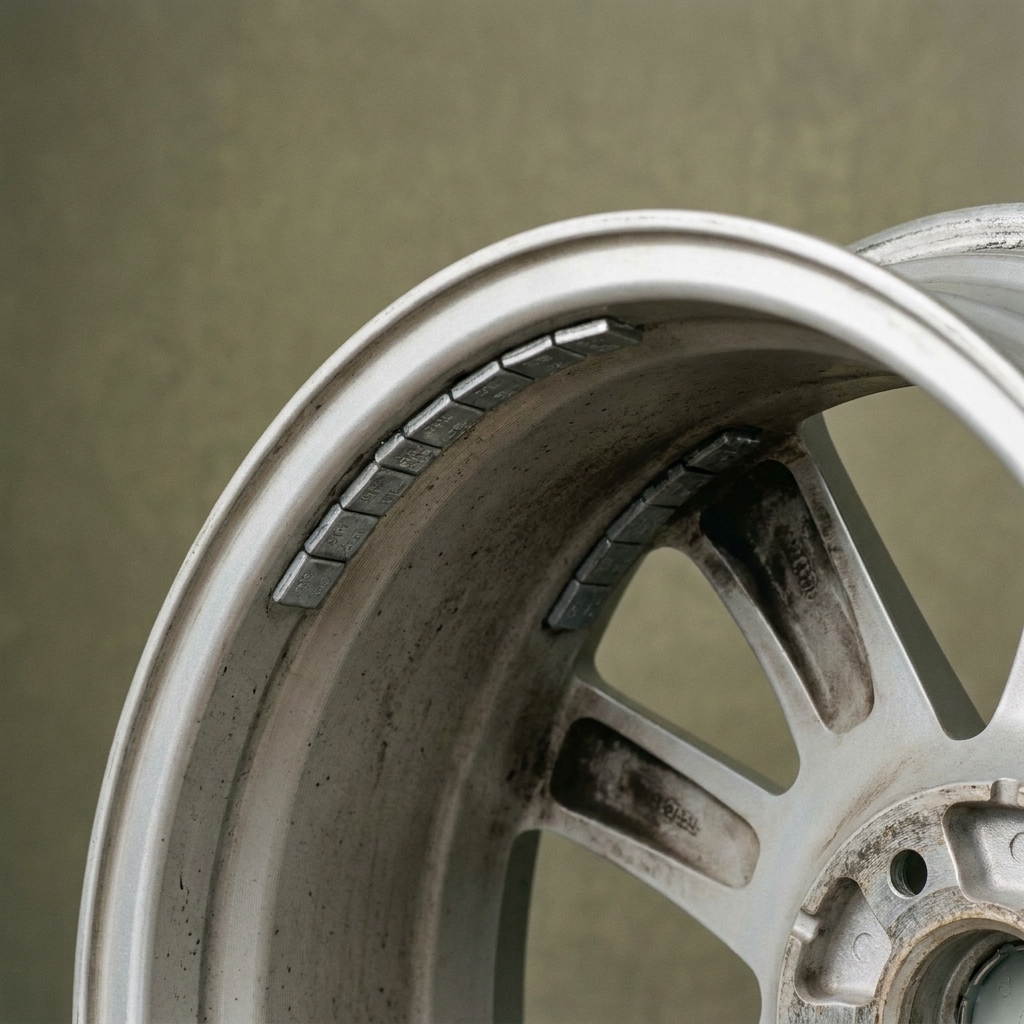
- Inspect for missing wheel weights on the rim. You may see a clean rectangle where an adhesive weight used to be.
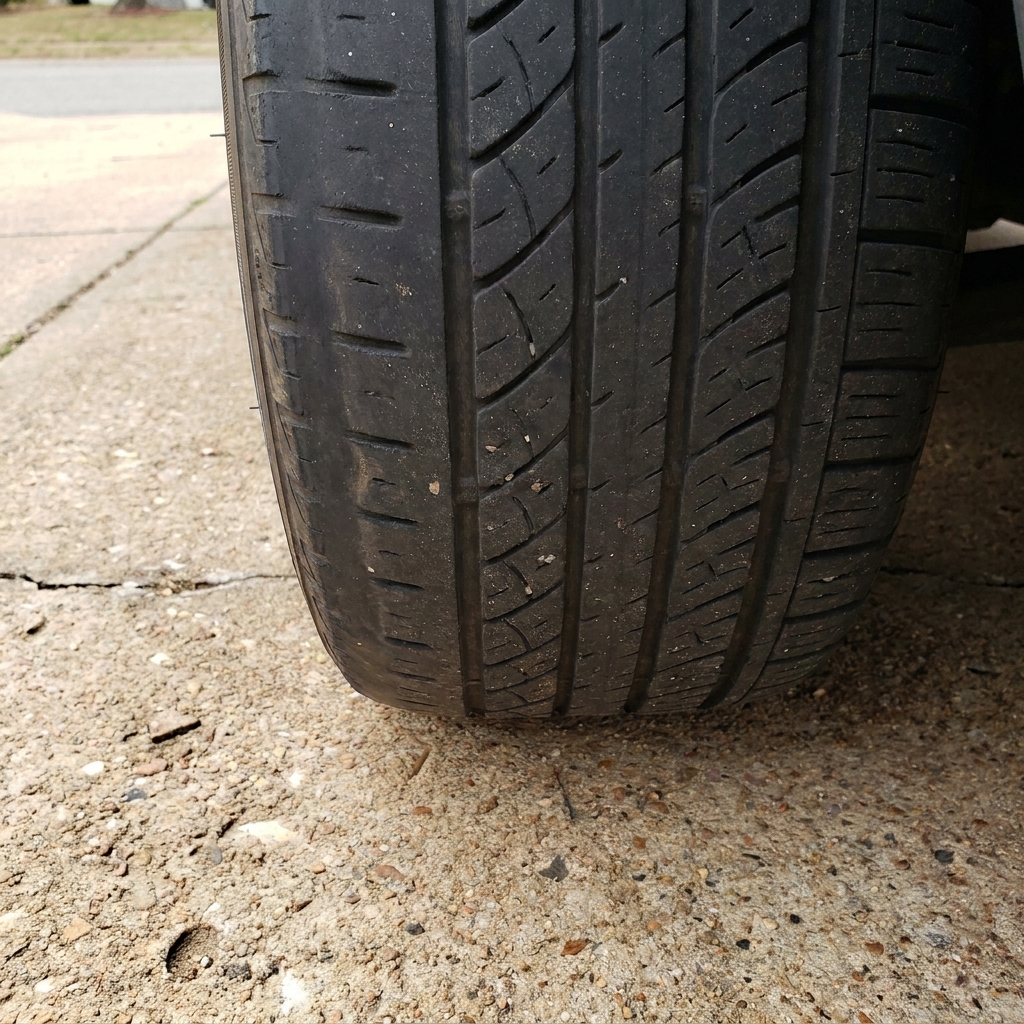
- Look for cupping (scalloped dips around the tread). Cupped tires can shake even if balanced, and they usually point back to worn shocks/struts or bad alignment.
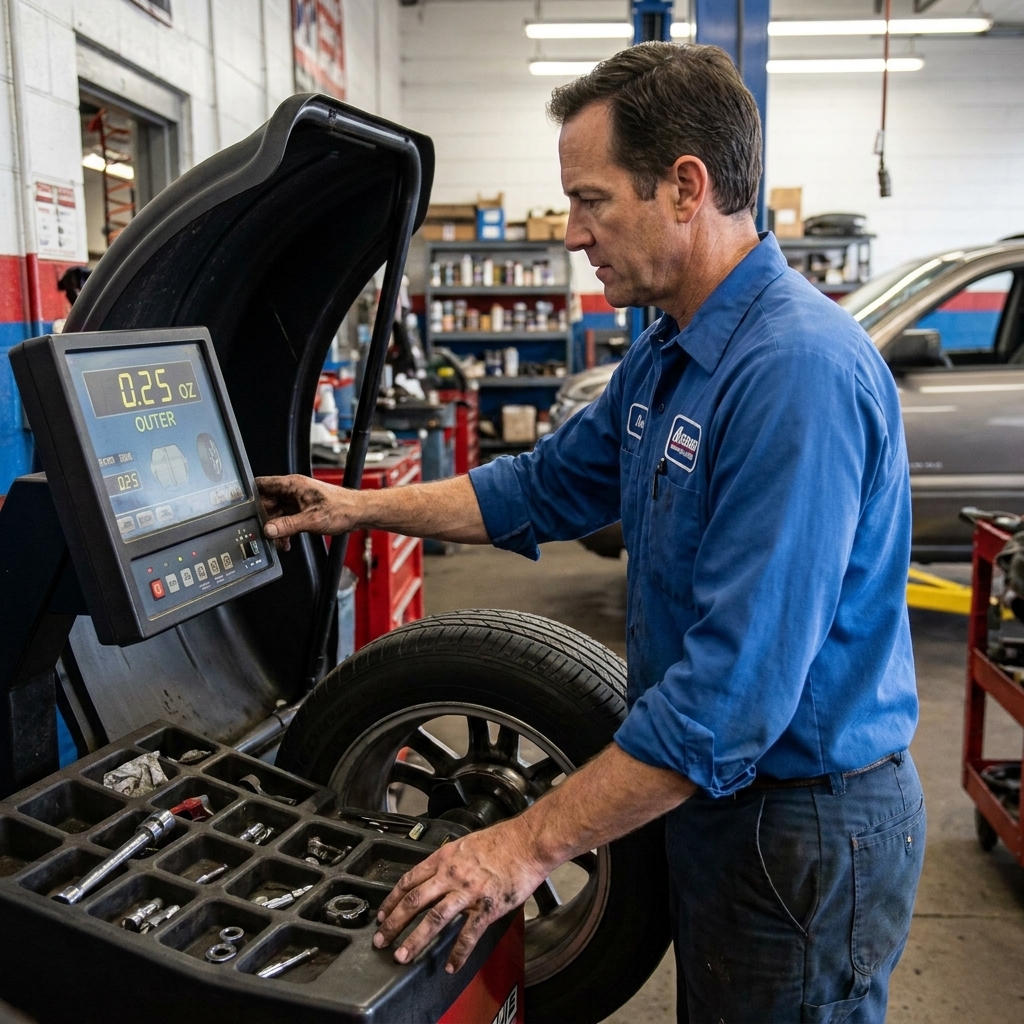
If everything looks normal, the next step is simple: get a tire balance. Ask for a road force balance if the shop offers it. That is a balance machine that also presses a roller against the tire to measure how the tire and wheel act under load, which helps catch stiff spots and “not quite round” assemblies that a normal spin balance can miss.
Cause #2: Bent wheel or bad tire
Sometimes the tire is balanced perfectly and the steering wheel still shakes. That is when you start thinking about runout, meaning the wheel or tire is not rolling true.
Common triggers
- Hitting a pothole hard
- Striking a curb
- Driving on a tire that was low on air
- Manufacturing defect in the tire (rare, but it happens)
- Belt separation or internal tire damage (more common than people think)
What it feels like
- Shake may be present at more than one speed range
- Can feel like a “thump-thump” that speeds up with the car
- Often worse on smooth roads (because you notice it more)
DIY checks
Park on level ground, set the parking brake, and chock a wheel. Then:
- Visually inspect the sidewalls for bubbles or bulges. If you see one, replace the tire immediately.
- Inspect the tread face for a raised spot, a wave, or a section that looks “shifted.” That can be a clue to a broken belt.
- Look at the rim lip for flat spots or bends.
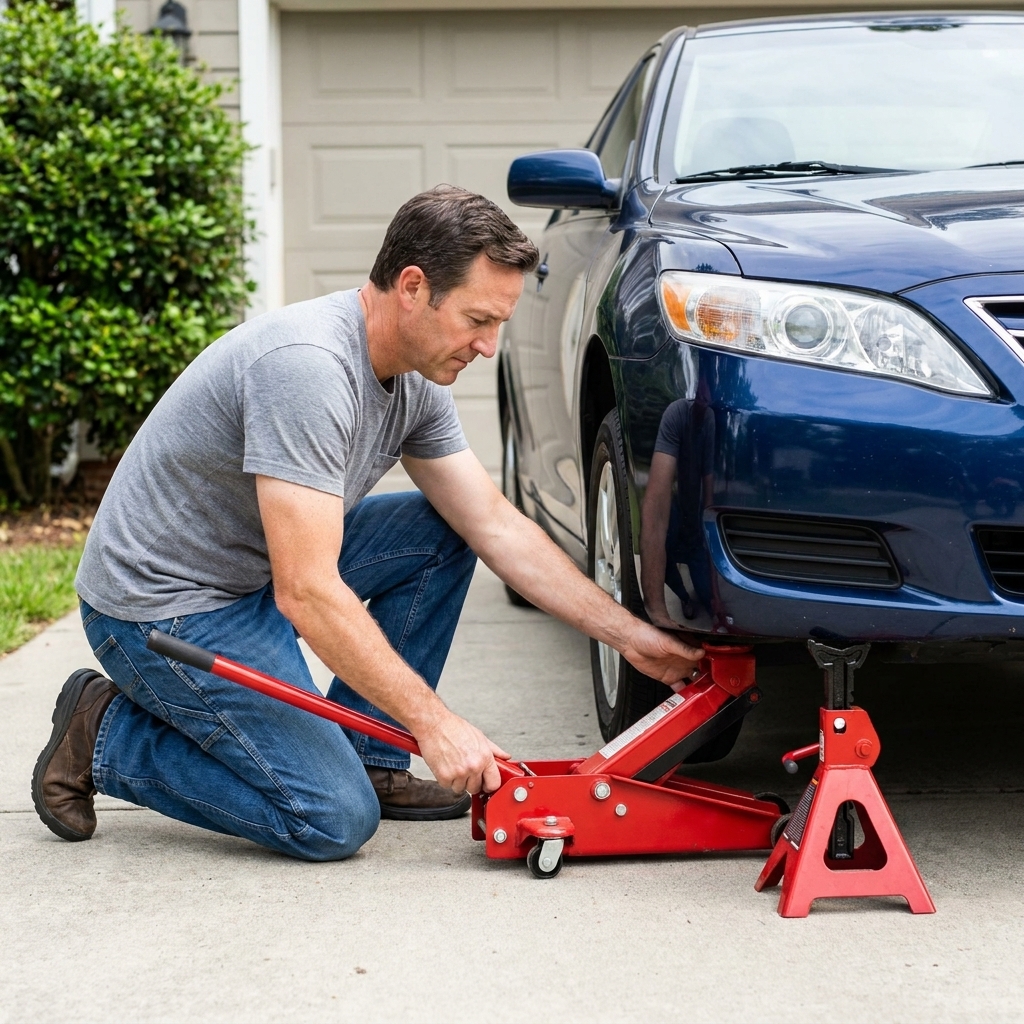
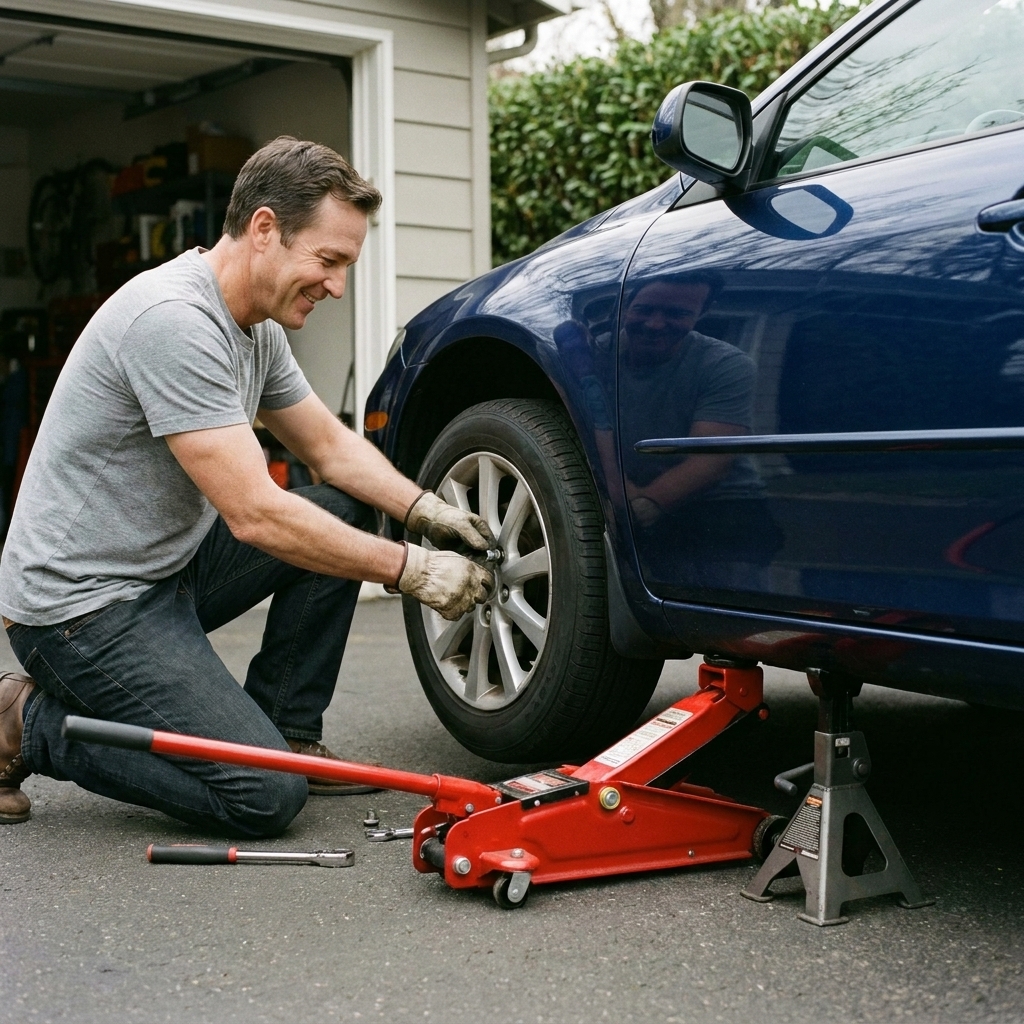
- Spin test (only if safely lifted and supported): If you can safely jack up the front end and support it on jack stands, spin the wheel and watch the tread and rim edge. A noticeable side-to-side wobble points to a bent wheel or tire issue.
A shop can measure runout precisely. If the wheel is bent, some can be repaired, but many should be replaced depending on severity and wheel type.
Cause #3: Brake rotors
If the steering wheel shake shows up when you press the brake pedal, especially coming down from highway speeds, brake rotors jump to the top of the list. Most people call it “warped rotors,” but what you feel is usually uneven rotor thickness or brake pad material transfer that makes braking force pulse.
What it feels like
- Steering wheel shimmies during braking
- Brake pedal may pulse under your foot
- Vibration is strongest from about 70 down to 40 mph
- May be worse after long downhill braking or towing
DIY checks
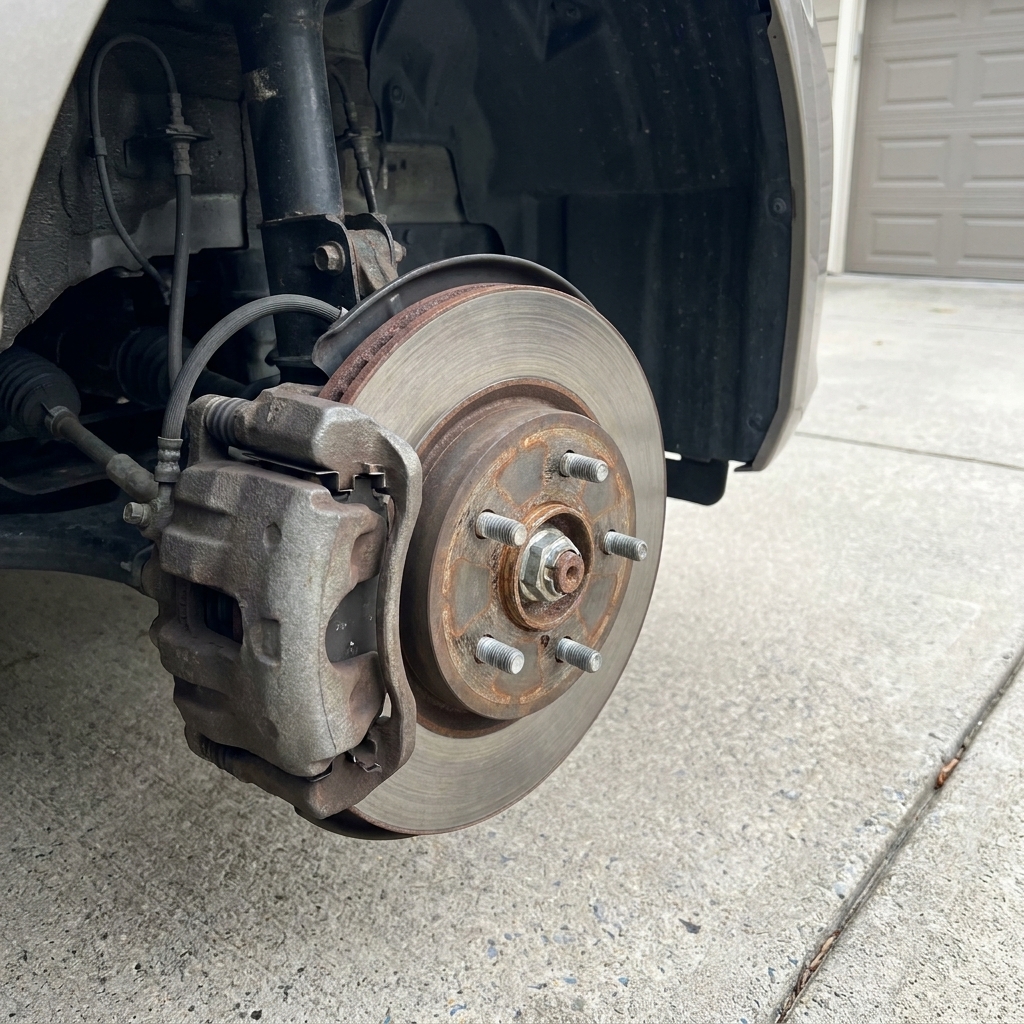
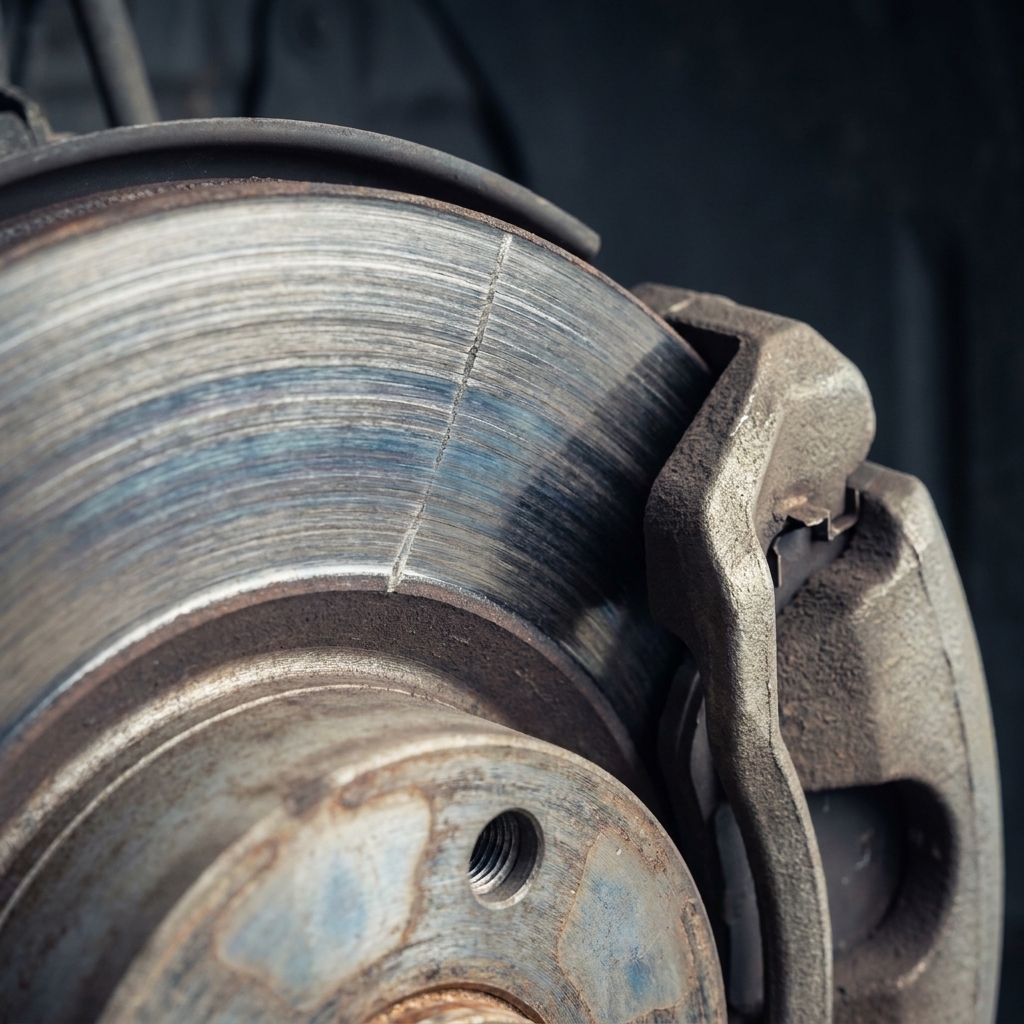
- Look at the rotors through the wheel spokes. Heavy grooves, blue heat spots, or obvious scoring are clues.
- Listen for scraping that changes with braking, which can also indicate pad or hardware issues.
- Check lug nut torque. Uneven or over-torqued lug nuts can contribute to rotor distortion. If you do one thing for your future self, use a torque wrench.
The real confirmation is measuring rotor runout with a dial indicator, which is a more advanced DIY step. For most driveway mechanics, the practical path is: if the shake only happens while braking and your pads are due anyway, plan on pads and rotors on that axle. Resurfacing is sometimes possible, but many modern rotors are thin enough that replacement makes more sense.
Cause #4: Steering and suspension wear
Tires and brakes get blamed for everything, but worn front-end parts can absolutely cause a steering wheel shake at speed, and they can make a mild imbalance feel ten times worse.
Common culprits
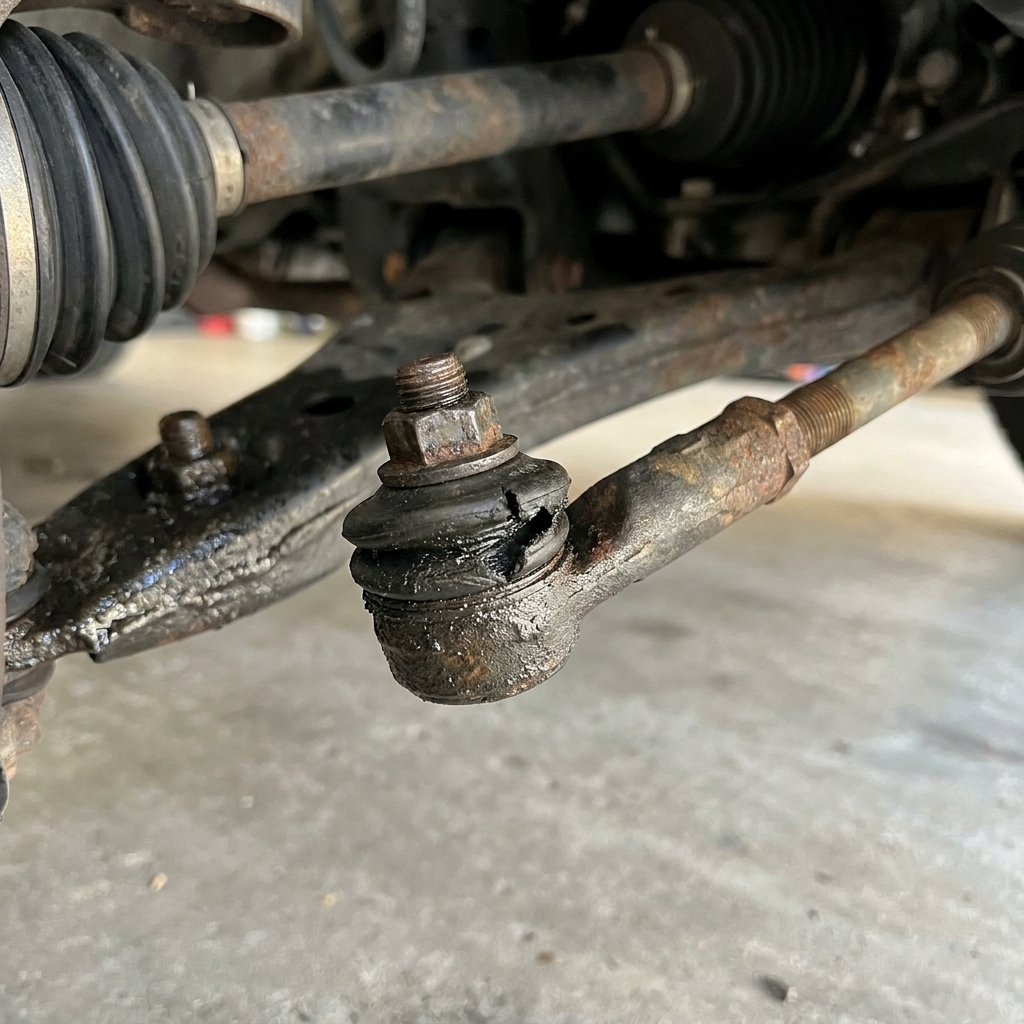
- Tie rod ends (inner or outer)
- Lower ball joints
- Control arm bushings
- Wheel bearings
- Shocks/struts (weak damping leads to tire cupping and instability)
What it feels like
- Vibration plus wandering, especially on grooved pavement
- Clunks over bumps or during braking
- Uneven tire wear, feathering, or cupping
- Steering feels loose, like you are constantly correcting
DIY driveway checks
If you can safely lift the front end and support it on jack stands:
- 12 and 6 o’clock test: Grab the tire at the top and bottom and rock it. Play here can indicate a ball joint or wheel bearing issue.
- 3 and 9 o’clock test: Grab the tire at the sides and rock it. Play here often points to tie rods or steering rack issues.
- Reality check: These quick tests can overlap depending on suspension design, and some worn joints only show play when the suspension is loaded. If something feels “off” but you cannot see it, a shop inspection with the suspension loaded (and sometimes a pry bar) may be the next step.
- Visual bushing check: Look for torn rubber, leaking hydraulic bushings, or metal-on-metal contact.
If you find noticeable play, do not ignore it. Loose steering and worn joints can turn a minor shake into a real loss-of-control situation.
Cause #5: Alignment
A bad alignment by itself does not always cause a classic highway shake, but it often shows up alongside the things that do. Misalignment can accelerate tire wear, create feathering, and make the car feel nervous at speed. And yes, truly extreme toe or caster issues can create instability even if the tires are balanced.
Clues you need an alignment
- Car pulls left or right on a flat road
- Steering wheel is off-center when driving straight
- Tires show uneven wear (inside or outside edge)
My rule: balance first, then alignment if the tires are healthy and the front end is tight. And if you replaced suspension parts, alignment is non-negotiable.
Cause #6: Wheel mounting and lug nuts
Here’s one that gets missed because it feels too simple: the wheel is not sitting perfectly centered on the hub.
What causes it
- Loose lug nuts or uneven torque
- Rust or debris on the hub face keeping the wheel from sitting flat
- Aftermarket wheels without hub-centric rings (or the wrong rings), so the wheel centers on the lug nuts instead of the hub
What to do
- Torque lug nuts to spec in a star pattern.
- If you recently had wheels off, pull the wheel and clean the hub face and wheel mating surface if you see rust scale or packed debris.
- If you run aftermarket wheels, confirm they are properly hub-centric for your vehicle, with correct rings if required.
I have seen “mystery shakes” disappear after nothing more than cleaning the hub and torquing the lugs correctly. It is not glamorous, but it works.
Cause #7: Drivetrain vibration
If the vibration shows up more in the seat than the steering wheel, or it changes under acceleration versus coasting, do not ignore the drivetrain.
Common examples
- Front-wheel drive and AWD: worn CV axle, especially if it also clicks on turns
- Rear-wheel drive and 4WD: driveshaft balance issues, worn U-joints, or bad carrier bearing
These are less common than tire and wheel issues, but when they are the cause, no amount of balancing will fix it.
Quick diagnostic flow
If you want the fastest path without overthinking it, follow this order:
- Check tire pressures and look for bulges, damage, missing weights, and packed debris.
- Confirm lug nut torque to spec with a torque wrench.
- Rotate tires and test drive. If the steering shake changes or moves, suspect a tire or wheel issue. If you have directional tires, a staggered setup, or limited rotation options, swap left to right on the front only if your tire type allows it, or have a shop move tires to isolate the corner.
- If it shakes only when braking, inspect rotors and plan brake service on that axle.
- If the car wanders or clunks, do the wiggle tests and inspect suspension and steering parts.
- After fixes, get an alignment if tire wear or steering position suggests it, or if any suspension parts were replaced.
That rotation step is gold for DIY diagnostics. It costs you nothing but a little time and it often tells you whether the vibration is tied to a specific tire or wheel.
Shop lot questions
Why does my steering wheel shake only at 70 mph?
That speed-specific shake is the classic footprint of tire imbalance or a wheel and tire runout issue. It can also be the early stage of a worn front-end component, but start with tires and wheels first.
Can bad tires cause the steering wheel to shake even if they are balanced?
Yes. Cupping, broken belts, flat spots, or a tire that is not perfectly round can still shake when balanced. Balance fixes weight distribution, not tire construction problems.
Is it safe to drive with a shaking steering wheel?
Light vibration that has been stable for a while is usually not an immediate emergency, but it is still a warning sign. If the shake is new, severe, or getting worse, slow down and inspect the tires and lug nuts right away. When in doubt, treat it as a safety issue.
Does a warped rotor always shake the steering wheel?
Front rotor issues often do because the front wheels steer. Rear rotor issues are more likely to show up as a vibration in the seat or a pedal pulse without much steering shake.
What if the vibration is in the seat, not the steering wheel?
Seat vibration points more toward rear tires and wheels or drivetrain components, while steering wheel vibration points more toward the front. It is not a perfect rule, but it is a useful starting point.
What I’d do on my own car
If my beater Civic started shaking at highway speeds, I’d go straight to the basics: air pressure, lug torque, quick visual tire inspection, then a tire rotation test drive. If braking triggered the shake, I’d inspect rotors and pads next. Only after those checks would I start chasing suspension play or drivetrain issues.
That method saves money because it starts with the most common, least expensive causes and works toward the more involved ones. And it builds confidence, which is the whole point. Your car is not trying to intimidate you. It is just communicating the only way it knows how.