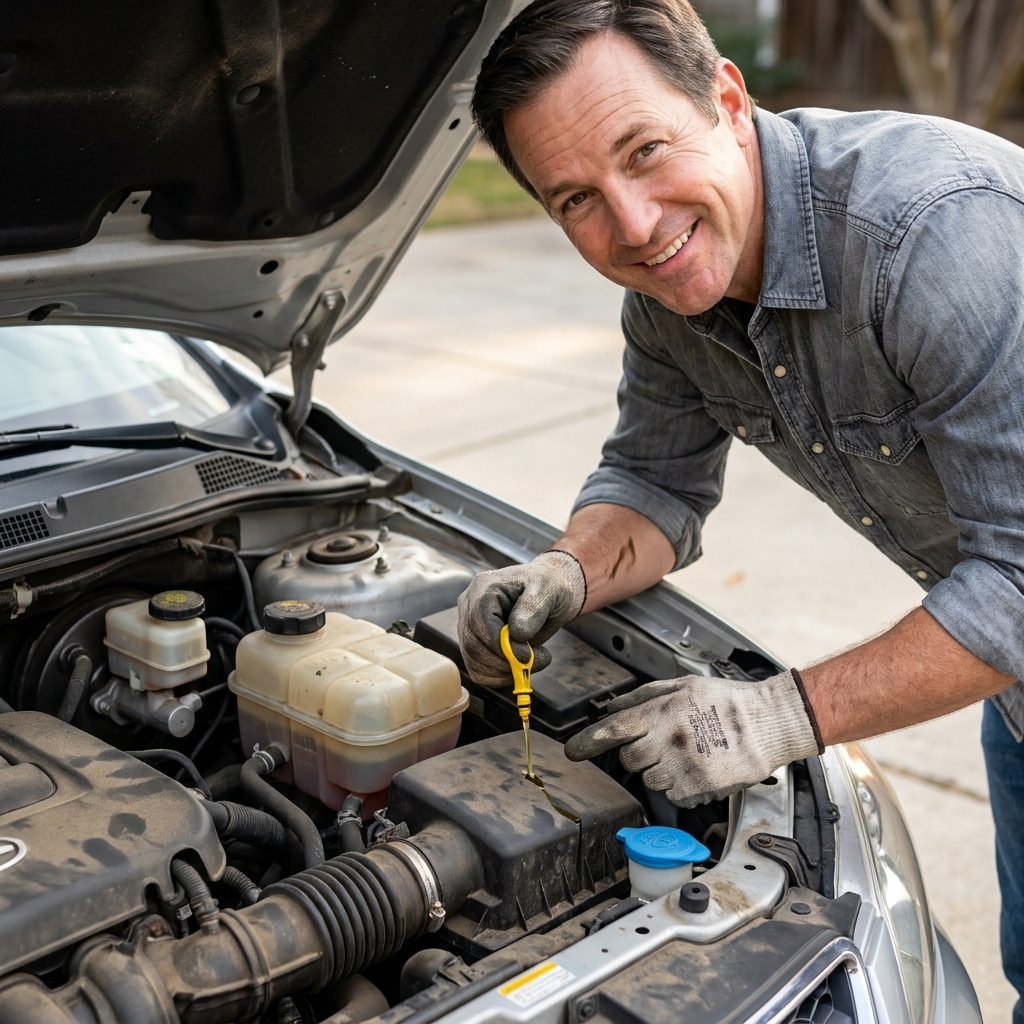
If your brakes squeak, you are not alone. I cannot count how many times a customer rolled into the shop convinced they needed a full brake job, only for the fix to be something simple like cleaning up glazed pads or applying the right brake grease in the right place.
The trick is figuring out when squeaking is normal and when it is your brakes asking for help. Below are the five most common squeak causes I saw in real bays, plus the DIY checks and fixes that can silence them.
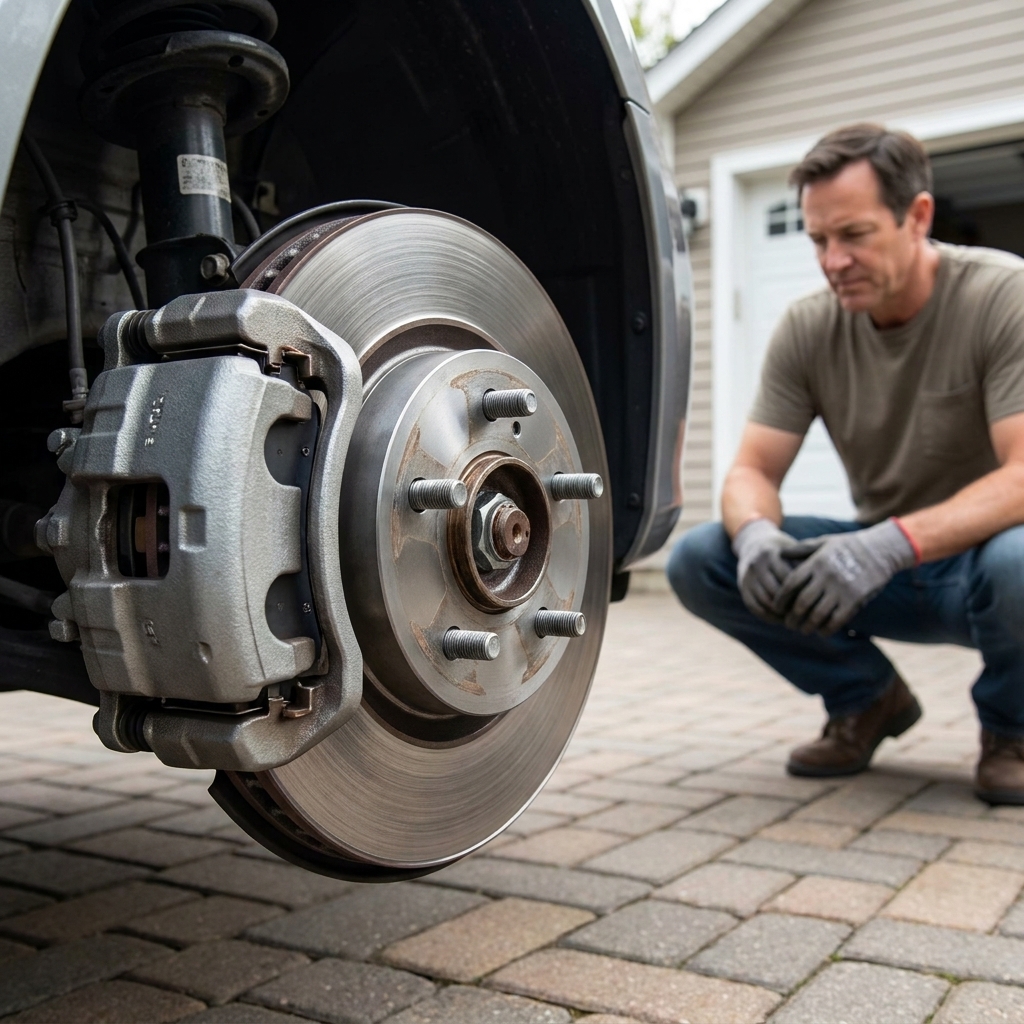
First: Squeak, squeal, or grind?
Brake noises have personalities. Matching the sound to the situation saves a lot of guesswork.
- Light squeak at low speed: Often pad vibration, light rust on rotors, dusty pads, or a minor contact issue.
- High-pitched squeal when braking: Frequently pad wear indicators (where equipped), glazed pads, or dry or incorrect hardware installation.
- Grinding or a growl: Usually pad material is gone and metal is contacting the rotor. Stop driving and inspect.
- Squeak only first thing in the morning or after rain: Often normal surface rust getting scrubbed off.
- Noise mainly in reverse: Common with certain pad shapes, light glazing, or pad and hardware vibration that shows up at low speed.
Safety note: If you feel a pulsing pedal, the car pulls to one side, the pedal is sinking, you smell hot brakes, or you hear grinding, skip the DIY guessing and inspect immediately. Brakes are not the place to “see if it goes away.”
Cause #1: Moisture and rotor surface rust
If the squeak happens mostly on the first couple stops of the day, especially after rain, dew, or a car wash, you might be hearing the pads scrape off a thin film of rust. Brake rotors are bare iron and they flash-rust fast.
How to confirm
- The noise is worst on the first stop or two, then fades.
- You may see a light orange haze on the rotors through the wheel spokes.
- No vibration, no pulling, braking still feels strong.
DIY fix
- Drive and brake normally for a few stops. In many cases that is all it takes.
- If the car sits a lot, take it for a longer drive once a week and use the brakes normally to keep the rotor faces clean.
When it is not normal: If the squeak stays after the brakes are warmed up, or the car sat so long the rotors are deeply pitted, move on to the next checks.
Cause #2: Pads are worn low
Many pads have a small metal tab called a wear indicator. When pad material gets low, that tab touches the rotor and makes a sharp squeal. It is basically your brake pad’s “check engine light,” except it is doing it by yelling at you. Some vehicles use electronic pad wear sensors instead, and some pad sets do not use squealer tabs at all, so do not treat the tab as a universal rule.
How to confirm
- Squeal gets louder as you brake.
- Often happens consistently, not just in the morning.
- You may see thin pads through the wheel spokes, or you may see brake dust buildup on one wheel more than the others.
DIY fix
Replace the pads soon. If you wait too long, you can ruin rotors and turn a simple pad replacement into a much bigger bill.
- Inspect pad thickness: a common guideline is 3 to 4 mm or less means it is time to plan a replacement. When in doubt, check the service manual or pad maker guidance for your vehicle.
- If one pad is much thinner than its mate on the same axle, suspect a sticking caliper (see Cause #5).
Tip from the shop: Replace pads in axle pairs (both fronts or both rears). Do not do one corner unless you are fixing a specific mechanical issue.
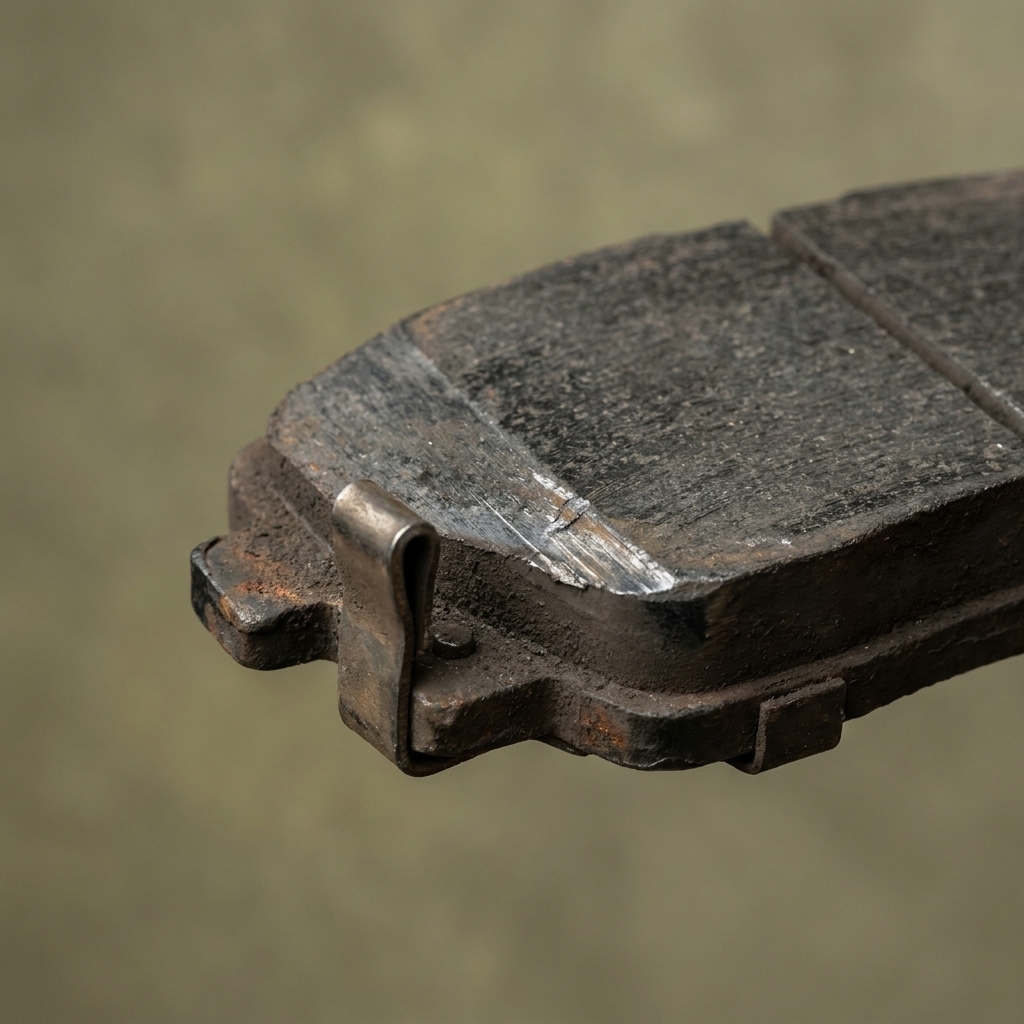
Cause #3: Pad compound and setup issues
Not all pads behave the same. Some pads are naturally noisier, especially when cold or under light pedal pressure. Budget pads can squeak more on some vehicles, but noise is not just about price. It also depends on the friction compound, shims, hardware condition, rotor finish, and whether everything was installed and lubricated correctly.
How to confirm
- Pads were recently replaced and the noise started right after.
- Everything looks mechanically fine, but squeak persists.
- Squeak is worse at light pedal pressure and low speeds.
DIY fixes
- Bed the pads properly (if you did not already). Many pads need a controlled series of moderate stops to transfer an even film to the rotors. Follow the pad manufacturer’s procedure if provided. A typical approach is several medium stops from city speeds with time to cool between stops, then a normal drive to let everything cool. Do not do panic stops back to back unless the manufacturer specifically calls for it.
- Verify hardware and shims: If your pads came with new shims or anti-rattle clips, use them. Worn or missing hardware can make good pads sound terrible.
- Switch pad type if the noise drives you crazy. Quality ceramic pads tend to be quieter on many daily drivers, but the best choice depends on the vehicle and how you drive.
Do not “fix” squeaks with grease on the pad face. Nothing should ever go on the friction surface of pads or rotors. That is a fast track to poor braking and a very bad day.
Cause #4: Glazed pads or rotors
Glazing is when the pad or rotor surface gets overheated or improperly bedded and ends up slick and shiny, almost glassy. When that happens, you can get squeal, reduced bite, and a stubborn noise that does not care if the brakes are warm.
This is most commonly tied to heat and uneven pad material transfer. Long downhills with lots of braking, repeated hard stops, dragging brakes from a sticking caliper, or skipping proper bedding after a pad change can all set the stage.
How to confirm
- Squeak or squeal is consistent even when brakes are warm.
- Brakes may feel less “grabby” than they used to.
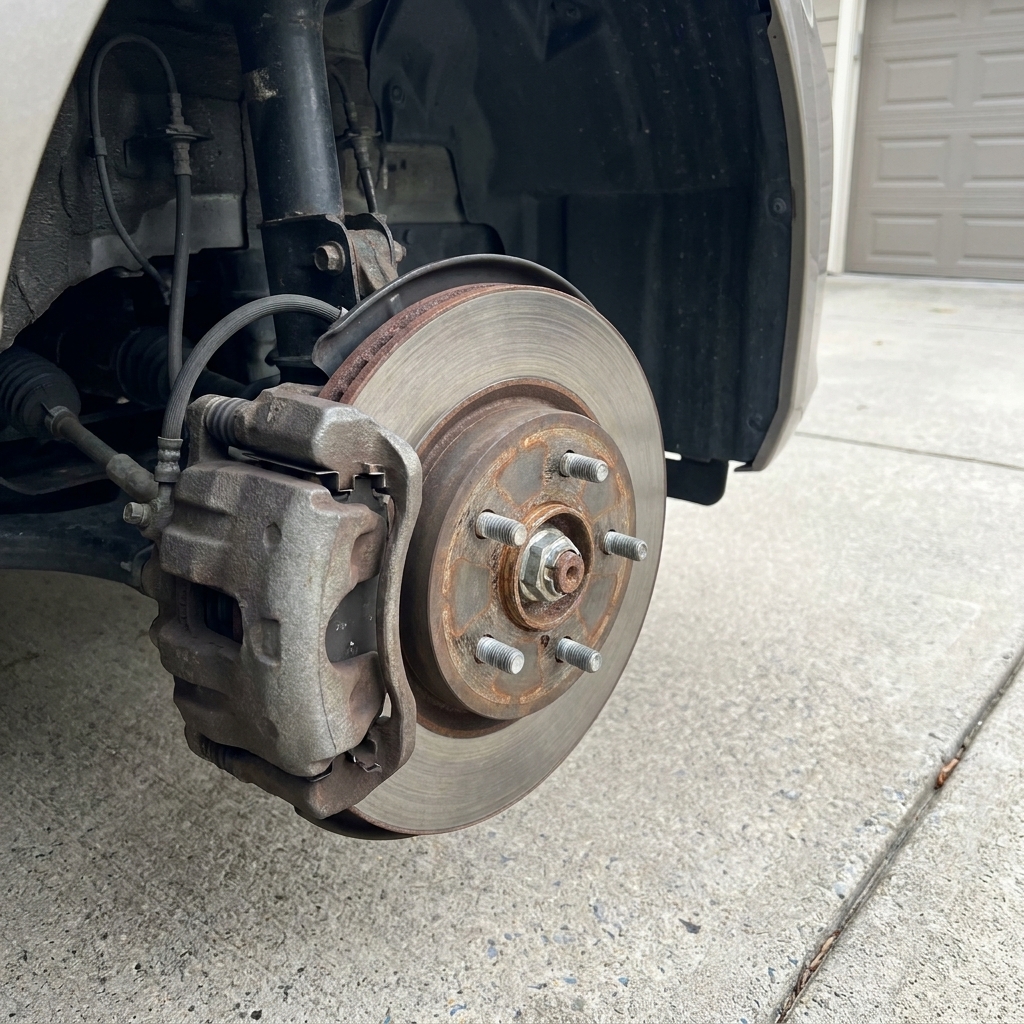
- Pad face can look shiny, and rotors can look mirror-smooth or have patchy darker areas instead of a fine, even finish.
DIY fixes
- Light glazing: Remove the pads and scuff the pad faces on flat sandpaper (around 120 to 150 grit) using even strokes. If you scuff rotor faces with a red scuff pad, keep it even and consistent. Do not dig grooves, and do not create random high and low spots. Clean everything with brake cleaner and let it dry fully.
- Moderate to severe glazing or uneven deposits: Replace pads and either resurface or replace rotors, depending on thickness and condition. If the rotor surface is badly uneven, machining or replacement is usually the real fix.
Important: Rotors have a minimum thickness spec. If you do not have a micrometer and the spec, replacing rotors is often the safer DIY call than guessing.
Cause #5: Hardware, dry contact points, or a sticking caliper
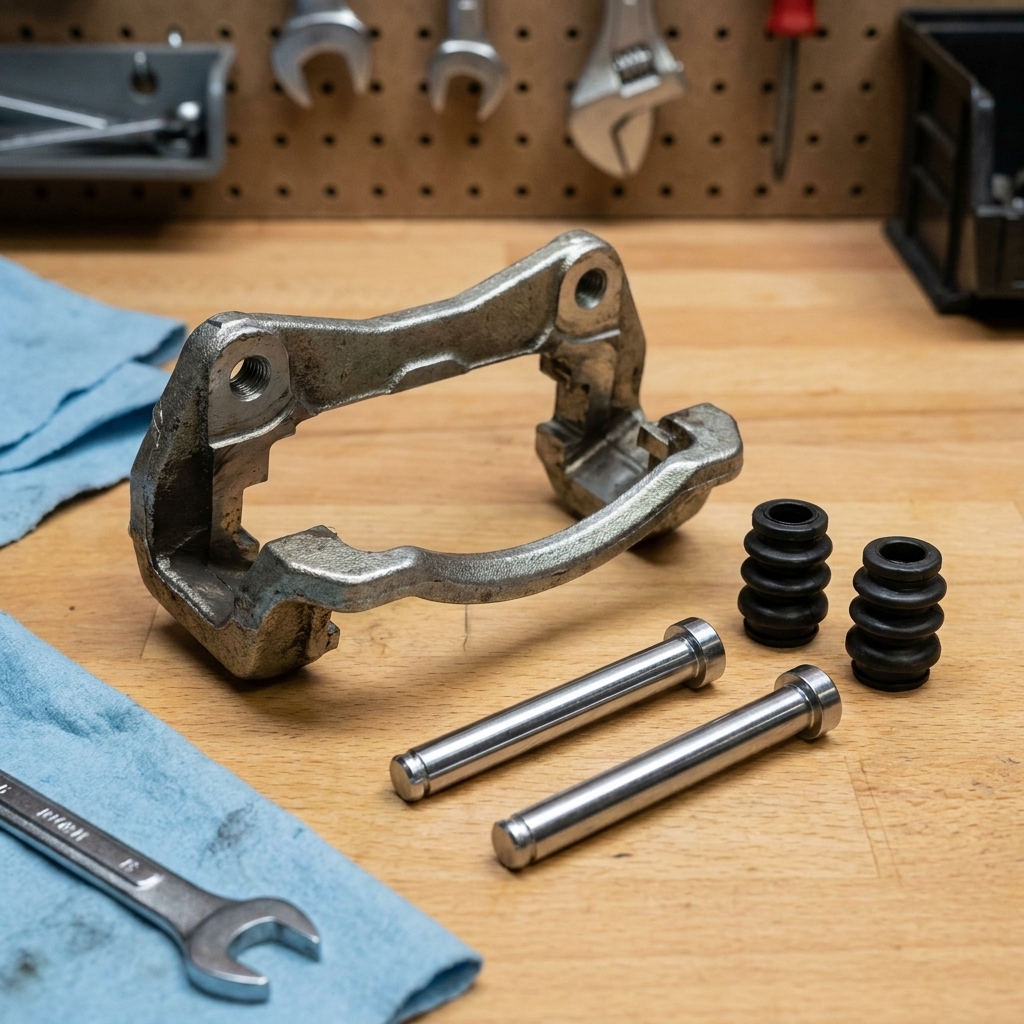
This is the one I saw misdiagnosed the most. Disc brakes are full of little metal-to-metal contact points, and if the hardware is worn, missing, bent, or installed wrong, you can get squeaks, chirps, and uneven wear. If a caliper slide pin is dry or seized, you can get constant contact that causes noise and heat.
How to confirm
- Noise is worse on one wheel than the others.
- One wheel produces much more brake dust.
- Car pulls during braking, or you smell hot brakes after a short drive.
- After a drive, one wheel feels noticeably hotter than the others (careful, they can be extremely hot).
DIY fixes (the right way)
- Clean and lubricate the correct points: Remove pads and hardware, clean the bracket lands where the pad ears sit, and apply a thin film of high-temp silicone or ceramic brake grease to the pad ears and backing plate contact points (where appropriate). Avoid petroleum grease unless the product explicitly states brake-safe.
- Service slide pins: Pull the caliper slide pins, wipe clean, inspect boots for tears, and re-lube with the correct brake grease. Pins should move smoothly.
- Replace hardware: If anti-rattle clips are rusty, deformed, or missing, replace them. Many pad sets include new hardware. Use it.
- Address a sticking caliper: If a piston will not retract smoothly, or a slide is seized, you may need a rebuilt caliper. Do not ignore it. It can cook pads and rotors fast.
Quick reality check: If you are not comfortable working with caliper bolts, torque specs, and proper reassembly, this is a good time to bring in a pro. Brakes are simple, but they are not forgiving of shortcuts.
Bonus: Dust shield contact or debris
If I had to name the easiest-to-miss squeak, it is a bent dust shield or a small rock lodged where it does not belong. This often sounds like a light scrape or chirp, and it can come and go with turns.
How to confirm
- Noise changes when turning left or right.
- Noise happens even when you are not pressing the brake pedal.
- You can sometimes see the dust shield sitting too close to the rotor through the wheel.
DIY fix
- If safe to do so, remove the wheel and look for a bent backing plate behind the rotor. Carefully bend it back so it clears the rotor all the way around.
- Look for a small stone or rust chunk stuck between the rotor and shield and remove it.
DIY inspection: Tools and checks
Basic tools
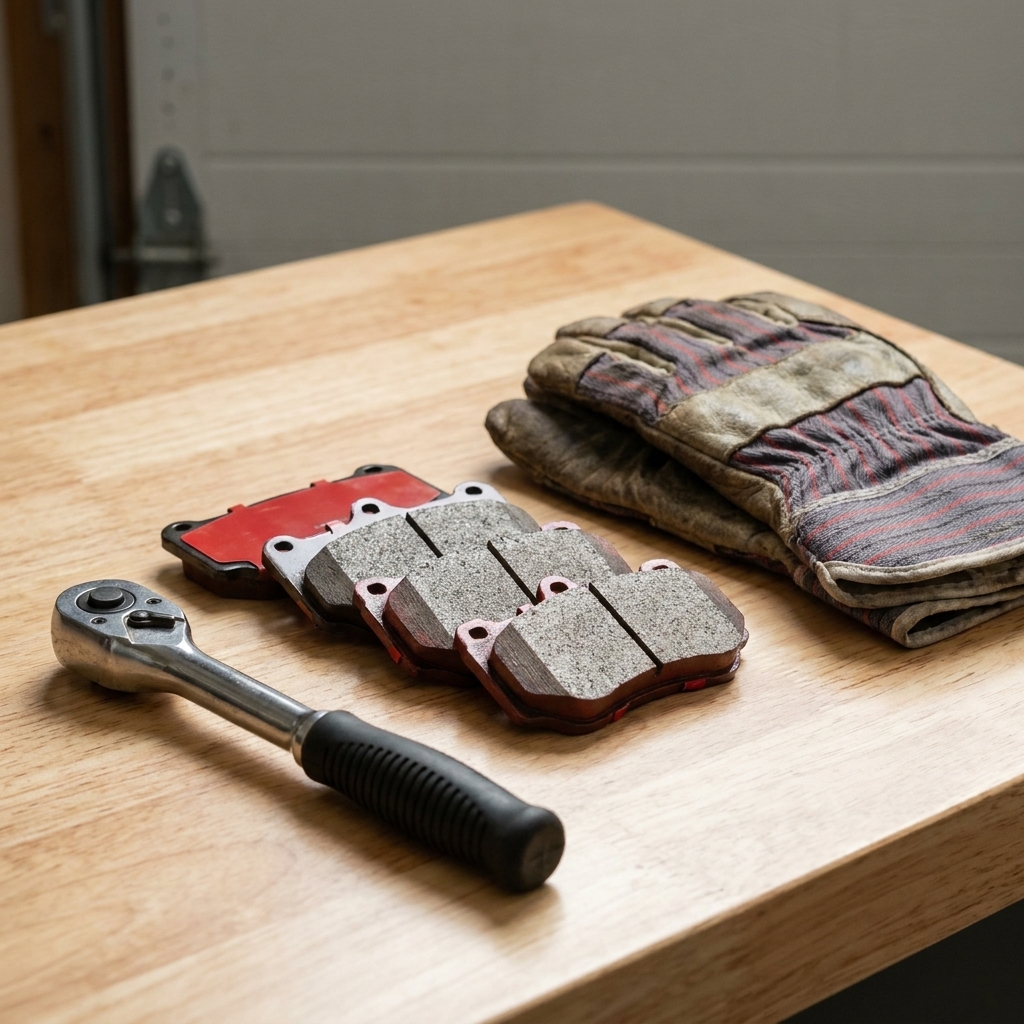
- Floor jack and jack stands
- Lug wrench or impact (hand tools are fine)
- Torque wrench
- Flashlight
- Brake cleaner
- High-temp brake grease
- C-clamp or caliper piston tool (depending on vehicle)
- Gloves and eye protection
What to check at the wheel
- Pad thickness: inner and outer pad
- Rotor surface: deep grooves, heavy rust lip, cracks, blue heat spots
- Hardware: clips seated correctly, nothing loose
- Caliper movement: slide pins free, boots intact
- Uneven wear: clues pointing to sticking slides or piston issues
- Dust shield clearance: shield not rubbing rotor
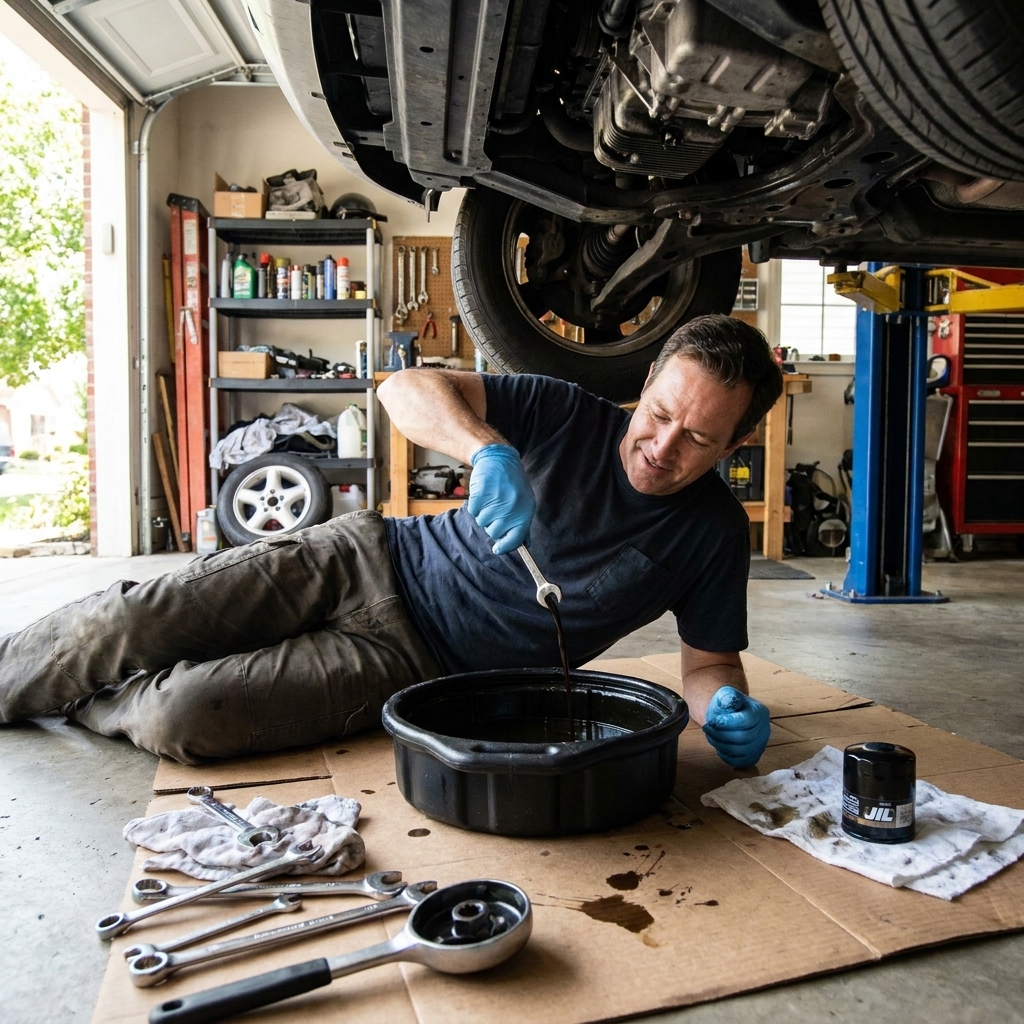
Safety reminder: Never work under a car supported only by a jack. Put it on jack stands on solid ground, give the car a firm shake test, then get to work.
Disc brakes only (quick note)
This guide is focused on common disc brake squeaks. If your vehicle has rear drum brakes or a drum-in-hat parking brake inside the rear rotor, the noise sources and inspection points can be different. The same safety rules apply, but the hardware and adjustment process is not the same.
When to stop driving
Squeaks can be annoying. Grinding can be expensive. Here is when I want you to park it and inspect before the next trip.
- Grinding noise when braking, even once
- Brake pedal feels soft, sinks, or requires pumping
- Car pulls hard to one side under braking
- Steering wheel shake or strong pedal pulsation that suddenly appears
- Burning smell near a wheel, smoke, or a wheel that is too hot to approach
FAQ
Why do my brakes squeak only at low speed?
Low-speed squeak is often pad vibration, dusty pads, or pad material that is naturally squeak-prone. It can also be hardware issues or a dust shield just kissing the rotor. If pad thickness is good and the rotor looks healthy, focus on cleaning and lubricating pad contact points and verifying hardware is installed correctly.
Can I spray something on my brakes to stop the squeak?
You can use brake cleaner to remove dust and grime during an inspection, but there is no safe “spray it and forget it” product that fixes the root cause. Avoid aerosol lubricants anywhere near pad and rotor faces. If you contaminate the friction surfaces, braking performance can drop.
New brakes are squeaking. Did I do something wrong?
Maybe, but not always. New pads can squeak if they were not bedded, if the hardware was reused and worn, if grease was skipped on the correct contact points, if rotors have uneven deposits, or if the pad compound is noisy by nature. Start by verifying correct hardware and lubrication, then bed the pads according to the manufacturer.
Should I replace rotors if my brakes squeak?
Not automatically. Rotors need replacement when they are below minimum thickness, badly scored, cracked, heavily pitted, or heat-damaged. Many squeaks are solved with pad replacement, proper hardware, correct lubrication, and addressing any sticking caliper issues.
The quiet-brake checklist
- Confirm the noise type: squeak vs squeal vs grind
- Rule out normal morning rust
- Check pad thickness (and sensors or wear tabs, if equipped)
- Check for dust shield rub or debris
- Inspect for glazing and uneven deposits
- Verify hardware is present and installed correctly
- Clean bracket lands and lubricate proper contact points only
- Service slide pins and address any sticking caliper issues
If you take nothing else away, take this: brake squeak is often a small problem, but it is rarely a random problem. A careful inspection will almost always tell you what your car is trying to say.