Brakes are one of the few car systems that give you warnings you can feel and hear. A squeak, a grind, or a pedal that suddenly feels like stepping on a wet sponge is not the car being dramatic. It's the brake system telling you exactly where to look.
This guide helps you diagnose the most common brake problems using two things you can observe in the driver’s seat: sound and pedal feel. You'll also learn which symptoms mean “inspect soon” versus “park it now.”
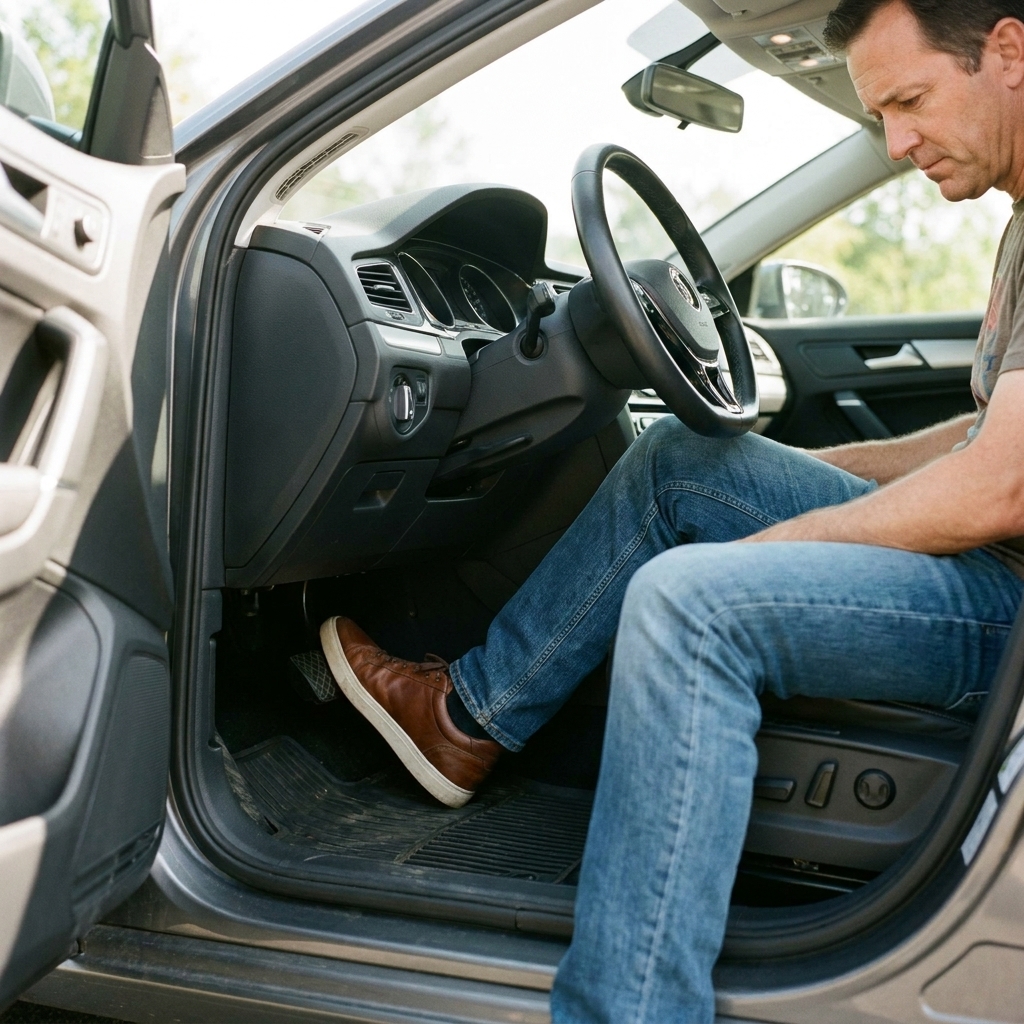
Stop first: quick safety rules
- If the brake pedal suddenly goes to the floor, the red brake warning light is on, or braking power is drastically reduced, don't keep driving. Call for a tow.
- If you hear grinding every time you brake, assume you're metal-on-metal. Every stop can quickly destroy rotors and can potentially damage calipers too.
- When checking anything near wheels, work on level ground, set the parking brake, chock a wheel, and use jack stands if the car leaves the ground.
If you're unsure, treat it as urgent. I've never met anyone who regretted being cautious with brakes.
Diagnose by sound
Squeaking or chirping when braking
Most likely causes:
- Pad wear indicator: Many pads have a small metal “squealer” tab designed to make noise when pads are getting low.
- Glazed pads or rotors: Overheating can harden the pad surface and make a high-pitched squeal.
- Cheap or aggressive pad material: Some pads are simply noisier, especially when cold.
- Dust and light rust: After rain, washing, or sitting, a little squeak for the first few stops can be normal.
- Hardware issues: Missing shims, dry slide pins, or worn anti-rattle clips can cause squeaks and tiny vibrations.
Clues that narrow it down:
- Squeaks only the first stop of the day: often surface rust or moisture.
- Squeaks every stop, getting worse over days: likely a pad wear indicator or hardware problem.
- Squeaks mostly with light pedal pressure: common with glazing or pad material resonance.
DIY check before you pull wheels: In a quiet parking lot, brake gently from 15 to 5 mph with the windows down. Note whether the squeak happens only at light pressure or all the way to a firm stop. That pattern helps later.
Grinding when braking
Most likely causes:
- Worn pads down to the backing plate: This is the classic metal-on-metal grind.
- Rock stuck between rotor and dust shield: Can sound like grinding even when you're not braking.
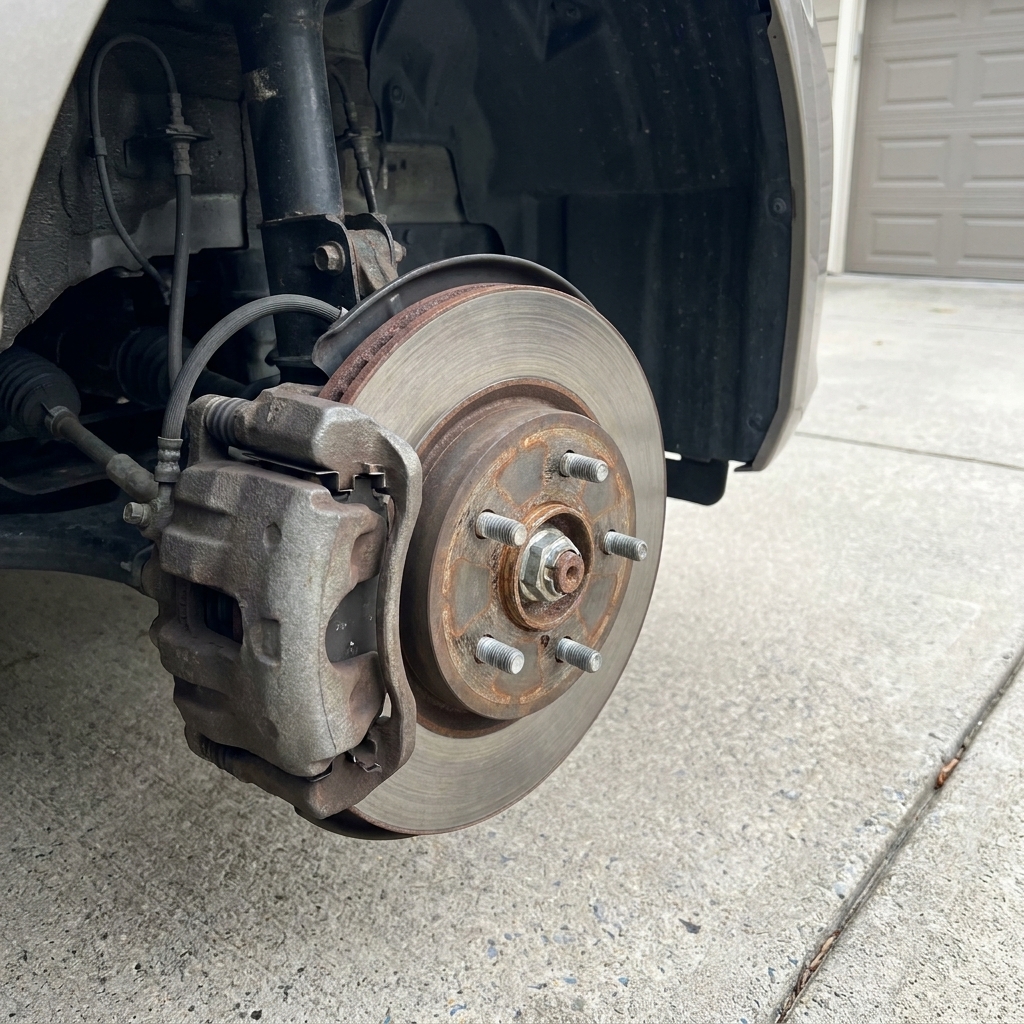
- Heavily rusted rotors: After a vehicle sits for a long time, severe rust can create rough braking and noise, especially if the rotor surface is pitted or flaking. A thin layer of surface rust that scrubs off after a few stops is normal.
- Failed wheel bearing: Not a brake part, but it can mimic brake noise, especially if it changes with turning.
Clues that narrow it down:
- Grinding only when braking: strongly points to pad and rotor contact.
- Grinding or scraping even when coasting: suspect a rock in the shield, a bent dust shield, or a wheel bearing.
- Noise from one corner: often one set of pads wore out faster due to a sticking caliper or seized hardware.
Risk level: High. If it's pad-to-metal grinding, you're damaging rotors quickly and can overheat the system. If you must move the car a short distance, do it slowly and avoid hard stops, but towing is the smart play.
Growling, humming, or a rhythmic “whomp-whomp” when braking
Most likely causes:
- Rotor thickness variation (often described as “warped rotor” feel): You'll usually feel it in the pedal too. True rotor distortion can happen, but vibration is very often caused by thickness variation or surface issues.
- Uneven pad deposits: Commonly mistaken for “warped” rotors. They can create vibration and noise under braking.
- Loose suspension or steering parts: Worn control arm bushings or tie rods can let braking forces shake the front end.
Clue: If the steering wheel shakes when braking from highway speed, look closely at front rotors and front suspension.
Clicking or clunking when you first hit the brakes
Most likely causes:
- Loose caliper mounting bolts or missing hardware.
- Pads shifting in the bracket due to missing anti-rattle clips or incorrect pad fit.
- Worn suspension that shifts under braking.
Risk level: Medium to high. A loose caliper is dangerous. If you hear a heavy clunk, don't ignore it.
Diagnose by pedal feel
Spongy pedal (soft, springy, needs extra travel)
Most likely causes:
- Air in the brake lines: Often after brake work, or from a leak that let fluid level drop.
- Brake fluid overheated: Old fluid absorbs moisture, lowering the boiling point. Hard braking can boil it and create gas bubbles, which feel spongy.
- Flexible brake hose swelling: A failing rubber hose can balloon under pressure and mimic a spongy pedal.
- Rear drum brakes out of adjustment (if equipped): Excess shoe-to-drum clearance increases pedal travel.
Quick tests you can do in the driveway:
- Pump test (engine off): With the car off, press the brake pedal several times to remove booster assist. Hold steady pressure. If it slowly sinks, suspect a leak or a master cylinder issue.
- Start-up check: Keep your foot lightly on the pedal and start the engine. The pedal should drop a bit as the brake booster comes alive. That drop is normal. A huge drop plus a soft feel isn't.
Important: A spongy pedal isn't “normal wear.” Pads can be worn out and the pedal can still be firm. Spongy almost always points to a hydraulic issue that deserves real attention.
Pedal goes to the floor
Most likely causes:
- Brake fluid leak: Caliper leak, wheel cylinder leak (drums), ruptured brake line, or a leaking master cylinder.
- Master cylinder internal bypass: Seals fail and pressure bleeds past internally, so the pedal drops with steady pressure.
What to do: Check the brake fluid reservoir immediately. If it's low or empty, don't drive. If it's full but the pedal still sinks, you still shouldn't drive. Call for a tow.
Hard pedal (takes lots of effort, braking feels weak)
Most likely causes:
- Brake booster problem: Failed booster or no vacuum supply.
- Vacuum leak or a bad one-way check valve at the booster.
- ABS or stability system issue (rare, vehicle-dependent): Some failures can change how assist feels, but most hard-pedal complaints are booster or vacuum related, and ABS issues typically come with warning lights.
Quick booster check: With the engine off, pump the brake pedal 4 to 6 times. Hold pressure on the pedal and start the engine. If the booster is working, the pedal should move downward slightly. If it doesn't, inspect the vacuum hose and check valve, and consider the booster.
Pedal pulsation (vibration through your foot)
Most likely causes:
- Rotor thickness variation from wear or pad deposits.
- ABS activation on slippery surfaces: feels like rapid pulsing, often with a buzzing sound.
Clue: If it happens only during panic stops on gravel, that's probably ABS doing its job. If it happens during normal braking on dry pavement, look at rotors and pad condition.
Pedal feels normal, but stopping power is poor
Most likely causes:
- Contaminated pads: Grease, brake fluid, or gear oil on friction material.
- Incorrect pads or low-quality friction material.
- Glazing from overheating.
- Rear brakes not contributing: Stuck rear caliper, out-of-adjustment drums, or rear hydraulic issue.
Brake fade vs spongy pedal
These two get mixed up because both feel scary, but they point to different problems.
- Brake fade: The pedal often stays firm, but the car doesn't slow like it should, especially after repeated hard stops or long downhill braking. That's usually overheated pads or overheated fluid, or both.
- Spongy pedal: The pedal itself feels compressible and springy. That's usually air in the system, boiling fluid creating bubbles, or hose expansion.
Either one deserves attention, but a truly spongy pedal is the bigger “hydraulics now” warning.
Symptom map
If you want the mechanic-style shortcut, combine three things: what it sounds like, what the pedal feels like, and when it happens.
Squeak + firm pedal + only at low speeds
- Common: pad material noise, light glazing, missing shims, dusty pads.
- Next step: inspect pad thickness and hardware when you pull the wheels.
Squeak + vibration in steering wheel
- Common: uneven rotor surface, pad deposits, loose front-end components.
- Next step: check rotor condition and front suspension play.
Grinding + any pedal feel
- Common: pads are done, rotor damage likely.
- Next step: stop driving and inspect immediately.
Spongy pedal + no obvious noise
- Common: air in system, old fluid boiled, small leak, swelling hose.
- Next step: check fluid level and look for wetness at each wheel and along lines.
Hard pedal + hissing sound under dash
- Common: vacuum leak or booster issue.
- Next step: inspect booster vacuum hose and check valve.
Before you jack it up
1) Check the brake fluid level and condition
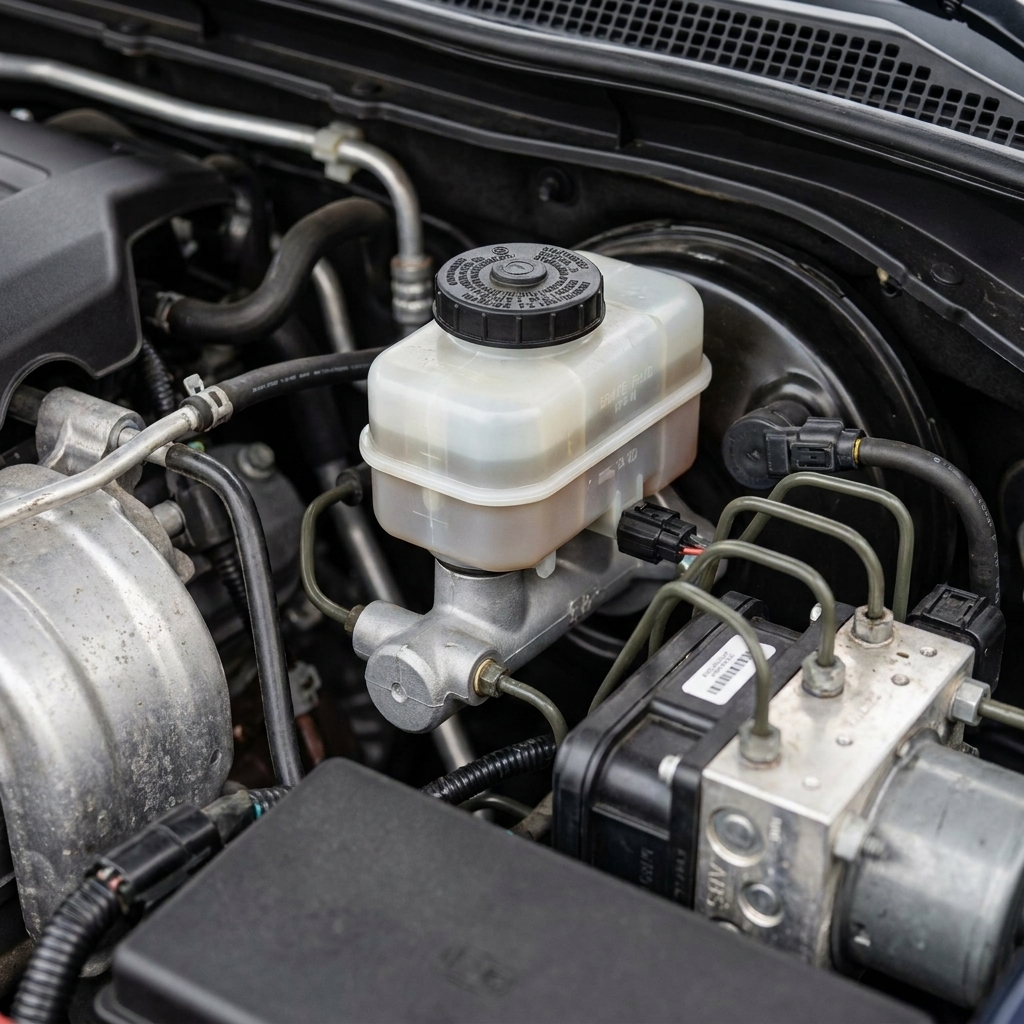
Open the hood and find the brake master cylinder reservoir. Fluid should be between MIN and MAX. The fluid should look clear to light amber. Dark brown fluid is common, but it's a hint it's overdue for a flush.
Low fluid matters. Sometimes it's just pad wear slowly lowering the level, but a sudden drop usually means a leak. Either way, don't treat low fluid as “safe.”
One more thing: Brake fluid damages paint. If you spill any, rinse it off with lots of water right away.
2) Look for warning lights
- Red brake warning light: often tied to low fluid or the parking brake, but meanings vary by vehicle. If it's on and you don't know why, treat it as urgent.
- ABS light: ABS may be disabled. Base brakes often still work, but diagnosis should happen soon, especially if the car behaves differently under braking.
3) Sniff test after a drive
If one wheel smells like burning, that corner may have a sticking caliper, stuck slide pins, or a parking brake that isn't releasing fully. Heat is a brake system’s enemy.
4) Listen with the window down
At 10 to 20 mph in a safe area, lightly apply the brakes and release. If the noise continues after you release the pedal, you may have dragging brakes, a dust shield rub, or a bearing issue.
5) Note if the car pulls left or right when braking
Pulling that happens only under braking usually points to uneven braking force side-to-side. Common causes are a sticking caliper, contaminated pad on one side, or a brake hose issue. If the car pulls all the time, include tire pressure, tire condition, and alignment on your suspect list too.
Inspect at the wheel
If your driveway checks point to a specific corner, you can save time by inspecting that wheel first.
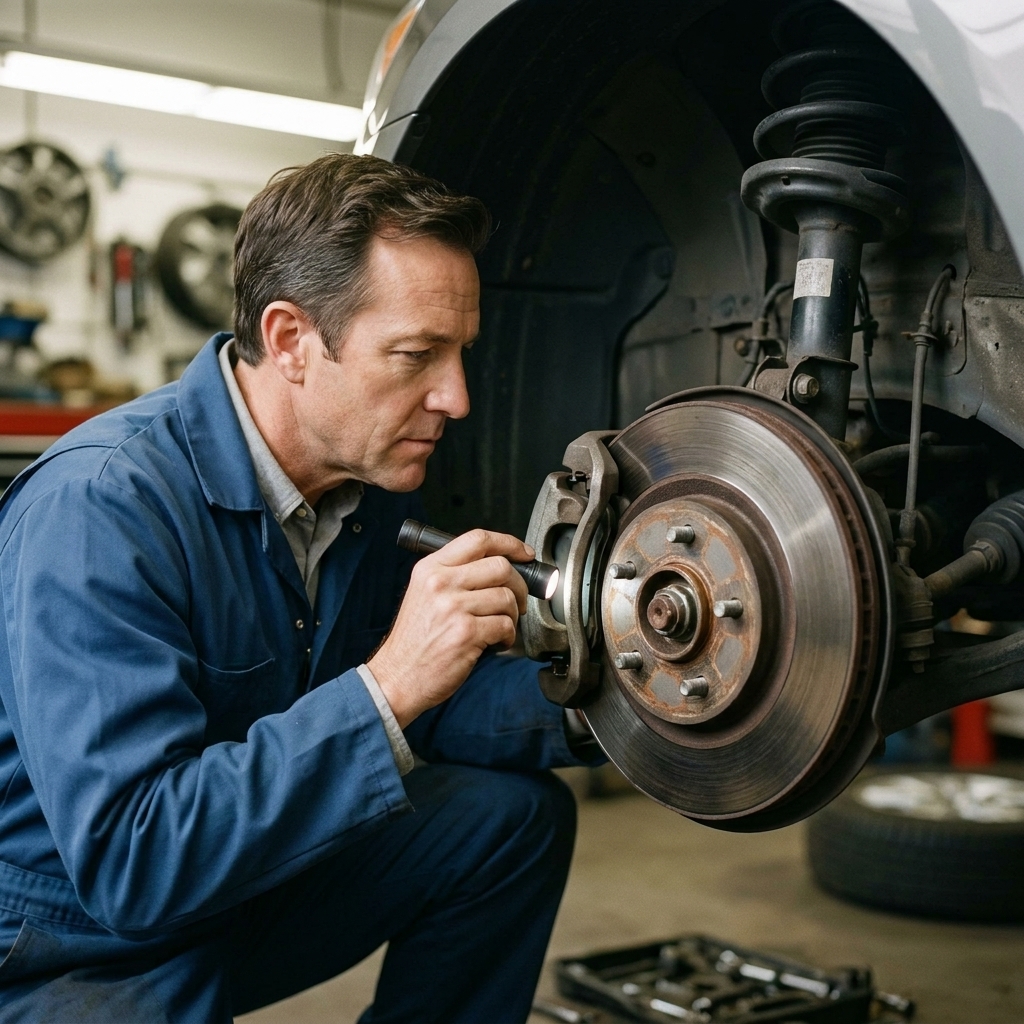
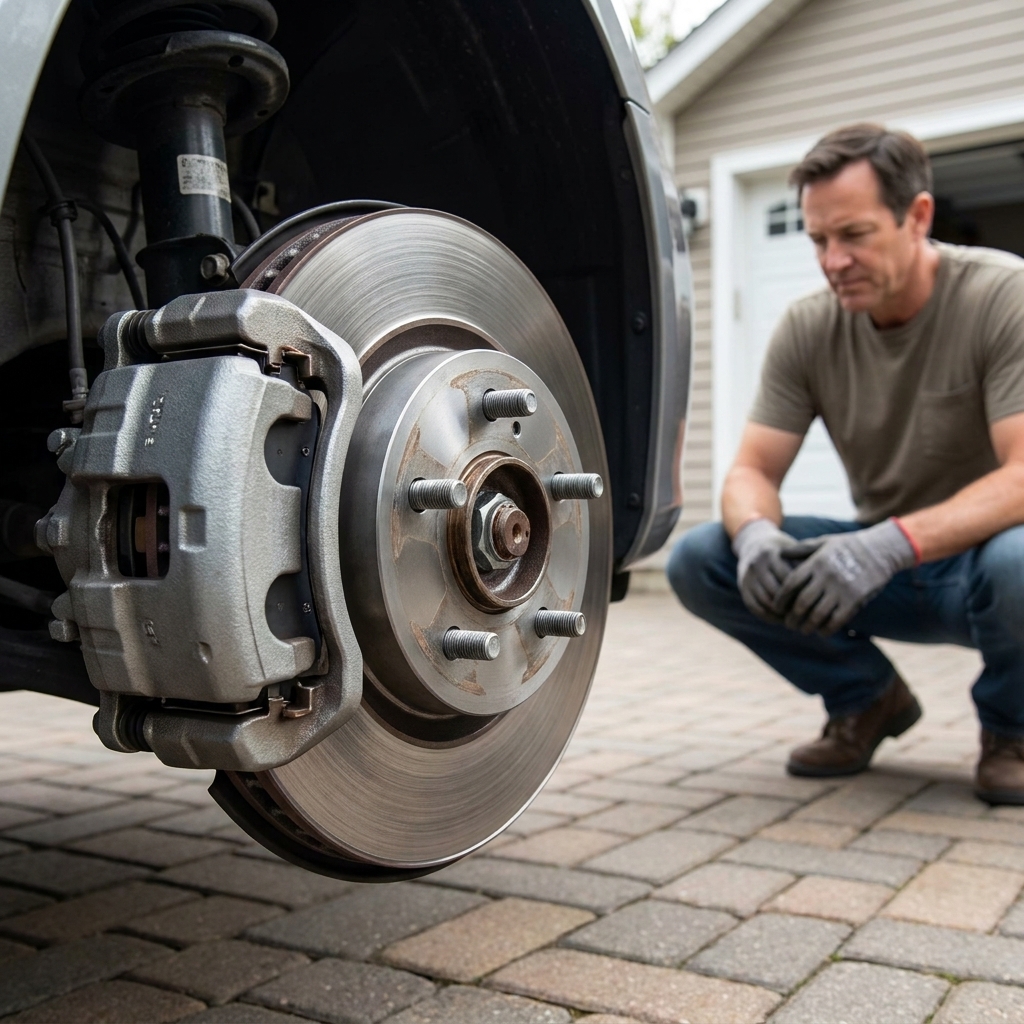
Pad thickness and wear pattern
- Less than about 3 mm: time to plan replacement soon. That's a common rule of thumb, but OEM service limits vary by vehicle and pad design.
- Inner pad much thinner than outer: common sign of stuck slide pins or caliper issues.
- One wheel worn much more than the others: that corner likely has a sticking caliper or hardware problem.
Rotor condition
- Deep grooves: can cause noise and reduced pad contact.
- Blue spots: overheating.
- Heavy lip on the outer edge: normal with wear, but an extreme lip means it's been a while.
Caliper slide pins and hardware
Slide pins are the small, greased guide pins that let a floating caliper move side-to-side so both pads clamp evenly. If you're comfortable removing the caliper, check that the slide pins move smoothly and are lubricated with appropriate brake grease. Dry or seized pins can cause squeaks, uneven wear, and pulling.
Leaks
Any wetness on the caliper, hose, or backing plate is suspicious. Brake fluid is slick and will strip paint. If you see a wet trail, don't ignore it.
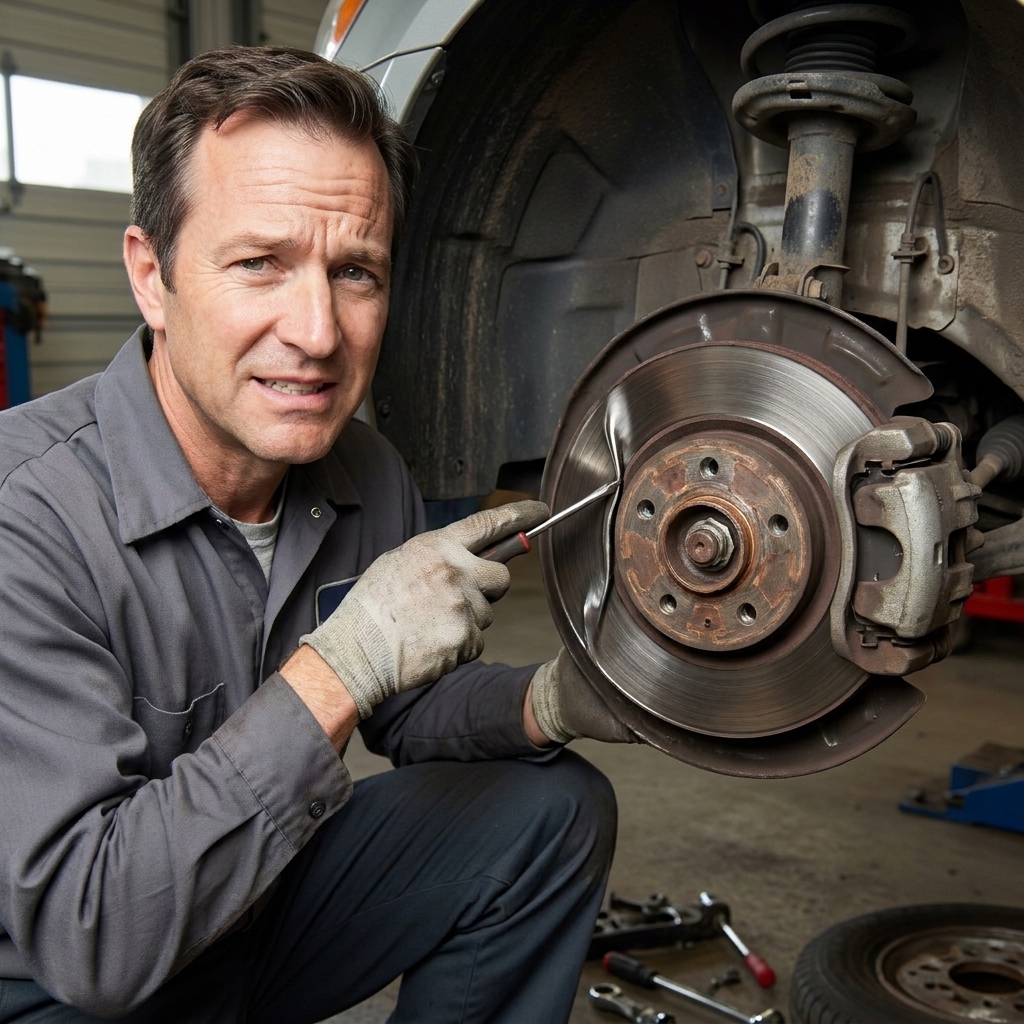
Dust shield rub
The thin metal shield behind the rotor bends easily. If it's touching the rotor, it can make a scraping sound that mimics brake failure. You can gently bend it back for clearance.
Drum brakes (if your rear brakes are drums)
Drums can squeal and feel grabby when out of adjustment or contaminated. A low pedal that improves when you pump it once can point toward rear drum adjustment.
DIY caution on hydraulics
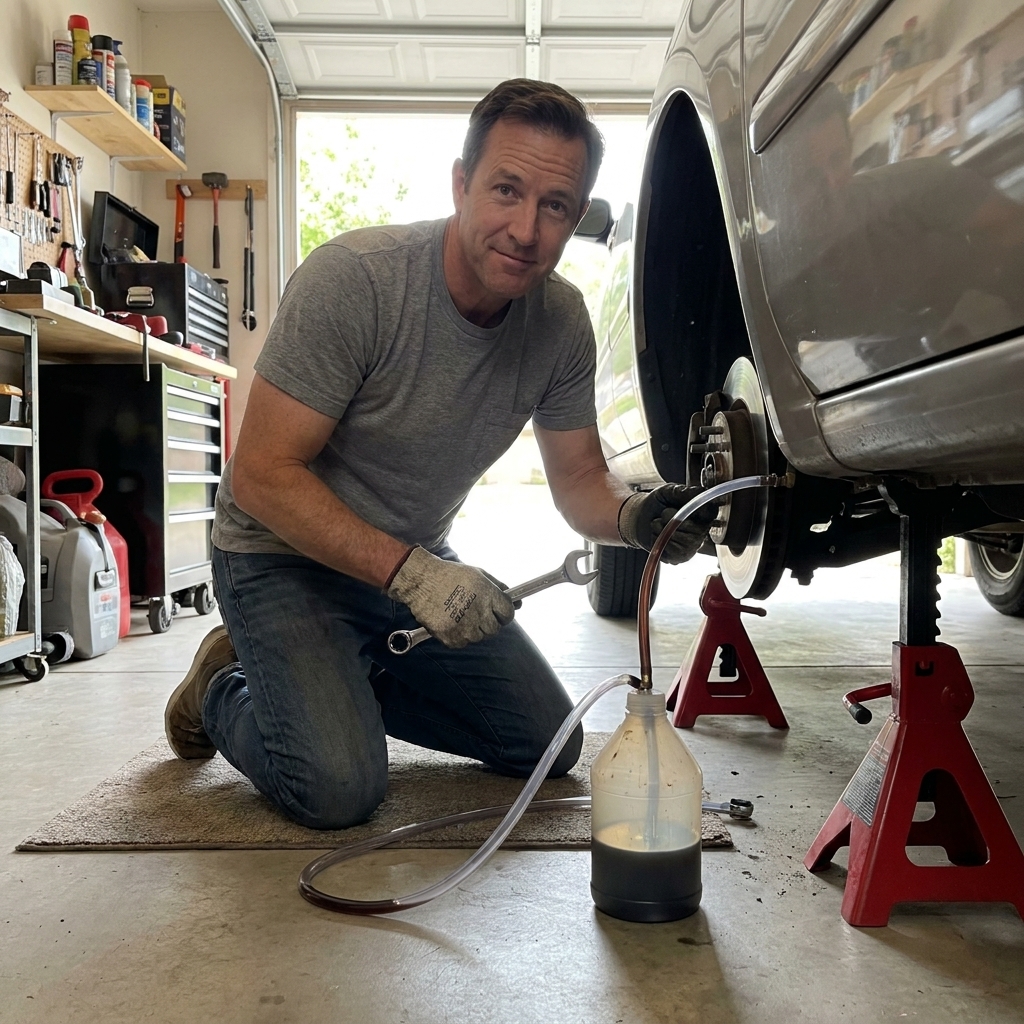
If you're opening the hydraulic system, bleeding brakes, or adding fluid, use the exact brake fluid type your cap and manual specify. DOT 3, DOT 4, and DOT 5.1 are usually glycol-based and not the same as DOT 5 silicone. If you're not sure, stop and look it up for your exact car.
Common false alarms
A little squeak after rain
Light surface rust on rotors can squeak briefly. If it disappears after a few normal stops, it's usually fine.
ABS buzz during a hard stop
ABS can sound like a growl or buzz and you'll feel pulsing in the pedal. That's normal when traction is low. If ABS activates during gentle stops on dry pavement, then you have a problem to diagnose.
New pads that squeak
New pads can make noise if they weren't bedded in properly, if hardware was reused when it should've been replaced, or if the pad compound is just loud. It's annoying, but it's also fixable.
When it's not DIY anymore
I'm all for learning. I'm also all for knowing when the smart move is calling for help.
- You have a sinking pedal or the pedal goes to the floor.
- Brake fluid is leaking anywhere.
- Grinding is constant and braking power is reduced.
- You suspect a failing brake booster and you're not confident testing vacuum systems.
- ABS and stability lights are on and braking behavior is unpredictable.
A reputable shop should be able to show you pad thickness measurements, rotor readings, and any leaks on the lift. If they can't explain what they found in plain language, that's a red flag.
Quick FAQ
Can low brake fluid cause a spongy pedal?
Low fluid by itself usually doesn't make the pedal spongy. The danger is that low fluid can allow air into the system, and air compresses. That's what creates the spongy feel. Low fluid is still a problem that needs an explanation, especially if it dropped quickly.
Why do my brakes squeak but the pads look fine?
Noise can come from pad compound, glazing, or hardware issues even with plenty of pad left. Missing shims, dry slide pins, and cheap pads are repeat offenders.
Is grinding always the pads?
No. A bent dust shield or a rock can scrape constantly even when you're not braking. But if grinding happens only when you press the pedal, assume pads and rotors until proven otherwise.
Why does the pedal feel spongy only after driving downhill?
Heat. Long downhill braking can overheat old fluid or pads. If the pedal firms up again after cooling, you may have boiled fluid. A brake fluid flush and a check for dragging brakes are smart next steps.
Can I just slap new pads on if it squeaks?
Sometimes, but you can waste money if the real cause is seized slide pins, uneven rotors, or contaminated friction material. Diagnose first, then buy parts.
My take
When I was keeping my old Civic alive, I learned that brakes are honest. Squeaks are usually warnings. Grinding is usually the end of the line. And a spongy pedal is your cue to treat the hydraulics seriously.
Listen, feel, and write down what you notice before you grab tools. That one minute of observation can save you hours and it keeps you from throwing parts at the problem.