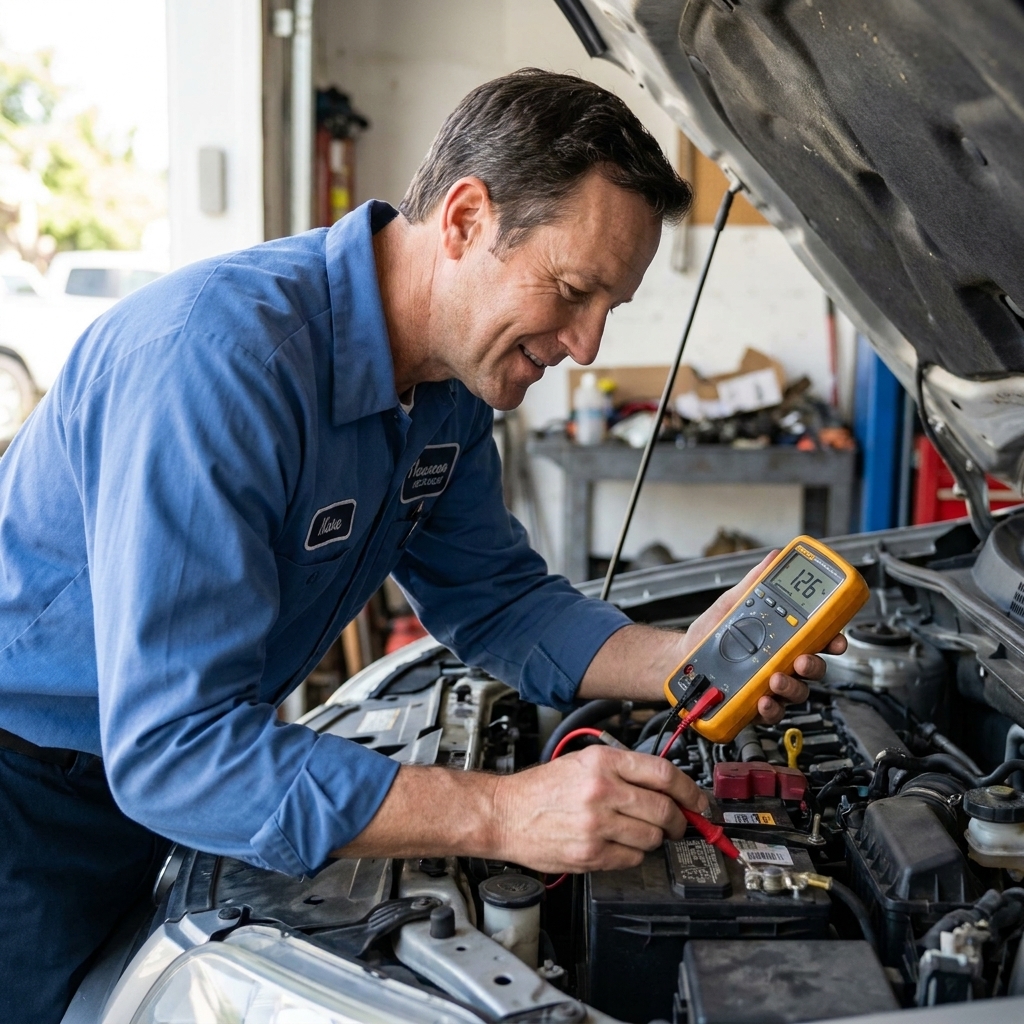
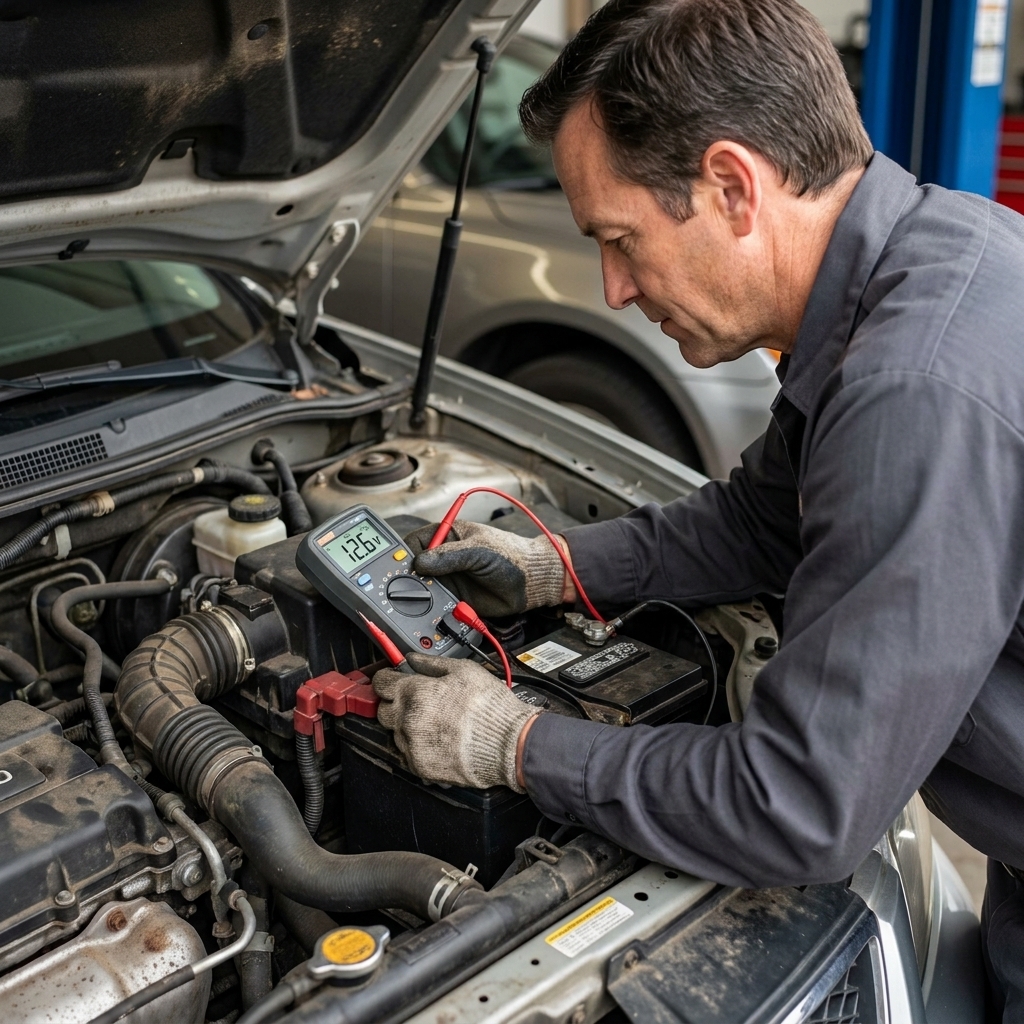
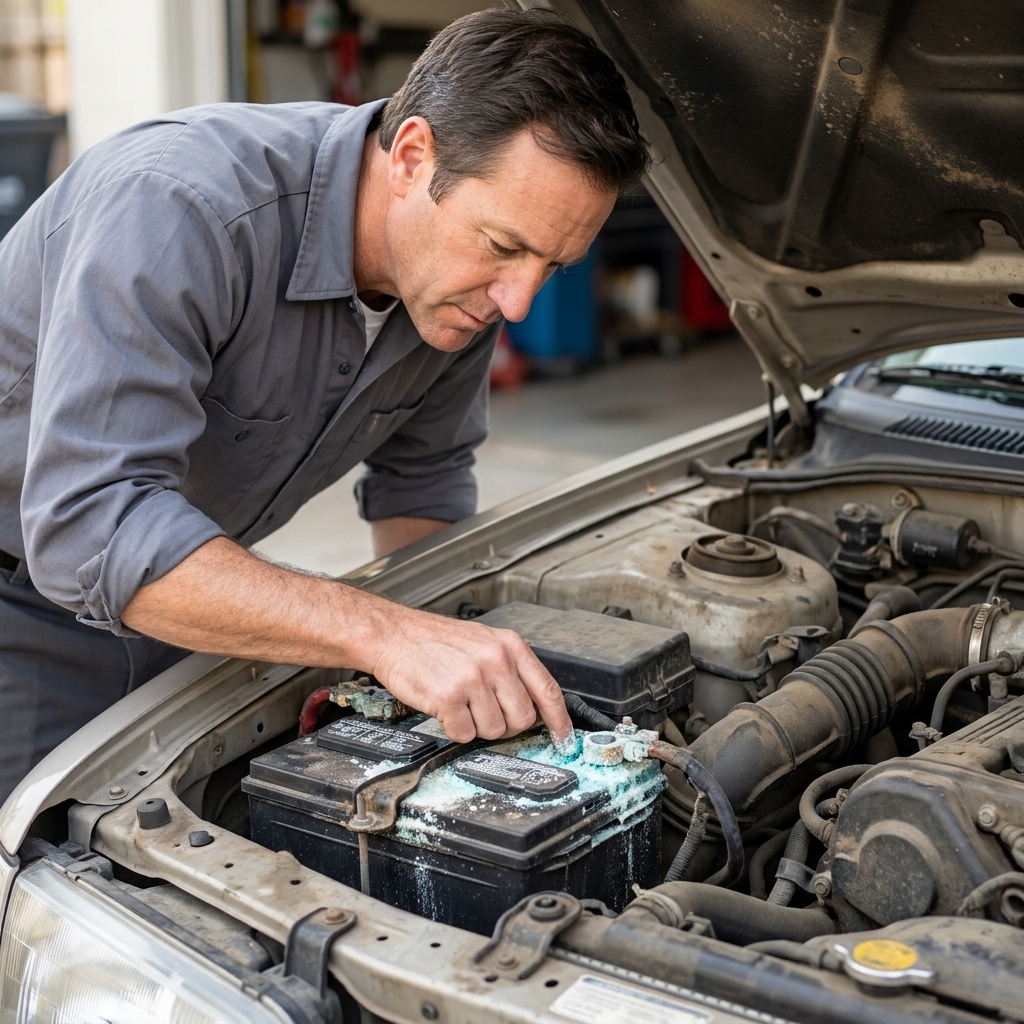
I have watched more than a few perfectly good mornings get ruined by one decision: the wrong battery. Not “dead battery” wrong. More like “it starts fine for a week, then gets weird” wrong. The kind that sends you back to the parts store, back to the parking lot with a 10mm, and back to wondering if your alternator is secretly plotting against you.
If you are choosing between an AGM battery and a standard flooded lead-acid battery, you are already asking the right question. Both can be “correct” depending on the vehicle, the climate, and how you drive. Let’s break it down in plain English so you can buy once and be done.
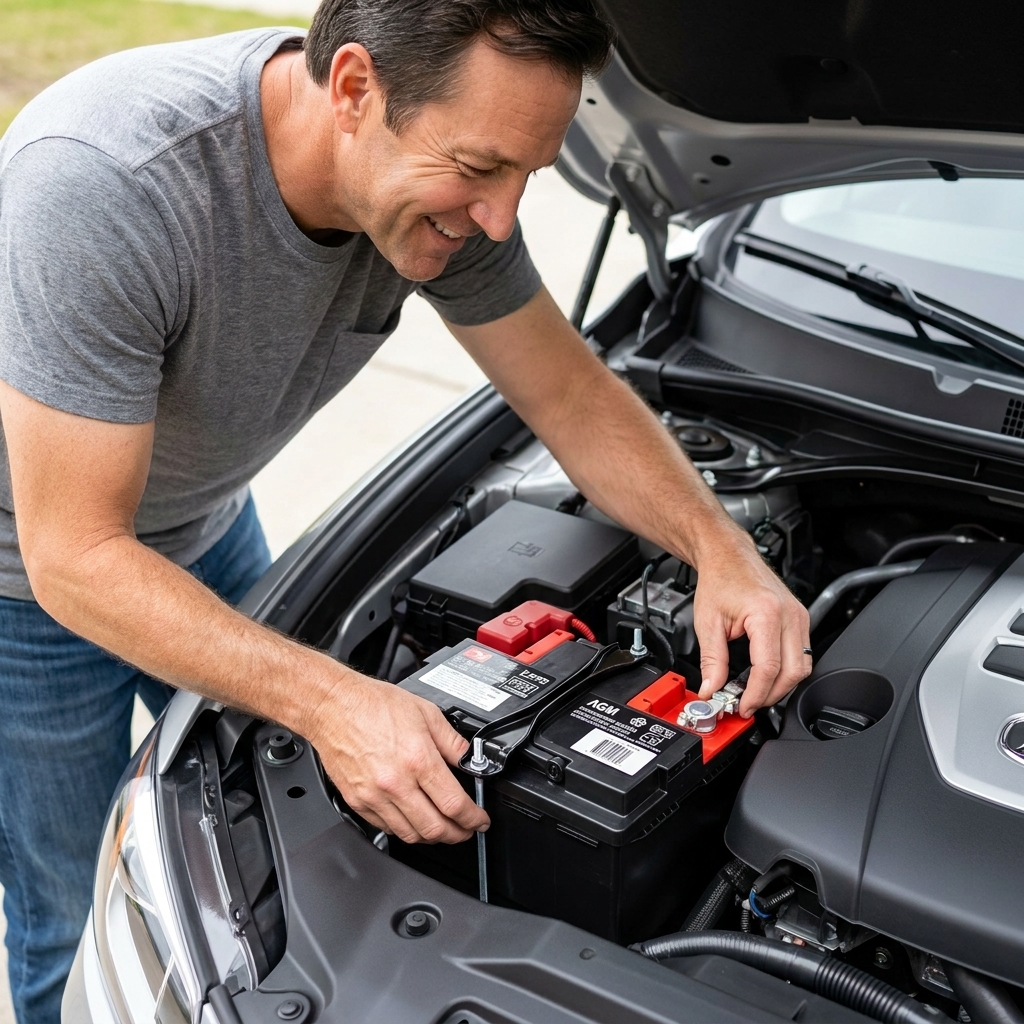
Quick definitions (no jargon)
Standard flooded lead-acid (the classic battery)
This is the traditional car battery with liquid electrolyte inside. It vents small amounts of gas during charging, and it is built to deliver a big burst of power to start the engine. These are usually the cheapest option and they work great in lots of basic cars and trucks.
AGM (Absorbent Glass Mat)
AGM is still a lead-acid battery, but the electrolyte is held in fiberglass mats instead of free liquid. The battery is sealed in normal use (it can vent under extreme conditions, like severe overcharge, but it is not “open” like a flooded battery). AGM batteries are tougher, handle vibration better, and generally tolerate frequent cycling better than a typical flooded starting battery.
One important nuance: most automotive AGM batteries are built for starting power and repeated cycling, not for repeated deep discharges like a true deep-cycle RV or marine battery. They are more tolerant than many flooded starting batteries, but you still do not want to drain them flat on a regular basis.
What changes for you as a DIYer
1) Durability and vibration
If you drive a lot of rough roads, have a battery mounted in a harsh spot, or run a vehicle that shakes (diesel trucks, off-road rigs, older solid-mount setups), AGM often comes out ahead. The internal construction is more rigid, so plates are less likely to get damaged over time.
- AGM: Better for vibration, washboard roads, off-road use, and long-term punishment.
- Flooded: Fine for normal commuting on decent roads.
2) Cold weather starting
Cold cranking amps (CCA) matter, but battery design matters too. With comparable CCA ratings and a healthy battery, AGM batteries often hold voltage a little steadier under heavy load, which can help modern vehicles with lots of electronics wake up and behave in the cold.
That said, you can absolutely buy a high-CCA flooded battery that starts great. The real question is how consistent you want that performance to be after a few winters and a lot of short starts.
- AGM: Often stronger voltage stability in the cold, can feel “snappier” on crank.
- Flooded: Can be excellent if sized correctly, but tends to show age and cold sensitivity sooner.
3) Heat and underhood life
Heat is the silent battery killer. High underhood temps accelerate grid corrosion and electrolyte loss. This is where things get nuanced:
- Flooded batteries can lose water over time (even “maintenance-free” ones vent). In hot climates, they can age fast.
- AGM batteries do not lose electrolyte the same way during normal use, but they can still vent and dry out if they are overcharged or cooked under constant high heat.
In very hot climates, picking the correct group size, ensuring the heat shield is in place, and making sure the charging system is not overcharging often matters as much as AGM vs. flooded.
4) How your vehicle uses the battery (the big one)
Older vehicles mostly use the battery for starting, then the alternator takes over. Many newer vehicles use the battery constantly, even while driving, to stabilize voltage for electronics and support fuel-saving strategies.
This is where battery type really matters. If your car has start-stop, it may use AGM or it may use EFB (enhanced flooded battery). EFB is basically a beefed-up flooded battery designed for start-stop duty. The correct choice is whatever your vehicle calls for.
AGM tends to shine when the battery is asked to do more than just start the engine:
- Start-stop systems: AGM is common and sometimes required, but some vehicles specify EFB instead. Follow the sticker, the owner’s manual, or the parts catalog for your exact model.
- Lots of accessories: Dash cams, audio amps, inverters, fridge for camping. AGM typically tolerates cycling better.
- Short trips: Multiple cold starts with not much recharge time. AGM can bounce back better, assuming the charging system is healthy.
Cost vs. value
AGM batteries usually cost more up front. Whether that premium is worth it comes down to two things: whether your car actually benefits from AGM, and whether the battery will live long enough to justify the extra spend.
AGM is worth it if:
- Your vehicle came with AGM from the factory.
- You have start-stop or heavy electrical loads.
- The battery is in the trunk, under a seat, or inside the cabin (common on European cars and some luxury models) where a sealed design is beneficial.
- You deal with harsh vibration or frequent washboard roads.
- You routinely do lots of short trips and want more resilience.
Flooded is a smart buy if:
- Your car is a straightforward commuter without start-stop.
- You want the lowest cost and you replace batteries on a normal schedule.
- You live in a mild climate and your driving includes regular 20 to 30 minute runs.
- Your vehicle does not specify AGM or EFB and has no battery monitoring quirks.
Fit and compatibility
This is where DIYers get burned, so I am going to be blunt: do not assume you can “upgrade” to AGM and call it a day.
1) What the vehicle expects
Many newer cars have a battery management system (BMS) that adjusts charging strategy based on battery type and age. If the car expects AGM (or EFB) and you install the wrong type, you can shorten battery life or trigger charging-related weirdness. If the car expects flooded and you install AGM, it may work fine, but some vehicles still need a battery registration/reset so charging behavior matches the new battery.
Battery registration is common on many European makes (BMW/MINI, Mercedes-Benz, VW/Audi) and shows up on some domestic models too. If your vehicle has:
- a battery current sensor on the negative cable,
- an “intelligent” alternator,
- or a menu setting for battery replacement,
then take the extra step to confirm whether battery registration, reset, or coding is required after replacement.
2) Charging behavior and smart alternators
AGM batteries generally like slightly different charging behavior than flooded. Most modern charging systems handle AGM just fine, but problems happen when:
- The alternator is weak and never fully recharges the battery.
- The vehicle has an aggressive fuel-saving charging strategy and the battery lives undercharged.
- You have a parasitic draw that slowly drains the battery between drives.
Chronic undercharge is bad for both flooded and AGM batteries. AGM can be especially quick to lose capacity if it spends a lot of time at a low state of charge. Either way, a battery that lives half-charged lives a short life.
3) Group size, terminals, and hold-downs
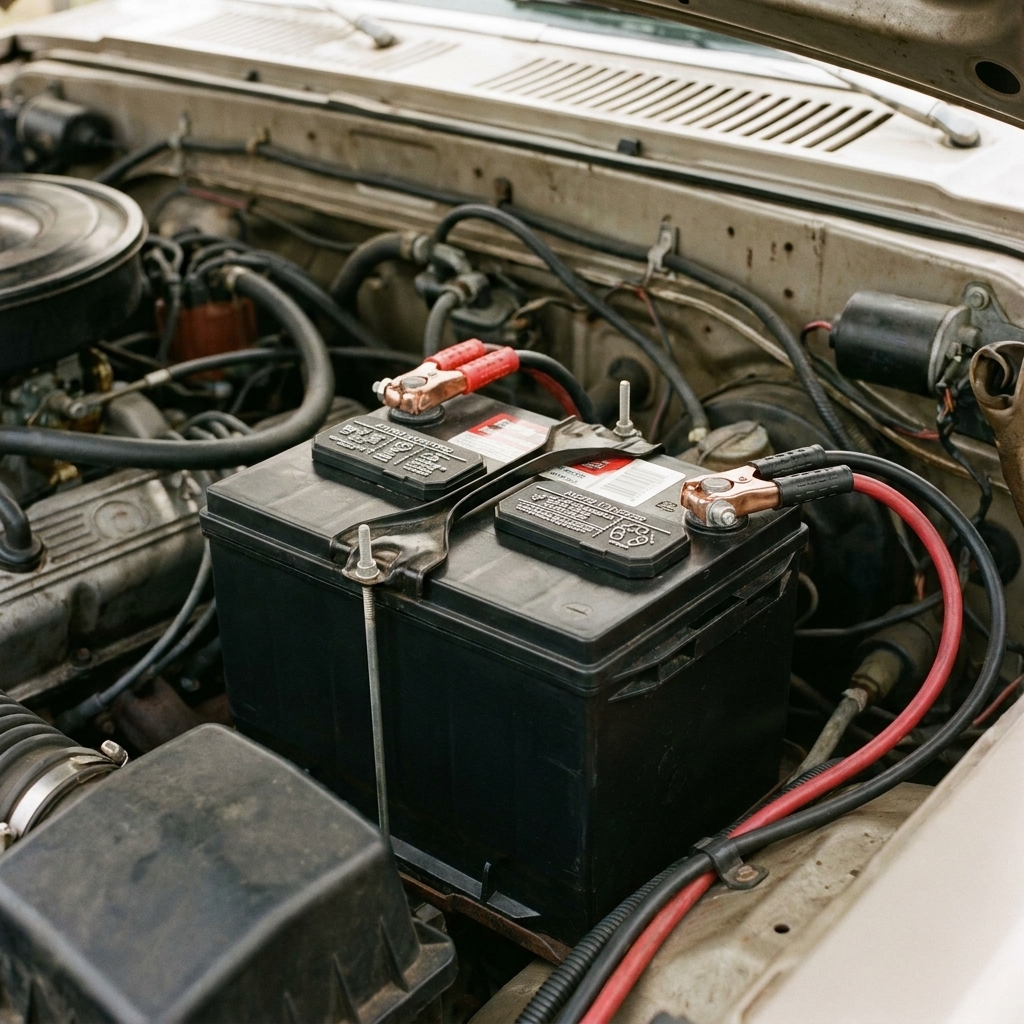
Match your group size (like H5, H6, 24F, 35, 48, etc.), terminal layout, and height. A battery that “sort of fits” can crack a case, stress cables, or come loose. Loose batteries die young.
What you notice day to day
Voltage stability (electronics care)
AGM batteries tend to hold voltage steadier under load. That can mean fewer low-voltage glitches like:
- slow cranking with bright headlights that suddenly dim,
- infotainment reboots on cold starts,
- random warning lights that disappear once the engine is running.
To be clear, those symptoms can also be bad cables, corroded grounds, or a failing alternator. But a stronger, steadier battery can help.
Reserve capacity (how long it can run stuff)
Reserve capacity is how long a battery can supply power if the charging system is not helping. If you sit in accessory mode a lot, run a dash cam in parking mode, or power camping accessories, look at reserve capacity and amp-hour ratings where available. Many AGM batteries do well here.
Climate and driving habits
If winters bite
- Prioritize CCA first, then consider AGM for steadier voltage and better cycling tolerance.
- Make sure the battery is fully charged going into a cold snap. A partially charged battery can freeze at much warmer temps than a fully charged one.
If you live in extreme heat
- Choose a battery with a good heat warranty and strong build quality, AGM or flooded.
- Check that factory heat shields and ducts are installed.
- Have the charging system tested for overcharge. Chronic overcharging cooks batteries fast, and it can make even a sealed AGM vent and dry out.
If you do lots of short trips
Short trips are rough because you take a big starting hit and never give the alternator enough time to refill the tank. AGM can handle that routine better, but you will get the best results if you also:
- take the car on a 20 to 30 minute drive weekly, or
- use a smart battery maintainer occasionally.
My rule of thumb
If your vehicle came with AGM, stick with AGM. Engineers did not spec it just to make batteries expensive. They spec it because the electrical system uses it hard.
If your vehicle came with a standard flooded battery and you want to move to AGM, it can be a solid upgrade if you have heavy electrical loads or harsh conditions. Just confirm:
- the correct group size and venting requirements (some trunk-mounted setups use vent tubes),
- whether a battery reset/registration is needed,
- and that your charging system is healthy.
And if your car specifies EFB, treat that like a hard requirement unless you have verified an AGM is approved as an equivalent replacement for your exact application.
Shopping checklist
- Match the group size and terminal orientation.
- Meet or exceed CCA (especially in cold climates).
- Confirm the required type: AGM vs flooded, and whether EFB is specified.
- Check warranty, but also check build date. Fresher is better.
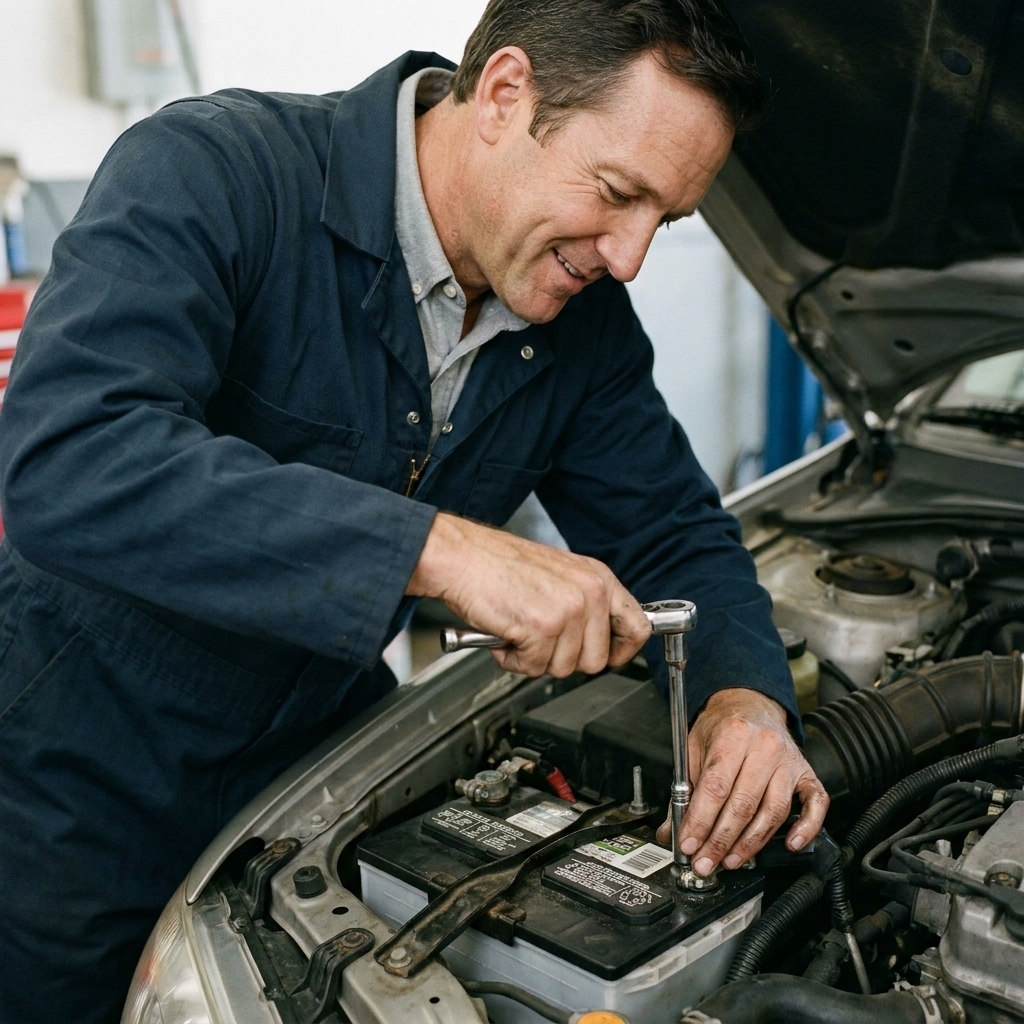
- Inspect cables and hold-down. A great battery will still struggle with crusty terminals and a loose bracket.
Common questions
Can I put an AGM battery in a car that had a standard battery?
Often, yes. But on vehicles with battery management systems, you may need a battery reset/registration so the car charges the new battery correctly. You still must match size, terminals, and any required venting setup.
Can I replace an AGM with flooded to save money?
I do not recommend it unless you have verified your vehicle does not require AGM (or EFB). Many vehicles with start-stop or advanced charging strategies will chew through a flooded battery quickly, or act up electronically.
Will AGM fix my slow crank?
Not if the real issue is corrosion, a failing starter, a bad ground, or an alternator problem. Before blaming the battery, check terminal tightness, clean the connections, and have the battery and charging system load-tested.
Do I need a special charger for AGM?
A modern smart charger with an AGM setting is ideal. A basic charger can work, but incorrect charging can shorten battery life. If you use a maintainer, pick one that supports AGM and has an automatic mode.
The bottom line
If your car is basic and your driving is normal, a quality flooded lead-acid battery is a perfectly good choice and the best value for a lot of people.
If your vehicle has start-stop, lots of electronics, heavy accessory use, or you deal with harsh conditions, AGM (or the specified EFB) is often the battery that saves you money in the long run because it tolerates the abuse better.
Either way, the “best” battery is the one that fits correctly, meets the specs, and is supported by clean cables, a solid hold-down, and a healthy charging system. That is the unglamorous truth, and it is also how you avoid buying the same battery twice.